
We've long known that rough childhoods can set the stage for addiction later in life. The epidemiological data is pretty clear: early life stress, including social isolation and neglect, correlates with higher rates of substance use disorders in adulthood. But what's actually happening under the hood? What changes in the brain?
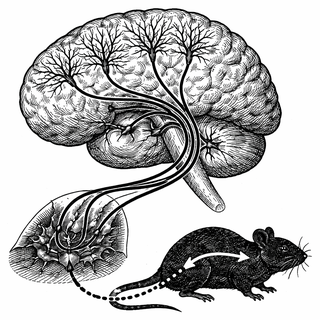
A study in Nature Communications traced the problem to a specific neural highway and found that teenage loneliness doesn't just hurt emotionally. It literally rewrites how the brain responds to drugs.
The Experiment: Make Mice Lonely, Then Offer Heroin
The researchers took the developmental stage equivalent of adolescence in mice and created a simple but powerful intervention: social isolation. Some mice got normal social housing with peers. Others were isolated during this critical developmental window.
Then, once they reached adulthood, all the mice got access to heroin. What happened?
The mice that had been isolated during their "teenage" years showed supercharged drug-seeking behavior. They worked harder to get heroin, they showed more intense seeking after withdrawal, and they were more susceptible to relapse cues. The lonely adolescence had left a mark on their reward systems.
This tracks with what we see in humans, where early life adversity predicts vulnerability to addiction. But the researchers wanted to know exactly which brain circuits had been altered.
The Quiet Highway
The culprit turned out to be a specific neural circuit connecting the prelimbic cortex (PrL) to the ventral tegmental area (VTA). The prelimbic cortex is part of the prefrontal system involved in impulse control and decision-making. The VTA is the brain's reward command center, the source of dopamine signals that make things feel good and drive motivated behavior.
This PrL-to-VTA connection is essentially a regulatory highway. When it's working properly, the prefrontal cortex can put the brakes on reward-seeking when appropriate. "Yes, that would feel good, but it's not worth it right now."
In the mice that had been isolated during adolescence, this connection had gone quiet. The neurons were still there, but they weren't firing like they should. Without proper signal traffic between the brain's impulse control region and its reward system, drug-seeking behavior ran unchecked.
Think of it like removing the crossing guard at a busy intersection. The cars (reward signals) just keep flowing through without anyone telling them to stop.
The Encouraging Plot Twist: It's Not Destroyed, Just Suppressed
Here's where the study offers some hope. When researchers artificially stimulated those sleepy PrL-to-VTA neurons, the isolation-enhanced drug seeking dialed back down. The circuit wasn't destroyed by loneliness. It was suppressed, silenced, but still present.
This is an important distinction. If early isolation had actually killed these neurons or permanently destroyed their connections, intervention would be much harder. But if the wiring is still there, just not being used properly, that's potentially fixable.
Think of it like a circuit breaker that tripped. The electrical connections are intact; they're just not conducting current. With the right intervention, you can reset the breaker and restore function.
Digging Into the Molecules
The researchers didn't stop at identifying the circuit. They used RNA sequencing to figure out what molecular changes were happening in these neurons. What genes were being affected by isolation and heroin exposure?
They found that both isolation and heroin exposure converge on similar gene expression changes. Genes controlling cell shape (cytoskeleton) and metabolism took major hits. One protein that emerged as a key player was thymosin B4, which is involved in regulating the cellular machinery.
But they also found something specific to the isolation-plus-heroin combination. Genes controlling DNA replication, particularly the minichromosome maintenance proteins Mcm3 and Mcm7, showed unique alterations. This suggests that the interaction between early stress and drug exposure creates a distinct molecular signature that's more than just adding the effects together.
Potential Therapeutic Targets
This is where the research gets clinically interesting. The researchers tested whether manipulating these molecular players could reduce drug-seeking behavior.
Infusing thymosin B4 into the prelimbic cortex helped reduce the enhanced drug-seeking that isolation had programmed. So did specifically knocking down Mcm3/7 in the affected neurons. Both interventions partially reversed the effects of early isolation.
For people whose early life experiences put them at risk for addiction, these molecular targets might eventually translate into real interventions. We're not there yet, obviously. Going from mouse experiments to human treatments takes years of work. But knowing specific molecules to target is the first step.
The Bigger Picture of Developmental Vulnerability
This study fits into a broader understanding of how early life experiences get "under the skin" and into the brain. The adolescent brain is particularly plastic, still actively wiring itself based on experience. Social isolation during this window doesn't just feel bad temporarily. It shapes the circuits that will govern behavior for the rest of life.
The somewhat reassuring takeaway is that the brain is more plastic than we thought, even after loneliness has left its mark. The circuits that got suppressed during development can potentially be reactivated. The molecular changes that occurred can potentially be reversed.
For the millions of people who experienced social isolation, neglect, or other forms of early adversity, this isn't just academic. Understanding why they're more vulnerable to addiction is the first step toward doing something about it. The lonely teenager isn't doomed. Their brain was changed, but brains can change again.
Reference: Liu L, et al. (2025). Prelimbic cortex to ventral tegmental area projection regulates early social isolation stress-potentiated heroin seeking in mice. Nature Communications. doi: 10.1038/s41467-025-64585-7 | PMID: 41162376
Disclaimer: The image accompanying this article is for illustrative purposes only and does not depict actual experimental results, data, or biological mechanisms.
Enjoyed this article?
Get the best new brain science delivered to your inbox every week.
Subscribe Free