
Your brain has a bouncer, and it's extremely strict. The blood-brain barrier (BBB) is a molecular security system that keeps most things in your bloodstream out of your brain. This is generally good, since you don't want random chemicals and pathogens wandering into your neural tissue. But it's also a massive problem for medicine, because most drugs can't get through either. You can develop the perfect treatment for a brain disease, but if it can't cross the BBB, it might as well not exist.
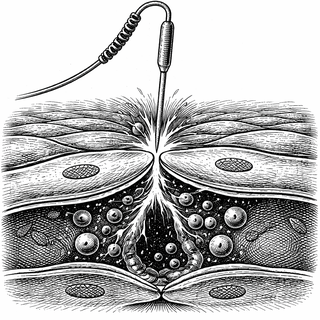
So what if you could temporarily open that barrier? Let the drugs through, then close it back up? A study in eLife digs into exactly this question, using single-cell RNA sequencing to figure out what happens at the molecular level when electroacupuncture temporarily opens the blood-brain barrier in rats.
Wait, Acupuncture Does What Now?
Okay, let's address the elephant in the room. Acupuncture can be a controversial topic, often lumped together with other alternative medicine approaches that don't have strong scientific support. But electroacupuncture, where electrical stimulation is applied through the needles, is increasingly being studied as a physical intervention with measurable physiological effects. It's not about mystical energy meridians. It's about specific electrical stimulation patterns affecting the nervous system.
Previous research had already shown that certain electroacupuncture protocols could temporarily open the blood-brain barrier in rats. The effect was real and reproducible. But knowing that something works is different from knowing how it works. And understanding the mechanism is what lets you optimize the approach, develop better protocols, or maybe find alternatives that achieve the same effect more efficiently.
That's where this study comes in. The researchers used single-cell RNA sequencing, one of the most powerful tools in modern molecular biology, to see exactly which cells respond and how when electroacupuncture opens the BBB.
A Tour of the Blood-Brain Barrier
Before we get into what they found, let's talk about what the blood-brain barrier actually is. It's not one thing. It's a complex system involving multiple cell types working together.
Endothelial cells form the actual wall of the blood vessels, and in the brain, they're sealed together more tightly than anywhere else in the body. Unlike blood vessels in your arm, which let stuff slip through relatively easily, brain endothelial cells are locked together with specialized tight junctions.
Pericytes wrap around the outside of these blood vessels, providing structural support and communicating with the endothelial cells to help regulate what gets through.
Astrocytes, star-shaped brain cells, extend little feet that touch the blood vessels and play a role in regulating barrier function. They're not just passive bystanders. They actively participate in controlling what the barrier lets through.
Opening the blood-brain barrier isn't about attacking one of these cell types. It's about coordinating changes across all of them.
What Single-Cell Sequencing Reveals
Here's why single-cell RNA sequencing is such a game-changer for studies like this. Older techniques would grind up tissue and look at the average gene expression across millions of cells. That's useful, but it misses the point that different cell types do different things. Changes in astrocytes might be completely opposite from changes in endothelial cells, and averaging them together gives you misleading results.
Single-cell sequencing lets you separate out each cell type and see what's happening in each one individually. Which genes are turned on? Which are turned off? How do the cells differ before and after the treatment?
When the researchers applied this approach to the electroacupuncture-treated tissue, they could see coordinated changes across multiple cell types. Endothelial cells altered the expression of genes involved in those tight junctions that normally seal the barrier shut. Pericytes changed too, apparently adjusting their support and signaling functions. Astrocytes showed their own response patterns.
The molecular signature wasn't a single change in one cell type. It was a choreographed response across the whole barrier system.
Why This Matters for Getting Drugs Into Brains
The blood-brain barrier problem is one of the biggest challenges in neurological medicine. Brain cancers are hard to treat because chemotherapy drugs can't get in. Neurodegenerative diseases might be targetable if we could just deliver therapeutic molecules to the right places. Gene therapies for the brain are limited by the fact that you can't easily get the vectors through the barrier.
Current approaches to opening the BBB include focused ultrasound combined with microbubbles, which can temporarily loosen the barrier in specific locations. This works, but it requires specialized equipment and careful imaging guidance.
If electroacupuncture can achieve something similar, it represents a potentially much more accessible approach. Needles and electrical stimulators are available everywhere. If the technique works and is safe, it could democratize BBB opening in a way that expensive ultrasound setups cannot.
But here's the thing: you don't want to just randomly poke around. You want to understand the mechanism so you can optimize the approach. What stimulation frequencies work best? Which acupuncture points matter? How long does the opening last? Can you make it more or less pronounced?
The molecular data from this study provides a foundation for answering those questions. Once you know which pathways are being activated, you can test whether other approaches achieve the same molecular signature. You can look for drugs that might enhance or replicate the effect. You can design better protocols based on mechanism rather than trial and error.
The Goal Is Controlled, Reversible Opening
To be clear, the goal here isn't to permanently break the blood-brain barrier. That would be catastrophic. You want temporary, reversible, controlled opening. Get the drugs in, then close back up. Keep the brain protected during normal conditions.
The good news from studies like this is that the opening does appear to be reversible. The molecular changes induced by electroacupuncture are transient. The system returns to normal afterward. This is exactly what you'd want from a clinical approach.
The challenge is making sure the opening is safe, that it's sufficient to let therapeutic molecules through, and that it can be targeted to the right places in the brain. This study is one step in understanding the mechanism well enough to work toward those goals.
Where Does This Go From Here?
There's a lot more work to be done. This is a rat study, and what works in rats doesn't always translate to humans. The molecular mechanisms identified here need to be validated across different conditions and species. The actual drug delivery improvements enabled by this approach need to be tested.
But the fact that we can now see at single-cell resolution what electroacupuncture does to the blood-brain barrier is a real advance. It takes something that was previously somewhat mysterious and makes it tangible, molecular, and improvable.
Whether electroacupuncture itself becomes a clinical BBB-opening tool or whether this research just points toward mechanisms that can be exploited in other ways, understanding what's happening at the cellular level is how you make progress. The brain's bouncer might be strict, but it's not immune to persuasion.
Reference: Bhattacharyya S, et al. (2025). Single-cell transcriptome sequencing for opening the blood-brain barrier through specific mode electroacupuncture stimulation. eLife. doi: 10.7554/eLife.107938 | PMID: 41134133
Disclaimer: The image accompanying this article is for illustrative purposes only and does not depict actual experimental results, data, or biological mechanisms.