
Imagine the most stubborn houseguest you've ever had. Now imagine that houseguest is a tumor that literally plugs itself into your brain's electrical grid, hijacks your neurons, and throws a party every time your brain cells try to communicate. That's glioblastoma - and it's been getting away with this nonsense for far too long.
A recent gathering of over 130 neuro-oncology experts at the 2024 Christopher Davidson Forum has produced a consensus paper that essentially reads like a battle plan against the brain's most notorious squatter. And honestly? The strategies they're cooking up are wild.
The Problem: This Tumor Has Read the Playbook
Here's the thing about glioblastoma (GBM): it's not just aggressive - it's clever. With a median survival of just 12-15 months and a five-year survival rate hovering around 5-7%, GBM has been dunking on oncologists for decades. The standard playbook - surgery, radiation, temozolomide chemotherapy - extends life but rarely wins the war.
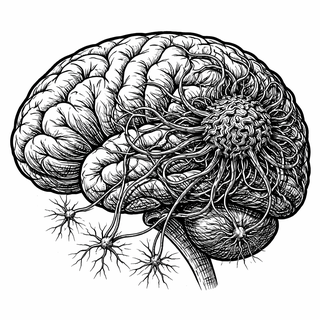
Why? Because GBM cells are basically that friend who knows all your passwords. They hide behind the blood-brain barrier like it's a VIP rope. They deploy stem cells that shrug off chemotherapy. They even form actual synapses with your neurons, essentially becoming part of your brain's communication network. In 2019, researchers discovered that the more neurons fire, the more tumors grow - and the more tumors grow, the more they excite surrounding neurons. It's a feedback loop that would make any social media algorithm jealous.
Cancer Neuroscience: When Tumors Go Full "Single White Female"
One of the most eye-opening sections of this consensus paper tackles "cancer neuroscience" - a field that sounds like it was named by a Marvel villain but is actually revolutionizing how we understand brain tumors. Turns out, glioblastoma doesn't just grow near neurons; it integrates with them.
The tumor cells form functional connections using proteins like neuroligin-3, which normally helps healthy brain cells communicate. When researchers blocked neuroligin-3 production in mice, the cancer just... stopped. Like unplugging a smart home device that won't stop ordering things from Amazon.
This discovery opens up entirely new therapeutic angles. If we can sever these neural connections - essentially giving the tumor the silent treatment - we might finally have a way to slow its relentless expansion.
The Immune System's Frustrating Day at Work
Your immune system would love to handle this problem. Really, it would. But GBM has essentially built a fortress of immunosuppression around itself. The tumor microenvironment is so hostile to immune cells that T-cells basically show up, look around, and file for early retirement.
The forum experts identified this as priority number one. New strategies include oncolytic viruses that not only kill tumor cells but also "wake up" the immune system - kind of like setting off a fire alarm to get everyone's attention. Early trials with engineered viruses like CAN-3110 have shown that a single injection can draw immune cells deep into tumors and keep them actively fighting.
There's also work on CAR-T cell therapy, checkpoint inhibitors, and vaccines targeting tumor-specific mutations. The catch? Getting any of these past the blood-brain barrier remains the neurological equivalent of getting through airport security with a full-size shampoo bottle.
Nanotechnology: Very Small Solutions to Very Big Problems
This is where things get genuinely futuristic. The consensus paper highlights neuro-nanotechnology as a critical frontier - essentially using microscopic delivery vehicles to sneak therapeutics past the blood-brain barrier.
Think of it like this: if the blood-brain barrier is a bouncer, nanoparticles are the VIP guests who know the secret handshake. Researchers are developing spherical nucleic acids that can travel from the nasal passages along cranial nerve routes directly into the brain, bypassing the barrier entirely. It sounds like science fiction, but early results in mice show complete tumor clearance.
The Call to Action: Get Mad, Get Organized
Perhaps the most striking aspect of this position paper is its tone. This isn't just a literature review - it's a rallying cry. The authors explicitly call for multi-disciplinary, cross-institutional collaboration to accelerate clinical translation.
They're essentially saying: we know enough to make real progress, but the field is too fragmented. Time to stop working in silos and start working like the tumor does - connected, coordinated, and relentless.
For a disease that has resisted our best efforts for so long, that kind of unified scientific aggression might be exactly what's needed. The tumor has been reading our playbook for years. It's time we read its.
References
-
Dunn GP, Yu KKH, Krucoff MO, et al. Recent progress and future directions to advance glioblastoma research: A consensus perspective from the 2024 Christopher Davidson Forum. Neuro-oncology. 2025. DOI: 10.1093/neuonc/noag043. PMID: 41871616
-
Nussinov R, Yura K, Jang H. Advances in Glioblastoma Therapy: An Update on Current Approaches. Cells. 2023;12(18):2302. PMCID: PMC10669378
-
Monje M, et al. Cancer neuroscience: state of the field, emerging directions. Cell. 2023;186(8):1689-1707. PMCID: PMC10107403
-
Winkler F, Venkatesh HS, Monje M. Cancer Neuroscience of Brain Tumors: From Multicellular Networks to Neuroscience-Instructed Cancer Therapies. Cancer Discovery. 2025;15(1):39-55. PMID: 39801234
-
Washington University in St. Louis. The return of the Christopher Davidson Forum. Taylor Family Department of Neurosurgery. 2024. Available at: neurosurgery.wustl.edu
Disclaimer: The image accompanying this article is for illustrative purposes only and does not depict actual experimental results, data, or biological mechanisms.