
Ever notice how you don't feel itchy when you're running from danger? Okay, maybe you haven't been chased by a bear lately, but your ancestors certainly were, and they needed a way to ignore that mosquito bite while fleeing predators. It turns out your brain has a built-in "shut up, I'm busy surviving" switch for itch sensations, and scientists just figured out exactly where it lives.
The Hypothalamus: Your Brain's Overworked Middle Manager
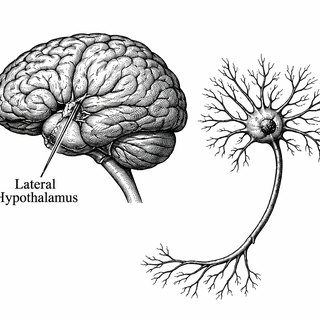
Researchers at the Indian Institute of Science in Bengaluru have identified a cluster of stress-responsive neurons in the lateral hypothalamus that act as a biological mute button for itching. The lateral hypothalamus is one of those brain regions that seems to have its fingers in everything: hunger, arousal, reward, sleep, and apparently, deciding whether you should scratch that itch or focus on more pressing matters.
Using some seriously clever techniques, including genetic labeling that lights up neurons when they're active during stress, the team found that activating these stress-sensitive neurons caused mice to stop scratching. Both acute itch (the "something just bit me" kind) and chronic psoriatic itch got dialed down when these neurons fired up. The neurons send their signals to the periaqueductal gray (PAG), a brainstem structure that's basically the brain's volume control for unpleasant sensations.
"We saw that surprisingly, acute stress was able to suppress acute itching," explained Jagat Narayan Prajapati, the study's first author.
Plot Twist: Chronic Stress Breaks the System
Here's where things get complicated. While a quick burst of stress (think: job interview, near-miss car accident) activates this itch-suppressing circuit beautifully, chronic stress does the opposite. In mice with psoriasis-like inflammation, these same neurons became hyperexcitable and essentially malfunctioned. Instead of providing relief, they seemed to contribute to making the itch worse.
This finding resonates with what dermatologists have observed for decades: somewhere between 37% and 71% of psoriasis patients report stress as a trigger that worsens their symptoms. The brain-skin connection isn't just psychosomatic hand-waving. There's actual circuitry involved, and chronic stress appears to rewire it in unhelpful ways.
Why Evolution Gave Us This Strange System
From an evolutionary perspective, this makes perfect sense. If you're being chased by something that wants to eat you, the last thing you need is to pause for a good scratch. Acute stress suppressing itch is a survival feature. Your nervous system essentially says, "We'll deal with that bug bite later, assuming we survive."
But our modern lives are full of stress that doesn't resolve. Financial worries, work pressure, and doomscrolling don't trigger a quick fight-or-flight response that ends. They simmer constantly, and your poor lateral hypothalamus doesn't know the difference between "bear attack" and "rent is due." The system designed for brief emergencies gets stuck in overdrive, and the protective mechanism becomes part of the problem.
What This Means for Treatment
Current treatments for chronic itch conditions like psoriasis mostly target the skin and immune system. Creams, biologics, light therapy. All of these work at the periphery, where the itch signals originate. But this research suggests the brain deserves more attention.
"By identifying the specific neural circuit that links stress to itch, we are opening the possibility of targeting these brain mechanisms to better manage chronic stress-induced worsening of itch," said senior author Arnab Barik.
The PAG has already been implicated in modulating both the sensory and emotional components of itch. Future treatments might include drugs that specifically target this hypothalamus-to-brainstem pathway, potentially offering relief for the millions of people whose chronic itch worsens under stress.
The Bigger Picture
This study adds to growing evidence that itch isn't just a skin problem. It's a whole-body experience shaped by your emotional state, stress levels, and brain chemistry. The molecular mechanisms of psoriatic itch involve neurotransmitters, immune cells, and hormones all talking to each other in complicated ways.
For now, if you have chronic itch that flares when you're stressed, know that you're not imagining the connection. Your lateral hypothalamus is working overtime, and science is finally catching up to why.
References:
-
Prajapati JN, Hoque A, Pattanayak M, Sahu G, Barik A. Lateral hypothalamus directs stress-induced modulation of acute and psoriatic itch. Cell Reports. 2026;117025. DOI: 10.1016/j.celrep.2026.117025
-
Nattkemper LA, Tey HL, Valdes-Rodriguez R, et al. The Genetics of Chronic Itch: Gene Expression in the Skin of Patients with Atopic Dermatitis and Psoriasis with Severe Itch. Journal of Investigative Dermatology. 2018;138(6):1311-1317. PMCID: PMC7664892
-
Seo E, Yoon J, Jung SJ, et al. Cell type-specific modulation of sensory and affective components of itch in the periaqueductal gray. Nature Communications. 2019;10:4334. DOI: 10.1038/s41467-019-12316-0
-
Misery L, Dutray S, Chastaing M, et al. Psychosomatic factors in pruritus. Dermatologic Therapy. 2013;3(2):131-147. PMCID: PMC3690364
Disclaimer: The image accompanying this article is for illustrative purposes only and does not depict actual experimental results, data, or biological mechanisms.