
Anyone who's ever broken out in itchy, angry skin patches right before a big presentation has probably muttered, "It's just stress." Doctors would nod sympathetically while secretly thinking, we know stress makes eczema worse, but we have no idea how. Well, a team of researchers just caught the culprit: a specific set of nerve cells that act as tiny, overzealous messengers between your stressed-out brain and your very irritated skin.
The Nerve of Those Neurons
Here's the setup. Atopic dermatitis - the clinical term for eczema that makes it sound fancier than it feels - affects roughly 200 million people worldwide (Tian et al., 2023). For decades, patients have reported that stress makes their flare-ups worse, and for decades, the scientific explanation was basically a shrug emoji.
Enter Jiahe Tian and colleagues, who published their findings in Science this March (Tian et al., 2026). They identified a subset of sympathetic nerve cells - specifically, prodynorphin-positive (Pdyn+) noradrenergic neurons - that preferentially wire themselves into hairy skin. Think of these neurons as your body's most dramatic middle managers: the moment your brain sends a stress signal, they immediately escalate the situation by calling in the immune system's heaviest hitters.
Eosinophils: The Overreacting First Responders
Those heaviest hitters? Eosinophils - white blood cells typically associated with fighting parasites and making allergies miserable. When Pdyn+ neurons detect stress signals, they release chemical messengers that recruit eosinophils to the skin through a signaling pathway called CCL11-CCR3. Once the eosinophils arrive, the neurons activate them via beta-2 adrenergic receptors, essentially handing them a megaphone and yelling "GO."
The result is inflammation, itching, and the kind of skin flare-up that makes you want to cancel all your plans and sit in an oatmeal bath.
Mice, Lasers, and Proof
The researchers didn't just theorize this - they proved it with some genuinely impressive experiments. Using mice with eczema-like skin conditions, they genetically removed either the Pdyn+ neurons or the eosinophils. In both cases, stress-induced flare-ups essentially stopped. The inflamed skin calmed down as if someone had finally turned off the fire alarm.
Then, because scientists love a good plot twist, they did the opposite. Using optogenetics - a technique where you literally control neurons with light (yes, really) - they activated the Pdyn+ neurons on demand. The mice developed skin inflammation even without being stressed, confirming these neurons were running the show.
It's Not Just Mice Being Dramatic
To make sure this wasn't a rodent-only phenomenon, the team studied 51 human patients with eczema. The pattern held: people reporting higher stress levels had more eosinophils accumulating in their skin and worse flare-ups. Lower stress, fewer eosinophils, happier skin. The correlation was about as subtle as a neon sign.
As Nicolas Gaudenzio and Lillan Basso noted in an accompanying Science perspective, this work "offers a mechanistic explanation for the well-documented but poorly understood link between stress and atopic dermatitis flare-ups" (Naddaf, 2026). Translation: we finally have receipts.
Why This Actually Matters
Right now, eczema treatment mostly involves topical creams and telling patients to "manage their stress" - which, if you've ever tried to relax while your skin is on fire, you know is spectacularly unhelpful advice. This research opens the door to targeting the actual nerve-immune pipeline. Imagine a treatment that blocks the CCL11-CCR3 recruitment pathway or dampens Pdyn+ neuron activity, cutting the stress-to-rash connection at its source.
The broader picture is equally exciting. This neuroimmune axis - the crosstalk between nerves and immune cells - is increasingly recognized as a key driver in conditions from eczema to psoriasis to inflammatory bowel disease (Liu et al., 2023; Li et al., 2025). Understanding how your nervous system conspires with your immune system to ruin your day could reshape treatment for a whole family of stress-sensitive diseases.
So next time your skin decides to stage a rebellion during finals week or tax season, know this: it's not in your head. Well, technically it is - it starts in your brain, travels down very specific nerves, and ends with eosinophils throwing a party in your skin that nobody wanted. But at least now, science knows exactly which wires to cut.
References
-
Tian, J., Cao, Y., Li, Y., Sun, J., Zhan, C., Ni, W., Zheng, Y., Wang, Y., & Liu, S. (2026). A sympathetic-eosinophil axis orchestrates psychological stress to exacerbate skin inflammation. Science, 391(6791), 1269-1277. DOI: 10.1126/science.adv5974 | PMID: 41855337
-
Naddaf, M. (2026). Stress can cause eczema to flare up - now we know why. Nature. DOI: 10.1038/d41586-026-00876-3 | PMID: 41857217
-
Tian, J., Zhang, D., Yang, Y., Huang, Y., Wang, L., Yao, X., & Lu, Q. (2023). Global epidemiology of atopic dermatitis: a comprehensive systematic analysis and modelling study. British Journal of Dermatology, 190(1), 55-61. DOI: 10.1093/bjd/ljad339 | PMID: 37705227
-
Liu, A. W., Gillis, J. E., Sumpter, T. L., & Kaplan, D. H. (2023). Neuroimmune interactions in atopic and allergic contact dermatitis. Journal of Allergy and Clinical Immunology, 151(5), 1169-1177. DOI: 10.1016/j.jaci.2023.03.013 | PMID: 37149370 | PMC: PMC10167546
-
Li, D., Han, Y., Zhou, J., Yang, H., Chen, J., Tey, H. L., & Tan, T. T. Y. (2025). Mast cell-neuron axis as a core mechanism in chronic pruritus of atopic dermatitis: from mechanistic insights to therapeutic targets. Frontiers in Immunology, 16, 1645095. DOI: 10.3389/fimmu.2025.1645095 | PMID: 41235218 | PMC: PMC12604997
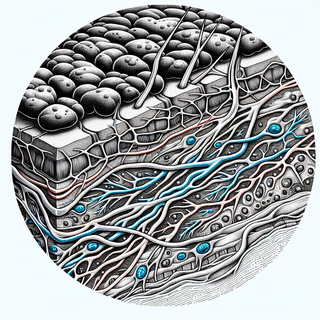
Disclaimer: The image accompanying this article is for illustrative purposes only and does not depict actual experimental results, data, or biological mechanisms.