
Your brain cells have a pretty exclusive club when it comes to firing electrical signals. Neurons earned that privilege through billions of years of evolutionary fine-tuning. So imagine the surprise when researchers caught glioblastoma tumor cells - the most aggressive brain cancer known to medicine - crashing the party, sending their own electrical impulses like they owned the place.
A new study published in Neuro-Oncology has pulled off something remarkable: combining patch-clamp electrophysiology (basically, eavesdropping on individual cells with a tiny glass pipette) with single-cell genomic analysis to profile tumor cells at the leading edge of human glioblastoma. And what they found has some wild implications for how we understand the deadliest brain cancer around.
The Brain's Worst Houseguest
Glioblastoma is the overachiever nobody asked for. It's the most common and aggressive primary brain cancer, with a median survival of about 10-13 months. It resists chemotherapy, laughs at radiation, and almost always comes back after surgery. About 3 in 100,000 people develop it each year, and despite decades of research, the survival numbers have barely budged.
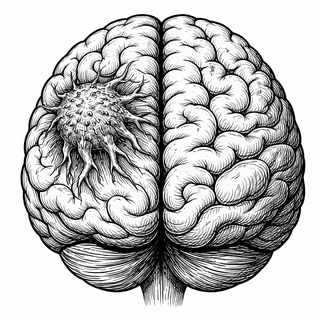
What makes glioblastoma particularly sneaky is how it infiltrates. Rather than sitting in one neat lump, it sends tendrils of tumor cells snaking through healthy brain tissue, setting up shop at what scientists call the "leading edge" - the invasion front where cancer meets normal brain.
Tumor Cells With an Electrical Side Hustle
Tong and colleagues wanted to know what these leading-edge cells were actually doing, electrically speaking. Using tissue slices from glioblastoma patients' surgeries, they poked individual cells with patch-clamp electrodes (as one does on a Tuesday) and simultaneously sequenced each cell's RNA to figure out its genetic identity.
The technique, called Patch-seq, is the neuroscience equivalent of reading someone's diary while recording their phone calls. You get the full picture: what the cell does (electrophysiology), what it looks like (morphology from dye filling), and what it is (transcriptomics).
Here's the kicker: more than half of the cells at the leading edge fired aberrant action potentials - electrical spikes that look like a neuron's signal, but... off. Think of it like a cover band that knows all the songs but plays them in slightly the wrong key. These aren't the crisp, rapid-fire signals of a healthy neuron. They're slower, weirder, and happening in cells that have no business generating them.
The Identity Theft Gets Weirder
Perhaps the most head-scratching finding? It wasn't just the tumor cells doing this. Non-tumor cells in the neighborhood showed the same behavior - depolarized membrane potentials, elevated input resistance, and those same aberrant spikes. The tumor had essentially corrupted the entire electrical neighborhood.
The transcriptomic data revealed that this spiking behavior showed up across multiple glioblastoma cell states and correlated with lower proliferation but higher inflammatory, immune, and mesenchymal transition pathways. In other words, the spiking cells weren't the ones dividing fastest - they were busy doing something else entirely.
This mirrors a bombshell finding from 2024, when Curry and colleagues discovered "GABA-OPC" hybrid cells in IDH-mutant gliomas - tumor cells that are basically half-neuron, half-glial-precursor, firing action potentials and apparently associated with better patient survival. The current study extends this concept to glioblastoma (IDH-wildtype), the far more aggressive cousin, suggesting neuronal mimicry might be a universal trick across glioma types.
Why Your Brain Tumor Playing Pretend Matters
This isn't just a curiosity. The field of cancer neuroscience has exploded in recent years with discoveries that brain tumors physically wire themselves into neural circuits, hijacking the brain's communication infrastructure to fuel their own growth. Venkatesh and colleagues showed in 2019 that gliomas form actual synapses with neurons, and Krishna and colleagues demonstrated in 2023 that glioblastomas remodel functional neural circuits in ways that directly decrease patient survival.
The new finding adds another layer: the tumor cells themselves are generating electrical activity, not just passively receiving it. That opens up entirely new questions about whether disrupting this aberrant firing could slow tumor progression - a therapeutic angle that didn't exist five years ago.
We're still early in understanding what these spiking tumor cells are really up to. But one thing's clear: glioblastoma isn't just growing in your brain. It's learning to speak the language.
References
-
Tong T, Hendriksen JD, Elbæk KJ, et al. Combined Patch-clamp Electrophysiology and Single-Cell Genomic Analysis Reveal Spiking Tumor Cells at the Neocortical Glioblastoma Interface in Humans. Neuro-Oncology. 2025. DOI: 10.1093/neuonc/noag059. PMID: 41857760
-
Curry RN, Ma Q, McDonald MF, et al. Integrated electrophysiological and genomic profiles of single cells reveal spiking tumor cells in human glioma. Cancer Cell. 2024;42(10):1713-1728.e6. DOI: 10.1016/j.ccell.2024.08.009. PMID: 39241781. PMCID: PMC11479845
-
Venkatesh HS, Morishita W, Geraghty AC, et al. Electrical and synaptic integration of glioma into neural circuits. Nature. 2019;573(7775):539-545. DOI: 10.1038/s41586-019-1563-y. PMID: 31534222. PMCID: PMC7038898
-
Krishna S, Choudhury A, Keough MB, et al. Glioblastoma remodelling of human neural circuits decreases survival. Nature. 2023;617(7961):599-607. DOI: 10.1038/s41586-023-06036-1. PMID: 37138086
Disclaimer: The image accompanying this article is for illustrative purposes only and does not depict actual experimental results, data, or biological mechanisms.