
Picture this: you hand the same road map to 20 different GPS companies and ask them to draw driving directions from New York to Los Angeles. You'd expect roughly the same route, right? Maybe a few scenic detours, but the general picture should hold up. Now imagine every single company comes back with wildly different highways, some of which don't even exist. Welcome to the current state of brain tractography.
Wait, What's Tractography?
Your brain runs on about 100 billion neurons, and they don't just sit there in polite silence - they're wired together by white matter tracts, bundles of cable-like axons wrapped in fatty myelin that shuttle signals between brain regions at ridiculous speed. Tractography is the technique neuroscientists use to map those cables without, you know, opening up your skull and poking around with a flashlight.
Here's the trick: water molecules inside your brain tend to flow along these axon bundles like tiny kayakers following a river. Using a special type of MRI called diffusion MRI, researchers can track which direction the water is drifting and, from that, reverse-engineer the brain's wiring diagram. The result is those gorgeous rainbow spaghetti images you've probably seen on science magazine covers - each colorful strand representing a reconstructed neural pathway.
It's clever. It's powerful. And according to a new review by Jon Haitz Legarreta and a small army of 16 co-authors, it's also kind of a mess (Legarreta et al., 2025).
The "Every Lab Does It Differently" Problem
The core issue is almost painfully simple: there's no standard way to do tractography. Lab A uses one MRI scanner setting, Lab B uses another. Lab A's software traces fibers using Algorithm X, while Lab B swears by Algorithm Y. Lab A draws the boundaries of the corticospinal tract one way; Lab B's neuroanatomist draws them somewhere slightly (or not-so-slightly) different.
The result? Two labs can scan the same brain and come away with different maps of its wiring. That's not a small academic quibble - it means tractography results often don't replicate across studies, which is sort of the one thing science absolutely needs to work.
And the numbers are rough. The Tractostorm project, which asked experts worldwide to manually segment the same white matter bundle, found that inter-rater agreement hovered around a 0.65 Dice score (Rheault et al., 2020). For context, a perfect match is 1.0. Even more sobering, a landmark 2017 study showed that tractography algorithms produced false positive connections - pathways that literally do not exist - in about 64% of reconstructed bundles (Maier-Hein et al., 2017). Your brain's GPS is confidently routing you through phantom highways.
Why This Actually Matters
This isn't just an "academics arguing about decimal places" situation. Neurosurgeons use tractography to plan operations - specifically, to avoid cutting through critical white matter tracts while removing tumors. If your wiring map is wrong, you risk real damage to motor control, language, or vision. No pressure.
Beyond the operating room, tractography underpins large-scale studies of brain connectivity in Alzheimer's disease, traumatic brain injury, multiple sclerosis, and neurodevelopment. If results can't be compared across hospitals and research centers, the whole enterprise stalls. It's like trying to build a national weather forecast when every city measures temperature in a different unit and nobody agrees on where to put the thermometers.
The Fix: Standardize Everything (Yes, Everything)
Legarreta and colleagues lay out a roadmap for getting tractography's house in order, and it touches basically every step of the pipeline:
Data acquisition - MRI scanners vary in field strength, gradient directions, and resolution. The paper argues for consensus protocols so that brain scans from Tokyo and Toronto can actually be compared.
Spatial referencing - Different software packages define coordinate systems differently, which is the neuroimaging equivalent of one country using miles while another uses kilometers, and a third one just vibes it.
Preprocessing - Noise removal, motion correction, distortion correction - each step has multiple valid approaches, and the choices cascade. Pick a different denoising method and you might get different tracts downstream.
Tractography reconstruction - Deterministic vs. probabilistic algorithms, local vs. global approaches, different stopping criteria. The options multiply fast. A follow-up to Tractostorm showed that simply sharing a detailed dissection protocol improved reproducibility significantly (Rheault et al., 2022), which suggests that sometimes the fix is embarrassingly low-tech: just write better instructions.
Quality control - Automated pipelines to catch bad data before it contaminates downstream analyses. Right now, quality control is inconsistent at best.
The Bottom Line
Tractography is one of the only tools we have for mapping the living brain's structural wiring, and that makes it incredibly valuable. But valuable tools need calibration. You wouldn't trust a ruler that gives different measurements depending on who holds it.
The field has the talent and the technology. What it needs now - as this review makes thoroughly clear - is the boring, unglamorous, absolutely essential work of agreeing on standards. Because the brain is complicated enough without us making the maps worse.
References
-
Legarreta, J.H., Schiavi, S., Tang, W., et al. (2025). What needs to be standardized for reliable, reproducible, and robust tractography? GigaScience, 14, giag034. DOI: 10.1093/gigascience/giag034. PMID: 41880537
-
Rheault, F., De Benedictis, A., Daducci, A., et al. (2020). Tractostorm: The what, why, and how of tractography dissection reproducibility. Human Brain Mapping, 41(7), 1859-1874. DOI: 10.1002/hbm.24917. PMID: 31925871
-
Maier-Hein, K.H., Neher, P.F., Houde, J.C., et al. (2017). The challenge of mapping the human connectome based on diffusion tractography. Nature Communications, 8, 1349. DOI: 10.1038/s41467-017-01285-x. PMID: 29116093
-
Rheault, F., Bayrak, R.G., Wang, X., et al. (2022). Tractostorm 2: Optimizing tractography dissection reproducibility with segmentation protocol dissemination. Human Brain Mapping, 43(7), 2134-2147. DOI: 10.1002/hbm.25777. PMID: 35141980
-
Schilling, K.G., Nath, V., Hansen, C., et al. (2019). Challenges in diffusion MRI tractography - Lessons learned from international benchmark competitions. Magnetic Resonance Imaging, 57, 194-209. DOI: 10.1016/j.mri.2018.11.014. PMID: 30503948
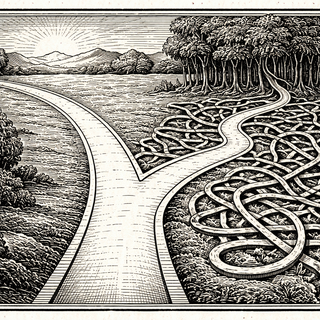
Disclaimer: The image accompanying this article is for illustrative purposes only and does not depict actual experimental results, data, or biological mechanisms.