
Your immune system is supposed to be your bodyguard - that loyal friend who spots trouble and handles it before you even notice. But sometimes, like an overzealous bouncer, it gets confused about who belongs in the club. And when this mix-up happens during pregnancy? The consequences can ripple across generations.
A new study in Cell Reports has revealed something genuinely unsettling: certain rogue antibodies from a mother's immune system can sneak across the placenta and mess with the developing brain's wiring diagram. We're talking about antibodies that mistakenly target NMDA receptors - the brain's master switches for learning, memory, and basically getting neurons to talk to each other properly.
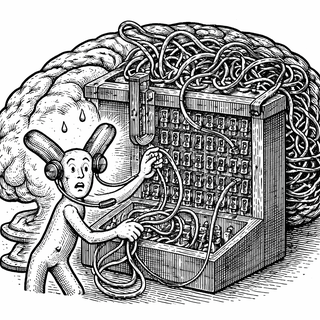
The Brain's Telephone System Gets Prank Called
Think of NMDA receptors as the switchboard operators of your nervous system. They control the flow of calcium ions into neurons, which is essentially how brain cells decide whether to fire off messages or sit quietly. These receptors are especially busy during fetal development when the brain is laying down its foundational circuitry. The NR1 subunit - the component targeted by these troublemaking antibodies - is so essential that mice born without it can't even breathe or feed on their own.
Here's where it gets interesting. Researchers at the University of Würzburg and Charité Berlin used a clever approach: they gave pregnant mice these NR1-targeting autoantibodies and then watched what happened to their offspring's brains. Spoiler alert: nothing good.
GABA Gets Ghosted
Using some seriously impressive technology - including in vivo acousto-optic calcium imaging (think of it as watching neurons send text messages in real time) and patch-clamp recordings - the team discovered that these maternal antibodies disrupted GABAergic transmission in the hippocampus. For the non-neuroscientists: GABA is the brain's primary "chill out" signal. It's the inhibitory neurotransmitter that tells overexcited neurons to take a breath and calm down.
In a developing brain, GABA plays a surprisingly complex role. Early on, it actually excites neurons and helps guide the formation of proper neural circuits. The switch from excitatory to inhibitory GABA signaling is one of the key milestones in brain maturation. When those NR1 antibodies showed up uninvited, this carefully choreographed developmental dance went sideways.
The CA1 pyramidal cells - the main output neurons of the hippocampus and absolutely crucial for memory formation - showed impaired GABAergic input. Their computational modeling suggested this wasn't just a minor hiccup but a fundamental disruption of how these circuits were supposed to mature.
Why This Matters (And Why It's Not Panic Time)
Before anyone starts worrying about every pregnancy ever, let's put this in context. About 1% of the general population carries these NMDA receptor autoantibodies, according to previous research from the same group. Most of these people are completely fine because the blood-brain barrier keeps these antibodies from causing trouble in their own brains. But the developing fetal brain? That barrier is still under construction.
The connection to anti-NMDA receptor encephalitis - a severe autoimmune brain inflammation that disproportionately affects young women - adds another layer to this story. Clinical studies have generally found reassuring outcomes for babies born to mothers with this condition, with only about 2% showing developmental delays. But those studies couldn't explain the mechanisms, and long-term follow-up data remains thin.
This mouse study starts filling in those gaps. It suggests that even when babies appear outwardly normal, subtle disruptions in hippocampal circuit formation could potentially set the stage for later problems - potentially contributing to conditions like ADHD, autism spectrum disorder, or even schizophrenia further down the road.
The Silver Lining
The real power of this research isn't in identifying a new thing to worry about. It's in understanding a mechanism. If we know that maternal antibodies can disrupt GABAergic circuit maturation via NMDA receptor interference, we can potentially do something about it. Prenatal screening could identify at-risk pregnancies. Therapeutic interventions - perhaps plasmapheresis to filter out problematic antibodies - could theoretically prevent these effects.
The sequential development of synapses in the hippocampus, where GABAergic connections form before glutamatergic ones, means there might be specific windows of vulnerability. And windows of vulnerability can also be windows of opportunity for intervention.
This is how science actually works: not by providing immediate cures, but by illuminating the hidden pathways through which things go wrong. Every mechanism we understand is another potential point of intervention. And that's worth getting excited about - even if the findings themselves are a bit sobering.
References:
-
Majoros M, Zhang C, Rahmati V, et al. In utero exposure to NMDA receptor autoantibodies disrupts hippocampal circuit maturation. Cell Reports. 2026;117022. DOI: 10.1016/j.celrep.2026.117022
-
Clinical data and reporting quality in NMDAR-antibody encephalitis and pregnancy: a systematic review. PMC. 2025. PMCID: PMC11877225
-
DZNE Press Release: Autoantibodies in Pregnancy: A Cause of Behavioral Disorders in the Child? Link
-
The Establishment of GABAergic and Glutamatergic Synapses on CA1 Pyramidal Neurons is Sequential and Correlates with the Development of the Apical Dendrite. Journal of Neuroscience. 1999. Link
-
Perinatal outcome in anti-NMDAr encephalitis during pregnancy—a systematic review. PMC. 2024. PMCID: PMC11306544
Disclaimer: The image accompanying this article is for illustrative purposes only and does not depict actual experimental results, data, or biological mechanisms.