
You know that moment when you smell pizza and your mouth starts watering before you've even taken a bite? Or when Pavlov's dogs heard a bell and turned into slobbery messes? Turns out, scientists have been scratching their heads about where exactly these drool commands come from for over a century. Now, a team of researchers has finally cracked the case - and the answer involves a tiny cluster of neurons hiding in your brain stem that's been running the show this whole time.
Meet Your Mouth's Secret Operator
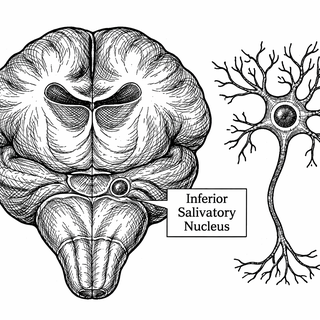
Park and Lee's new study in Cell Reports identifies what they call a "salivatory center" in the mouse brain stem - specifically, the inferior salivatory nucleus (IS for short, because neuroscientists love abbreviations). Think of it as mission control for your spit glands. These researchers discovered that activating a specific type of neuron in this region - ones that express choline acetyltransferase, if you're keeping score - is enough to turn on the saliva faucets.
But here's where it gets really interesting. The IS doesn't just sit there waiting for food to hit your tongue. It's actually running two operations simultaneously: the reflexive "food is here NOW" response and the learned "food is coming SOON" anticipation. It's like having a bouncer who checks IDs at the door AND reads the guest list ahead of time.
The Pavlov Connection (Yes, Those Dogs Again)
When Pavlov rang his famous bell in the early 1900s, he noticed his dogs would start drooling before the food even arrived. He called these "psychic secretions" - which sounds like something from a supernatural thriller but is actually just your brain being clever. The dogs had learned to associate the bell with incoming snacks, so they started pre-gaming their digestion.
What Park and Lee discovered is that this anticipatory drooling requires input from the gustatory cortex - the brain region that processes taste. When they blocked the connection between the gustatory cortex and the IS in mice, the animals could still drool when food hit their tongues, but they stopped drooling in anticipation of food cues. The reflexive response stayed intact; the learned response vanished.
It's like the brain stem handles the immediate "pizza in mouth" alert, while the cortex sends down advance warning that pizza is en route.
Why Should You Care About Mouse Drool?
Fair question. Here's the thing: salivation isn't just about making your mouth wet when you're hungry. Saliva is basically an unsung hero of your body - it protects your teeth, kicks off digestion, helps you taste things, and makes swallowing possible. When it goes wrong, life gets genuinely miserable.
About 1 to 4 million Americans suffer from Sjogren's syndrome, an autoimmune disorder that attacks the salivary glands and causes chronic dry mouth. Beyond the discomfort, this leads to rampant tooth decay, difficulty speaking and swallowing, and a significantly lower quality of life. Current treatments mainly involve drugs like pilocarpine that stimulate whatever salivary tissue remains, but they're far from perfect solutions.
Understanding exactly how the brain controls salivation could open doors to better treatments - not just for Sjogren's, but for anyone dealing with dry mouth from radiation therapy, medications, or aging.
The Circuit Speaks
Using fiber photometry (a technique that lets scientists watch neurons fire in real time), the researchers monitored the IS while mice experienced different tastes and textures. They found that IS activity tightly correlated with actual saliva output - when the neurons fired more, more spit flowed. The IS also responded to both taste and mechanical stimulation, suggesting it integrates multiple sensory inputs before deciding how much to crank up the saliva production.
Even more striking: the IS receives direct input from the gustatory cortex AND from local brain stem circuits. This dual input system explains why you can drool both reflexively (something sour hits your tongue) and predictively (you see a lemon). The hardware and software are working in concert.
What's Next?
This research provides what the authors call a "foundation for dissecting this autonomic response in health and disease." Translation: now that we know where the drool control center is and how it's wired, scientists can start figuring out what goes wrong when salivation fails - and maybe how to fix it.
So next time you start salivating at the smell of fresh cookies, give a little mental nod to your inferior salivatory nucleus. That tiny cluster of neurons has been running your drool response since before you could walk, integrating everything from pure reflex to learned anticipation. Your brain stem, it turns out, has been moonlighting as a very sophisticated saliva sommelier.
References
-
Park G, Lee H. A brain stem circuit integrating reflexive and anticipatory salivation. Cell Reports. 2026. DOI: 10.1016/j.celrep.2026.117067. PMID: 41832958.
-
Inferior Salivatory Nucleus. ScienceDirect Topics. Available at: https://www.sciencedirect.com/topics/neuroscience/inferior-salivatory-nucleus
-
Avery JA, et al. Distinct representations of basic taste qualities in human gustatory cortex. Nature Communications. 2019;10:820. DOI: 10.1038/s41467-019-08857-z
-
McLeod S. Pavlov's Dogs Experiment and Pavlovian Conditioning Response. Simply Psychology. 2024. Available at: https://www.simplypsychology.org/pavlov.html
-
Hammett TL, et al. An Update on the Lived Experience of Dry Mouth in Sjogren's Syndrome Patients. International Journal of Environmental Research and Public Health. 2022;19(2):820. PMCID: PMC8757894
Disclaimer: The image accompanying this article is for illustrative purposes only and does not depict actual experimental results, data, or biological mechanisms.