
Your gut has its own nervous system. Like, a whole one. Half a billion neurons wrapped around your intestines, running the show without asking your brain for permission. Scientists call it the enteric nervous system (ENS); everyone else calls it the "second brain." It controls everything from how fast your lunch moves through you to when your colon decides now is a good time to contract. Neat system. Shame diabetes keeps wrecking it.
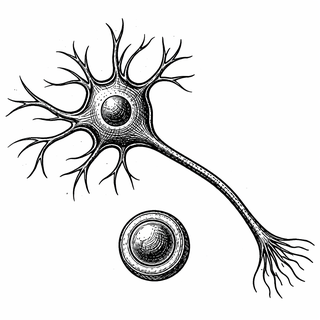
When Your Second Brain Starts Losing Neurons
Here's something that doesn't get nearly enough attention: diabetes doesn't just mess with your eyes, kidneys, and feet. It also slowly dismantles the nervous system in your gut. Diabetic patients show significantly higher rates of constipation and diarrhea - about 30% compared to roughly 15% in non-diabetic people - and their gastrointestinal transit slows to a crawl across every segment of the digestive tract (Abdalla, 2024).
The damage is structural. Chronic high blood sugar, oxidative stress, and inflammatory signaling kill off enteric neurons and glial cells, shrink the ganglia (the little nerve clusters that coordinate gut movements), and generally turn a well-oiled machine into a highway with half the traffic lights out. Current treatment? Basically just managing symptoms. Laxatives. Prokinetics. Hope.
Your Gut's Repair Crew Is Pulling Overtime (and Still Losing)
Your gut isn't totally defenseless. It has enteric neural precursor cells (ENPCs) - stem cell-like residents that can generate new neurons and glial cells to patch things up. Previous work showed that bone marrow stem cells can coax these precursor cells into action (Fan et al., 2023), and other researchers found that even a dietary sugar called L-fucose can kickstart ENS regeneration in diabetic mice (Yao et al., 2023).
The problem in diabetes? The ENPCs are trying. Neurogenesis and gliogenesis actually ramp up - like bringing in a dozen interns during a corporate meltdown and expecting them to save the quarterly report. Functionally insufficient. The new cells can't keep pace with the destruction.
The Cellular Self-Destruct Sequence
A team led by Rong Lin at Huazhong University of Science and Technology dug into the transcriptomics and found the answer hiding in the endoplasmic reticulum - each cell's protein-folding factory. In a study just published in the Journal of Clinical Investigation, they showed that in diabetic ENPCs, the ER is overwhelmed (Shi et al., 2026). Misfolded proteins pile up, triggering the unfolded protein response (UPR). Normally, the UPR is a rescue operation: slow down, fix the mess, get back to work.
But when ER stress goes chronic, the PERK branch of the UPR flips from "fix it" to "burn it all down," activating pro-apoptotic signals that push precursor cells toward self-destruction. Your gut's repair team wasn't just understaffed - it was being actively sabotaged from the inside. Honestly, relatable.
Bone Marrow's Care Package
This is where the real twist lands. The team took microvesicles - tiny membrane-wrapped packages naturally shed by bone marrow mesenchymal stem cells (BMSC-MVs) - and injected them into diabetic mice. These aren't whole cells. Think of them as cellular care packages: nanoscale bubbles packed with surface proteins and molecular instructions. They're more stable than whole stem cells, less immunogenic, and sidestep most of the ethical baggage (Jiao et al., 2024).
The BMSC-MVs traveled to the colon, got selectively gobbled up by ENPCs (not mature neurons, not glial cells - just the precursors), and dialed down the ER stress. With the PERK-driven death spiral shut off, the precursor cells could finally do their job. Functional neurogenesis and gliogenesis bounced back, ENS structure recovered, and - the part patients actually care about - gut motility improved. Effects held up eight weeks after the last dose.
The World's Most Specific Molecular Handshake
The mechanism is beautifully precise. A protein called vinculin on the microvesicle surface grabs onto talin-1 on the ENPCs. This molecular handshake triggers the ERK signaling pathway, which tells the ER stress machinery to stand down. Knock out vinculin on the bubbles or silence talin-1 on the precursor cells, and the whole rescue falls apart. No handshake, no uptake, no therapy.
The team confirmed the same ER stress signatures in human diabetic colon tissue. This isn't just a mouse story.
Why This Actually Matters
For the roughly 537 million adults living with diabetes worldwide, GI complications remain among the most common and least treatable aspects of the disease. This study doesn't just offer a new treatment candidate - it maps the exact molecular pathway (vinculin to talin-1 to ERK to ER stress suppression) that makes it work. That's the kind of mechanistic clarity that turns a mouse experiment into a clinical trial conversation.
The safety data looked clean too: no immune blowback, no liver or kidney red flags, and the microvesicles actually reduced gut inflammation markers. We're still in pre-clinical territory, and the road from mouse model to prescription pad is famously long. But a cell-free, targeted approach that rescues the gut's own repair system rather than replacing it? That's the kind of strategy that has legs.
Or, more accurately, the kind that has guts.
References:
-
Shi, H., Yao, H., Liu, Y., Fan, M., Cai, S., Xu, S., Jiang, C., Zhang, Y., Jiang, W., Qian, W., & Lin, R. (2026). BM-derived mesenchymal stem cell microvesicles protect enteric neural precursor cells and alleviate diabetes-associated enteric neuropathy. The Journal of Clinical Investigation, 136(6). DOI: 10.1172/JCI192437 | PMID: 41837279
-
Abdalla, M. M. I. (2024). Enteric neuropathy in diabetes: Implications for gastrointestinal function. World Journal of Gastroenterology, 30(22), 2852-2865. DOI: 10.3748/wjg.v30.i22.2852 | PMCID: PMC11212710
-
Fan, M., Shi, H., Yao, H., Wang, W., Zhang, Y., Jiang, C., & Lin, R. (2023). BMSCs promote differentiation of enteric neural precursor cells to maintain neuronal homeostasis in mice with enteric nerve injury. Cellular and Molecular Gastroenterology and Hepatology, 15(2), 511-531. DOI: 10.1016/j.jcmgh.2022.10.018
-
Yao, H., Shi, H., et al. (2023). L-Fucose promotes enteric nervous system regeneration in type 1 diabetic mice by inhibiting SMAD2 signaling pathway in enteric neural precursor cells. Cell Communication and Signaling, 21, 280. DOI: 10.1186/s12964-023-01311-0
-
Jiao, Y.-R., Chen, K.-X., Tang, X., Tang, Y.-L., Yang, H.-L., Yin, Y.-L., & Li, C.-J. (2024). Exosomes derived from mesenchymal stem cells in diabetes and diabetic complications. Cell Death & Disease, 15, 271. DOI: 10.1038/s41419-024-06659-w
Disclaimer: The image accompanying this article is for illustrative purposes only and does not depict actual experimental results, data, or biological mechanisms.