
Have you ever wondered if mice have musical preferences? Probably not. Most people have more pressing concerns. But some researchers asked exactly this question, and their answer came with a twist that nobody expected. A study in Cell Reports reveals that not only do mice develop sound preferences based on early experience, but male and female mice process these experiences completely differently. Same exposure, same brain region, totally different outcomes.
The relationship between brain activity and actual behavior? It flipped depending on whether you were looking at a male or female mouse. This is the kind of result that makes researchers put down their coffee and say "wait, what?"
When Scientists Play Classical Music for Rodents
The experimental setup here is actually kind of delightful. Researchers took young mice during their critical developmental windows (the period when brains are most plastic and experience leaves the deepest marks) and exposed them to one of three auditory environments: music, non-music sounds, or silence.
For the music condition, they went with Beethoven's 9th Symphony, first movement. A classy choice for rodent enrichment, if you ask me. The non-music group got exposure to random auditory stimulation. And the silence group got exactly what it sounds like: quiet.
Weeks later, after these mice had grown up with their respective sonic childhoods, the researchers tested what sounds the adult mice actually preferred when given a choice. Would the Beethoven mice turn into little classical music snobs? Would the silence mice crave peace and quiet?
The Plot Twist: It Depends on Whether You're a Boy or Girl Mouse
Here's where the data got interesting. Male mice that were raised in silence developed a robust preference for quiet environments compared to naive controls who hadn't had the silence exposure. They actively chose quiet over sound. Makes sense, right? You grow up with silence, you learn to like silence.
But female mice exposed to the exact same silent environment? Nothing. No preference shift. No learned love of quiet. Same developmental window, same auditory exposure, completely different behavioral outcome.
This wasn't a subtle effect or a borderline statistical result. The sex difference was clear and strong. Whatever mechanism was translating early auditory experience into later sound preference was operating differently in male versus female brains.
Looking Under the Hood: The Brain Activity Mystery
At this point, the researchers did what any good neuroscientists would do: they opened up the hood and looked at what the auditory cortex was doing. If behavior was different between sexes, surely brain activity would explain it, right?
Wrong. When they measured neural responses in the auditory cortex, mice exposed to either music or silence showed suppressed responses compared to naive controls. Both sexes. Both exposure conditions. The brain changes were there, and they were sex-independent.
So wait. The brains were changing the same way, but the behaviors were changing differently? Something wasn't adding up.
The Relationship Between Brain and Behavior Gets Weird
Here's the finding that really makes you think. The researchers looked at whether neural response patterns could predict behavioral preferences. In female mice, there was a robust negative correlation. More suppressed neural activity meant different preference patterns. The brain measurement and the behavior were linked in a predictable way.
In male mice? That relationship was absent. The same neural measurement that predicted behavior in females told you nothing useful about what male mice would prefer.
Let that sink in for a moment. The exact same brain region, the exact same measurement, and the relationship to behavior depends entirely on whether you're looking at a male or female animal. You could know everything about a male mouse's auditory cortex activity and still have no idea what sounds it would prefer.
Why This Matters Way Beyond Mice and Beethoven
This finding has implications that extend far beyond rodent music appreciation. A huge amount of neuroscience research happens in male-only cohorts, often because female hormonal cycles are seen as adding complexity. The assumption is usually that male results will generalize, or that any sex differences will be minor variations on a theme.
This study suggests that assumption might be deeply wrong. It's not just that males and females might show different levels of some effect. The fundamental relationship between brain activity and behavior might be organized differently depending on sex. You literally cannot assume that understanding the male brain-behavior relationship tells you anything about the female one.
For translational research (the kind that's trying to develop treatments for humans), this is a big deal. If you're developing interventions based on brain activity measurements, and the relationship between those measurements and behavior differs by sex, you might be building your entire treatment strategy on a foundation that only applies to half your patients.
The Nature-Nurture Question Just Got More Complicated
People love asking whether behavior is due to nature or nurture, genetics or environment. This study throws another variable into the mix: sex. It's not just what you're exposed to, it's how your particular brain is wired to process that exposure.
A male mouse and a female mouse can have identical genetic backgrounds, identical early environments, identical auditory experiences, and end up with different sound preferences because their brains relate experience to behavior in fundamentally different ways.
This doesn't mean sex determines everything, or that individual variation doesn't matter. But it does mean we can't keep pretending sex is a minor variable that washes out in large enough samples. For some questions, it's the whole ballgame.
So next time someone asks whether you prefer Beethoven or silence, remember that your answer might depend not just on your childhood, not just on your genes, but on how your particular brain was wired to connect experience to preference in the first place.
Reference: Sehrawat K, Nelken I. (2025). Sound preferences in mice are sex dependent. Cell Reports. doi: 10.1016/j.celrep.2025.116454 | PMID: 41108688
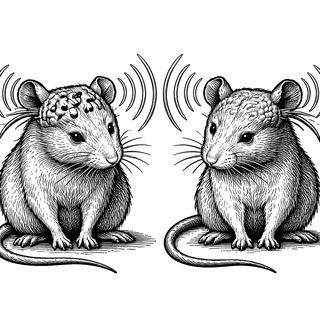
Disclaimer: The image accompanying this article is for illustrative purposes only and does not depict actual experimental results, data, or biological mechanisms.