
Ask any parent of a teenager why their kid doesn't seem to hear "please clean your room" and they'll blame selective hearing. But there might be more to the story. A study in eLife reveals that adolescent brains genuinely process sounds differently than adult brains, and they learn auditory tasks in their own distinctive way too.
The teenage brain isn't just a smaller, slightly more dramatic version of an adult brain. It's running different software.
Adolescence: Not Just Hormones and Bad Decisions
We tend to think of adolescence as that awkward period of hormonal chaos, questionable music choices, and eye-rolling. But from a neuroscience perspective, it's one of the most dynamic periods of brain development after infancy.
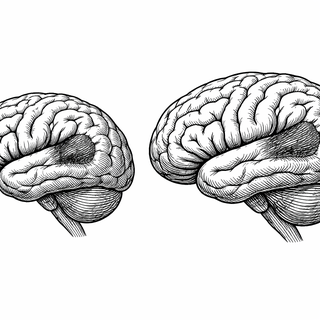
The brain is actively maturing. Connections are being pruned. Myelination is happening. Entire systems are being recalibrated. This includes sensory systems, which continue developing well into the teenage years.
Here's the problem: most neuroscience research uses adult animals. It's just easier. Adults are stable, predictable, and don't keep changing on you mid-experiment. But this means we've been systematically ignoring how the developing brain processes information differently.
When researchers do look at adolescents, they often find surprises. The brain doesn't just gradually become more adult-like in a straight line. There are qualitative differences in how it works.
Teaching Mice to Tell Sounds Apart
The researchers wanted to compare how adolescent and adult mice process and learn about sounds. To do this, they used a Go/No-Go auditory discrimination task, which is basically "when you hear this sound, do something; when you hear that sound, don't."
They trained two groups of mice: adolescents (postnatal day 20-42, which maps roughly to teenage years in mouse development) and adults (day 60-82, solidly mature). Both groups learned the same task, but the researchers varied how difficult it was by making the sounds more or less similar.
While the mice were learning, the team recorded neural activity in the auditory cortex. This let them see not just whether the mice could do the task, but how their brains were representing the sounds and how those representations changed with learning.
The Teenage Brain Plays By Different Rules
When they compared the two age groups, clear differences emerged. Adolescent and adult mice performed differently on the tasks, which wasn't entirely surprising. But more interesting was what was happening in their brains.
The neural representations of sounds were different between ages. It wasn't just that adolescents were "worse" or "better." The actual patterns of activity encoding the sounds had a different character.
And here's where it gets really interesting: learning shaped these sound representations, but it shaped them differently depending on age. When adult mice learned the task, their auditory cortex changed in one way. When adolescent mice learned the same task, the changes looked different.
This means the interaction between experience and brain development isn't just additive. You can't just say "adolescent brain plus learning equals adult brain plus learning, but weaker." The learning process itself operates differently in the developing brain.
Why This Matters Beyond Mouse Experiments
So teenage mice hear things differently. Why should humans care?
First, auditory learning disorders are a real thing. Some kids have persistent difficulty learning to distinguish sounds, which affects language development, reading, and academic performance. If adolescent brains learn auditory discriminations through different mechanisms than adult brains, then treatments designed for adults might not work the same way for teenagers.
Second, there's the question of optimal timing. If the adolescent brain is particularly plastic in certain ways, there might be windows of opportunity for interventions. Music education, language learning, auditory training for hearing-impaired kids, all of these might have age-dependent effectiveness.
Third, this challenges a lazy assumption that pervades a lot of neuroscience. We often act like findings from adult animals generalize to all ages. This study is a reminder that they probably don't. Development isn't just a warm-up period before the "real" brain comes online. It's a qualitatively different state.
The Machinery Under the Hood
What might explain these age differences? The researchers point to several possibilities.
Adolescent auditory cortex might still be refining its tuning curves, the basic selectivity of neurons for different sound frequencies. If the foundation is still under construction, learning might build on it differently.
There might also be differences in plasticity mechanisms. The molecular machinery that allows synapses to strengthen or weaken, the so-called rules of learning, might not be identical in adolescents and adults.
Neuromodulatory systems like dopamine and acetylcholine, which influence attention, motivation, and learning, are still maturing during adolescence. This could change how learning signals are computed and delivered.
And then there's the balance of excitation and inhibition, which undergoes significant changes during adolescence. This balance affects how neural circuits compute and how plastic they are.
In other words, the adolescent brain isn't just an adult brain with training wheels. It's a different machine that happens to share a lot of parts.
Looking Forward
This study opens more questions than it answers, which is the sign of good science.
What exactly is different about the learning mechanisms? Can we identify specific molecular or circuit-level changes? Do the differences hold across other sensory systems, or is hearing special? And critically, how do these mouse findings translate to humans?
The broader point is methodological. If we want to understand development, we can't just study adults and assume the findings scale down. The adolescent brain is its own beast, deserving its own attention.
For parents wondering why their teenager seems to inhabit a different perceptual universe: you're not imagining it. Their brains are literally processing the world differently. Whether that extends to "clean your room" is still under investigation.
Reference: Bhattacharyya S, et al. (2025). Age and learning shapes sound representations in auditory cortex during adolescence. eLife. doi: 10.7554/eLife.106387 | PMID: 41078316
Disclaimer: The image accompanying this article is for illustrative purposes only and does not depict actual experimental results, data, or biological mechanisms.