
So your gut has its own nervous system. You've probably heard this factoid floating around the internet, maybe accompanied by some vague statement about "gut feelings." But here's the thing: it's not just a fun trivia fact. Your gut contains hundreds of millions of neurons, more than your spinal cord, and they're running the whole digestive show basically independently from your brain. A viewpoint in Nature Reviews Gastroenterology & Hepatology highlights a conference that's been bringing together scientists studying this enteric nervous system for over 30 years. The conference is called "Little Brain Big Brain," and honestly, that alone is worth knowing.
The Best-Named Conference in Science
Let's appreciate this name for a second. Most scientific conferences have names like "Annual Symposium on Gastrointestinal Neurobiology" or something equally forgettable. But someone, three decades ago, decided to call a meeting about the gut nervous system "Little Brain Big Brain." That's the kind of energy we need more of in academia.
The name is accurate, too. The enteric nervous system really is a "little brain" in the sense that it can operate autonomously. It doesn't need constant input from the brain in your head to keep your digestive system running. You don't have to consciously think "okay, time for peristalsis" after eating a sandwich. The little brain handles it.
But here's what makes this conference unusual beyond the name: it's organized by early career researchers for early career researchers. In the typical academic hierarchy, senior professors dominate conferences. They give the keynotes, they lead the sessions, they're the ones everyone else is trying to impress. Little Brain Big Brain flips that script. Trainees get to present, lead discussions, and actually shape the conversation.
This structure has survived for three decades, which in academic terms is forever. It works because it fills a real need. Young scientists get to build networks with their peers, not just kowtow to established names. They get practice presenting to audiences who are genuinely interested rather than just politely nodding.
Your Gut Has More Neurons Than Your Spinal Cord
Let's back up and talk about why the enteric nervous system deserves all this attention. The number of neurons in your gut is genuinely staggering. We're not talking about a few scattered nerve endings down there. We're talking about a complex, interconnected network with hundreds of millions of neurons. That's more than your spinal cord contains.
This system handles digestion autonomously, which is a good thing because imagine having to consciously coordinate every muscle contraction needed to move food through your intestines. You'd never get anything else done. Instead, the enteric nervous system runs the whole operation with minimal input from upstairs.
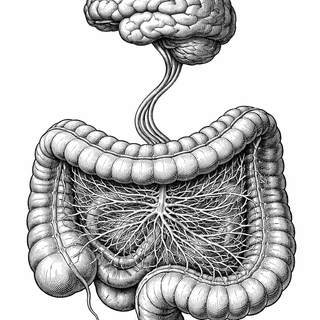
But here's where it gets more interesting: the gut brain and the head brain aren't completely independent. They communicate constantly through what's now called the gut-brain axis. Signals flow in both directions. Your gut talks to your brain, your brain talks to your gut, and this ongoing conversation influences everything from mood to immune function.
This axis turns out to be relevant to a surprising range of conditions. Irritable bowel syndrome, obviously, involves the gut. But Parkinson's disease? There's growing evidence that gut symptoms often appear years before the motor problems that define the disease. Some researchers think the pathology might even start in the gut and spread to the brain. If that's true, the enteric nervous system isn't just a footnote to neurology. It's potentially central to understanding neurodegenerative disease.
The Field Is Having Its Moment
For a long time, enteric neuroscience was kind of the nerdy younger sibling of "real" neuroscience. Everyone wanted to study the brain in your head, the sexy organ that produces consciousness and intelligence and all that. The brain in your gut? Less glamorous. Less funding. Fewer headlines.
That's changing. The gut-brain axis has become a hot topic. The microbiome, those trillions of bacteria living in your digestive system, keeps showing up in studies of everything from mental health to metabolism. And it turns out the microbiome and the enteric nervous system interact in ways we're only beginning to understand.
The researchers contributing to this viewpoint share where they see the field heading. New tools are emerging for studying enteric neurons in living tissue, which is technically challenging but increasingly possible. Better understanding of gut-brain communication is coming from advanced imaging and genetic techniques. And yes, the microbiome keeps showing up, because apparently no area of biology can avoid the microbiome anymore.
Why Early Career Scientists Matter for This
Fields advance when young scientists bring fresh perspectives and new techniques. The senior people have established the foundation, but they're also, inevitably, somewhat committed to their existing frameworks. The next generation can ask different questions and try approaches that seem crazy until they work.
Conferences like Little Brain Big Brain help ensure that next generation is prepared, connected, and empowered. Instead of just absorbing wisdom from on high, these trainees get to practice being scientists in the fullest sense. They present, they debate, they collaborate with peers who will be their colleagues for decades.
The enteric neuroscience field is poised to grow substantially as the gut-brain axis gets more attention from funding agencies and pharmaceutical companies. Having a robust pipeline of trained, connected young researchers will matter a lot for capitalizing on that momentum.
The Bottom Line
Your gut nervous system is not a metaphor or a wellness trend. It's a genuine second brain, with hundreds of millions of neurons coordinating one of the most complex continuous operations in your body. The scientists studying it have built their own community, complete with a perfectly named conference and a culture of nurturing young researchers.
If you've ever had a "gut feeling" about something, maybe take it a little more seriously. There's actual computational power backing that up.
Reference: Muppirala AN, et al. (2025). Next-generation enteric neuroscience - fostering the future of the field. Nature Reviews Gastroenterology & Hepatology. doi: 10.1038/s41575-025-01102-7 | PMID: 40866552
Disclaimer: The image accompanying this article is for illustrative purposes only and does not depict actual experimental results, data, or biological mechanisms.