
Neuroscience has been having an identity crisis about neurons. Are there distinct cell types in the brain, each with specific jobs and clear boundaries? Or is it all a blur, with neurons existing on a spectrum where categories are just convenient fictions we impose on messy biology? A study in Cell Reports weighs in with new evidence, and it comes down on the side of discrete types. The trick was asking not just what genes each cell expresses, but where those cells are sitting in the brain.
Turns out, location matters. A lot.
The Great Clustering Confusion
Here's the problem that's been plaguing neuroscience for years. Technology now lets us sequence RNA from individual cells, revealing which genes are turned on in each neuron. Analyze thousands of cells this way, and you get a massive dataset showing the molecular fingerprint of every neuron in your sample.
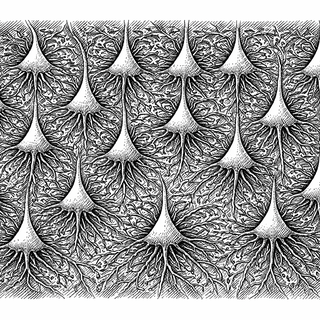
The next step should be straightforward: sort these cells into types based on similar fingerprints. Pyramidal neurons here, interneurons there, sub-sub-subtypes in their own clusters. Clean, organized, scientifically satisfying.
Except it often doesn't work that cleanly.
When researchers apply clustering algorithms to single-cell RNA data, the boundaries between groups frequently look fuzzy. Cells don't fall into neat piles. Instead, they spread across a continuum, with one type blending into the next. Maybe neurons aren't discrete types at all. Maybe "cell types" are just arbitrary boxes we draw around continuous variation because our primate brains crave categories.
This debate has been going on for years, and both sides have had reasonable arguments.
Learning from the Eye
The researchers behind this study took a page from retinal neuroscience. The retina is probably the best-understood piece of neural tissue we have. It's relatively simple, accessible, and has been studied intensively for decades. And in the retina, neurons of the same type follow a specific rule: they avoid sitting next to each other.
Think of it like rival coffee shops. If you're a Starbucks, you don't want another Starbucks right next door cannibalizing your customers. You space yourself out to tile the territory efficiently. Retinal neurons do the same thing. Cells of a given type distribute themselves into a mosaic pattern, covering the retina without overlap.
This spatial avoidance is independent of how cells cluster in gene expression space. It's a separate line of evidence for whether cell types are real. If true types exist, they should show mosaic spacing. If the categories are arbitrary, they won't.
The question was whether this principle holds in the cortex, which is messier and more complex than the retina.
Location, Location, Location
Using spatial transcriptomics data from mouse visual cortex, the researchers tested the mosaic hypothesis. Standard single-cell sequencing tells you what each cell expresses but loses information about where that cell was in the tissue. Spatial transcriptomics keeps the geography intact. You know both the molecular fingerprint and the physical address.
With this data, they could ask: do cells that cluster together based on gene expression also avoid sitting next to each other in real tissue?
The answer was yes. Cells fell into distinguishable clusters, and cells of the same cluster type showed spatial avoidance patterns consistent with true mosaics. They weren't randomly distributed. They were spaced out in ways that suggested they were avoiding each other, exactly what you'd expect if they represented genuine types rather than arbitrary divisions of a continuum.
Maybe the Blur Was Just Noise
This finding suggests something important about the earlier ambiguous results. The apparent continuity in single-cell data might not reflect biological reality. It might just be technical noise.
Sequencing is imperfect. Some transcripts get captured, others don't. Cells are damaged during isolation. Batch effects creep in. If you take discrete categories and add enough noise to the measurements, you can make them look continuous. The true signal gets obscured by artifacts, and researchers start wondering if the categories were ever real.
Spatial information provides an independent check. If cells really do form discrete types, they should show mosaic spacing regardless of how noisy the gene expression measurements are. Finding that they do suggests the types are real and the earlier uncertainty was a measurement problem, not a biological one.
Why Does This Matter?
You might wonder whether this is just academic hairsplitting. Discrete types, continuous variation, who cares? But the distinction actually matters quite a bit for understanding how brains work.
If neurons come in discrete types, then each type presumably has a specific function. The cortex is organized as a collection of specialized cell populations, each doing its job as part of a larger machine. Understanding the brain means cataloging these types and figuring out what each one contributes.
If neurons exist on a continuum, that picture breaks down. Function would emerge from gradients rather than categories. The same cell might shift its properties depending on context. The classification scheme we've been building for decades would need rethinking.
For disease research, discrete types offer cleaner therapeutic targets. If a particular cell type is vulnerable in Parkinson's or Alzheimer's, you can develop interventions aimed at that population. Continuous variation makes targeting harder because you're trying to hit a smeared-out distribution rather than a defined group.
The Mosaic Principle Goes Cortical
The retina taught us that spacing matters, and now the cortex appears to follow similar rules. Cell types show up as distinct clusters, and those clusters tile their territory in organized patterns. The messiness that seemed to challenge classical cell type theory might just be noise in the data rather than noise in nature.
None of this means the cataloging work is done. The cortex is vastly more complex than the retina, with more types, more layers, more connectivity patterns. But finding that the mosaic principle holds gives researchers confidence that the classification effort is on the right track.
Neurons have identities. Those identities are real, not just statistical conveniences. And when you account for where cells sit in tissue, the picture becomes clearer. Discrete types, spacing themselves out, tiling the cortex into an organized mosaic.
The brain might be messy, but maybe not as messy as we feared.
Reference: Bhattacharyya S, et al. (2025). Evidence from spatial transcriptomics for the mosaic hypothesis and pure cell types in the cortex. Cell Reports. doi: 10.1016/j.celrep.2025.116363 | PMID: 41045459
Disclaimer: The image accompanying this article is for illustrative purposes only and does not depict actual experimental results, data, or biological mechanisms.