
Your brain is basically a chatty electrical storm, constantly firing off signals that tell your muscles what to do. For millions of people with spinal cord injuries, those signals run into a dead end - the messages leave the station but never reach their destination. Now, for the first time anywhere on Earth, a brain implant has been approved for commercial use to help bridge that gap.
China's National Medical Products Administration just gave the green light to NEO, a coin-sized device developed by Shanghai-based Neuracle Medical Technology. It's the first brain-computer interface (BCI) cleared for use outside clinical trials anywhere in the world. That's not a typo - while companies like Neuralink grab headlines, China quietly crossed the finish line first.
What's Under the Hood
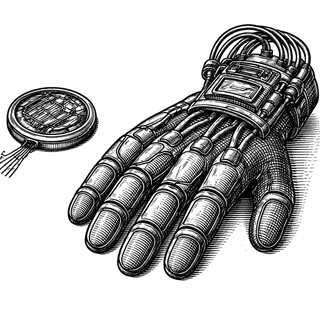
The NEO isn't drilling deep into your neurons like some competitors. Think of it more like a high-tech eavesdropper sitting on the surface of your brain's outer membrane. Eight electrodes listen in on the motor cortex - the region that handles movement commands - and pick up electrical signals when you imagine moving your hand.
Here's where it gets interesting. Those signals get beamed wirelessly to a computer, which decodes your intentions and translates them into instructions for a soft robotic glove. You think "grab that cup," and suddenly you're holding your morning coffee. For someone who hasn't been able to grip anything for years, that's not just convenience - it's independence.
The Numbers That Matter
So far, 32 people have received the NEO implant. All of them could perform grabbing movements with the robotic glove - something they couldn't do before. One tetraplegic patient used the system at home for nine months, achieving a 100% success rate in moving objects during tests. Daily tasks like eating and drinking became possible again.
"The device seems safe and works," noted Avinash Singh, a BCI researcher at the University of Technology Sydney, though he pointed out the cohort is still small. Fair enough - we're watching a technology take its first steps into the real world.
The Global BCI Race
Meanwhile, American companies are navigating the FDA's longer regulatory pathway. Neuralink has enrolled 21 participants in trials as of January 2026, with their device using 1,024 electrodes that penetrate the brain itself - a more invasive approach that theoretically captures richer signals. Synchron's Stentrode takes yet another route, threading through blood vessels to avoid drilling into the skull entirely.
About 25 clinical trials of BCI implants are currently underway globally, and participation is growing from single digits to dozens of patients. The field is heating up faster than anyone predicted a decade ago.
What This Means for the Rest of Us
There's something quietly revolutionary happening here. Brain-computer interfaces have been a clinical curiosity for decades - proof-of-concept demonstrations in research settings, tantalizing glimpses of what might be possible. This approval changes the conversation from "someday" to "now."
China has declared BCI technology a national strategic priority, and they're backing that declaration with regulatory speed. The country has seen an explosion of startups eager to develop the next breakthrough. Whether you view this as healthy competition or a geopolitical race, the result is the same: accelerated progress that benefits patients everywhere.
Of course, we're still in early days. Brain surgery carries inherent risks - infection, complications, the possibility of implants shifting or causing scar tissue that degrades signals over time. The NEO approval is limited to adults between 18 and 60 who've had stable paralysis for at least six months and retain some upper arm movement. This isn't a universal solution yet.
But watch this space. Researchers at UC Davis have developed BCIs that translate brain signals into speech with 97% accuracy. Others are targeting mental health conditions. The market is projected to hit $4.5 billion by 2030. What started as science fiction is becoming medical reality - one approval at a time.
References
-
Fieldhouse, R., & You, X. (2026). China approves brain chip to treat paralysis - a world first. Nature, 651(8107), 865-866. DOI: 10.1038/d41586-026-00849-6
-
Davis, K. C., et al. (2025). 5-year follow-up of a fully implanted brain-computer interface in a spinal cord injury patient. Journal of Neural Engineering. PMID: 40127544
-
Mitchell, P., et al. (2023). Assessment of Safety of a Fully Implanted Endovascular Brain-Computer Interface for Severe Paralysis in 4 Patients: The Stentrode With Thought-Controlled Digital Switch (SWITCH) Study. JAMA Neurology. PMID: 36622685
-
Lorach, H., et al. (2024). Brain-spine interface for movement restoration after spinal cord injury. PMC11379558. PMC Article
-
Brain-computer interfaces: the innovative key to unlocking neurological conditions. (2024). PMC11392146. PMC Article
Disclaimer: The image accompanying this article is for illustrative purposes only and does not depict actual experimental results, data, or biological mechanisms.