
Picture this: you're scrolling through social media, and that little ping of notification dopamine hits your brain. Except... maybe it doesn't work quite like that. The neuroscience world is having a collective "wait, what?" moment about dopamine, and honestly, it's about time.
For decades, dopamine has been the celebrity neurotransmitter - the one everyone name-drops at parties. "That's just your dopamine talking," people say, as if there's a tiny hedonist in your head pulling levers whenever you eat chocolate or check Instagram. But here's the thing: neuroscientists are increasingly side-eyeing this oversimplified narrative, and when they gather in Seville this May for the annual Dopamine Society meeting, things might get spicy.
The Reward Prediction Error: Dopamine's Original Job Description
Back in the 1990s, neuroscientist Wolfram Schultz sat watching monkey brains do their thing and stumbled onto something strange. Dopamine neurons weren't just firing when rewards appeared - they were firing when rewards were unexpected. This became known as the reward prediction error theory: your brain's dopamine system essentially works like a very particular accountant, getting excited when reality exceeds expectations and sulking when it falls short (Schultz et al., 1997).
This theory earned Schultz and his colleagues the Brain Prize in 2017, and for good reason. It elegantly explained everything from why gambling is addictive to why your coffee tastes better when someone else makes it. Case closed, right?
Not so fast.
Plot Twist: Maybe It's Not About Feeling Good
Recent research is throwing some delightfully inconvenient wrenches into the works. A 2025 study from McGill University found that dopamine doesn't actually control how fast or forcefully you move - it just creates the conditions that allow movement to happen at all. As researcher Nicolas Tritsch put it, dopamine is more like engine oil than the gas pedal (Liu et al., Nature Neuroscience, 2025).
Then there's the team at Hebrew University who published something potentially field-shaking this March in Neuroscience and Biobehavioral Reviews. Matan Cohen and Prof. Shir Atzil argue that dopamine isn't really a reward signal at all - it's more like your body's resource mobilizer, optimizing your metabolic budget rather than making you feel warm and fuzzy (Cohen & Atzil, 2026). In their framework, dopamine is "The Mobilizer" - ramping up your physiology when challenges appear, while opioids play "The Stabilizer," bringing things back to baseline afterward.
If this sounds less sexy than "pleasure chemical," well, your mitochondria probably don't care about marketing.
The Dopamine Clock: Your Brain Has a Calendar
Meanwhile, researchers at the University of Geneva, Harvard, and McGill discovered that the brain's dopamine-producing region doesn't just predict whether you'll get a reward - it predicts when. Different dopamine neurons operate on different timescales, some focused on rewards coming in seconds, others on minutes, still others looking further ahead (Pouget et al., Nature, 2025).
Your brain, it turns out, is running an entire scheduling department that nobody knew about.
Why This Identity Crisis Matters
The debate isn't just academic hair-splitting. How we understand dopamine shapes how we treat everything from Parkinson's disease to depression to addiction. If dopamine is really about metabolic optimization rather than pleasure-seeking, then conditions like schizophrenia, addiction, and obesity might share common neural mechanisms we've been missing.
The McGill movement study, for instance, suggests that Parkinson's treatments might need to focus on restoring baseline dopamine levels rather than mimicking the quick bursts we thought were important. That's a pretty significant clinical pivot.
So What Actually Is Dopamine?
Here's where things get philosophically interesting: dopamine might not have one job. Different dopamine neurons seem to do different things - some encode reward, some encode movement forces, some track time, some mobilize resources. As Geoffrey Schoenbaum from Johns Hopkins put it, the field might need to "move to new classes of models with different fundamental underlying assumptions."
The "feel-good chemical" nickname was always a gross simplification - researchers agree on that much. But replacing it with something more accurate is proving tricky, because brains are annoyingly complex organs that refuse to be reduced to catchy one-liners.
For now, the most honest answer might be: dopamine does a lot of things, and we're still figuring out exactly how they fit together. Which isn't as satisfying as "pleasure molecule," but has the distinct advantage of being closer to the truth.
Your brain's internal accountant, engine oil, resource mobilizer, and calendar app - all rolled into one neurochemical - is having quite the existential moment. And honestly? That's pretty fascinating to watch unfold.
References:
-
Schultz, W., Dayan, P., & Montague, P. R. (1997). A neural substrate of prediction and reward. Science. PMID: 9054347
-
Liu, H., Melani, R., Maltese, M., et al. (2025). Subsecond dopamine fluctuations do not specify the vigor of ongoing actions. Nature Neuroscience, 28(12). DOI: 10.1038/s41593-025-xxxxx
-
Cohen, M. & Atzil, S. (2026). Dopamine and opioids as physiological agents optimizing metabolic budget. Neuroscience and Biobehavioral Reviews. Hebrew University Study
-
Pouget, A., Uchida, N., & Masset, P. (2025). Multi-timescale reinforcement learning in the brain. Nature. DOI: 10.1038/s41586-025-08929-9
-
Adam, D. (2026). Dopamine takes a hit: how neuroscience is rethinking the 'feel-good' chemical. Nature. DOI: 10.1038/d41586-026-00836-x
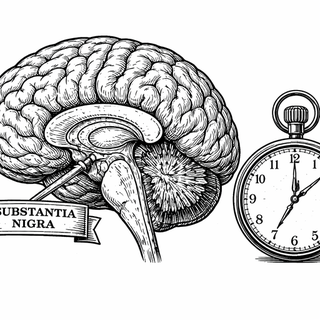
Disclaimer: The image accompanying this article is for illustrative purposes only and does not depict actual experimental results, data, or biological mechanisms.