
Here's a pattern that shows up across species: take a male, isolate him from social contact, and he becomes more aggressive. But here's the weird part. Despite all that extra aggression, isolated males don't actually win more fights. A study in eLife figured out why, and it turns out being angry doesn't make you smart.
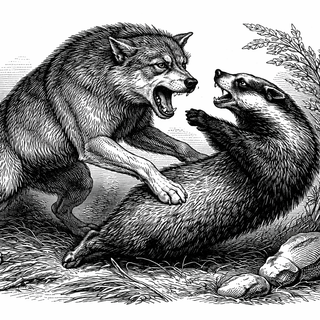
The "Angry But Bad At It" Paradox
If you've ever watched someone rage-quit at a video game or get into a fight they clearly couldn't win, you've seen this phenomenon in action. More aggression doesn't automatically mean better outcomes. Sometimes it means worse outcomes, because you're too busy being aggressive to think straight.
Scientists have known for a while that social isolation cranks up aggression in males across many species. What wasn't clear was why this increased aggression didn't translate into more wins. You'd think being more motivated to fight would help, right?
Wrong. The researchers found that isolated males were essentially all gas, no steering wheel. They had plenty of drive but terrible judgment.
The Difference Between Mean and Effective
Socially experienced males, the ones who'd spent time around other males and had previous competitive encounters, behaved differently. They weren't as aggressive on average, but they were much better at actually fighting.
What does "better at fighting" look like? It means picking your battles wisely. Assessing an opponent before committing. Knowing when to escalate and when to back off. Adjusting your tactics based on what the other guy is doing. These are skills that take practice.
The experienced males had basically gone through fight school, learning through repeated interactions what works and what doesn't. They'd figured out that charging in blindly isn't always the winning strategy. Sometimes it's better to test your opponent, find weaknesses, and only commit when you have an advantage.
The isolated males missed all those lessons. They had the aggression dial turned up to eleven, but they'd never learned how to actually compete effectively.
Social Life as Training Camp
This is where the finding gets interesting beyond just understanding animal behavior. Social interactions aren't just about moderating aggression levels, they're actually educational. Living in a social environment provides constant opportunities for competitive learning.
Every interaction teaches you something. That guy was bluffing. That posture means he's about to attack. That retreat was fake. Winners do this move. Losers make that mistake. Over time, these lessons accumulate into what you might call "social intelligence" about competition.
Isolated males are essentially untrained fighters with amateur-level skills. They've never had the sparring practice to develop good instincts. So when they finally do encounter a real competitive situation, they rely on pure aggression because that's all they have. And pure aggression, it turns out, loses to skill more often than it wins.
Why This Matters Beyond Animal Fights
The implications here extend beyond understanding why isolated mice are bad at mouse combat. This research speaks to broader questions about how social experience shapes behavioral competence.
Think about human analogues. Kids who don't get enough social interaction growing up often struggle with social skills later. They might have strong emotional reactions but poor ability to navigate complex social situations. The underlying principle might be similar: social experience isn't just about emotional regulation, it's about learning how to operate in a social environment.
Competition is a skill, not just a drive. You can have all the motivation in the world, but if you don't know what you're doing, that motivation just gets you into trouble faster.
For animals, this means isolation doesn't just change how aggressive you are, it changes how competent you are. And in the real world, competence beats raw aggression most of the time.
So the next time you see someone throwing their weight around aggressively but ineffectively, you might be looking at someone who missed some important social education along the way. The lonely fighter syndrome isn't just about being angry. It's about never having learned to channel that anger into something that actually works.
Reference: Bhattacharyya S, et al. (2025). Social experience shapes fighting strategies. eLife. doi: 10.7554/eLife.105639 | PMID: 41055639
Disclaimer: The image accompanying this article is for illustrative purposes only and does not depict actual experimental results, data, or biological mechanisms.