Finding the genetic cause of a rare disease is hard. Finding it when you have to coordinate research across unrelated families scattered around the world? That's a logistical nightmare wrapped in a scientific puzzle. But that's exactly what it took to identify ARHGAP19, a newly discovered gene responsible for a form of Charcot-Marie-Tooth disease (CMT). The results are now published in the Journal of Clinical Investigation, and they're a testament to both stubborn persistence and international collaboration.
The Quarter of Patients Still Waiting for Answers
CMT is the most common inherited nerve disorder, affecting about 1 in 2,500 people. It causes progressive damage to peripheral nerves, leading to muscle weakness, sensory loss, and foot deformities that typically start in the legs and work their way up. Over 100 genes have been linked to CMT, which sounds like a lot until you realize that roughly 25% of patients still don't have a molecular diagnosis.
For those patients, there's no closure. No explanation for family members about inheritance patterns. No gene therapy trials to consider. Just a diagnosis of "CMT, unknown cause" and a shrug from the medical establishment.
The researchers behind this study decided to change that for at least some of those people. They assembled an international group of undiagnosed CMT patients and went gene hunting.
When One Family Isn't Enough
Here's the challenge with identifying new disease genes: any individual person carries thousands of genetic variants that differ from the reference genome. Most of these are benign. So how do you know which one is causing the disease?
The answer is patterns. If you find completely unrelated families with the same rare disease, and they all have variants in the same gene, that's strong evidence. The more families, the more confident you can be.
The researchers ultimately identified 16 different recessive variants in ARHGAP19 across 25 individuals from 20 unrelated families. These families came from different continents, different ethnic backgrounds, different everything. The only thing they had in common was CMT and mutations in this one gene.
That kind of convergent evidence is hard to argue with. When unrelated people from around the globe independently develop the same disease because of mutations in the same gene, you've probably found something real.
What Does ARHGAP19 Actually Do?
Every gene does something, and understanding that something is key to eventually developing treatments. ARHGAP19 encodes a protein that functions as a GAP, or GTPase-activating protein. In less jargon-heavy terms, it's an off-switch for a signaling molecule called RhoA.
RhoA is involved in regulating the cytoskeleton, the internal scaffolding that gives cells their shape and enables them to move and extend processes. In neurons, proper cytoskeletal control is especially important because these cells have to extend axons over long distances. Motor neurons in particular have to maintain axons that can stretch from the spinal cord all the way to your toes.
When ARHGAP19 works properly, it helps keep RhoA signaling in check. Turn RhoA on when you need it, turn it off when you don't. Smooth, controlled regulation.
When ARHGAP19 is broken? The off-switch stops working. RhoA signaling becomes dysregulated. The cytoskeleton doesn't behave properly. And eventually, the motor neurons start having problems.
The researchers confirmed this using patient-derived cells, biochemical assays, and computational modeling. The CMT-associated variants weren't just rare variants of uncertain significance. They genuinely knocked out ARHGAP19's function.
Flies, Fish, and Human Cells All Agree
To really nail the case, the team went multi-species. They removed the equivalent of ARHGAP19 in fruit flies (Drosophila) and zebrafish, two organisms commonly used to model nervous system function.
Both species developed motor problems. Both showed abnormal axon and synapse structures. The phenotypes looked remarkably similar to what the researchers saw in motor neurons derived from actual patient cells grown in the lab.
When your patient genetics, your cell biology, your fruit fly experiments, and your zebrafish work all point to the same answer, you're not just fishing for correlations anymore. You've got a solid case.
What This Means Going Forward
For the 25 individuals identified in this study, having a diagnosis changes everything. Ending a years-long diagnostic odyssey provides closure that's hard to overstate. Family members can now understand inheritance patterns and make informed decisions about genetic testing.
For the broader CMT community, adding ARHGAP19 to the list of known genes means other patients can now be screened. Some of that mysterious 25% of undiagnosed cases might turn out to have ARHGAP19 mutations too.
And for researchers? Understanding that ARHGAP19 and RhoA signaling are involved in motor neuron maintenance opens up new avenues for investigation. Could modulating RhoA activity be therapeutic? What other components of this pathway might be relevant? These are the kinds of questions that eventually lead to treatments, though the road from gene discovery to therapy remains long for rare diseases.
Still, every journey starts somewhere. And for ARHGAP19, the starting line has now been drawn.
Reference: Dominik N, et al. (2025). Biallelic variants in ARHGAP19 cause a progressive inherited motor-predominant neuropathy. Journal of Clinical Investigation. doi: 10.1172/JCI184474 | PMID: 41086021
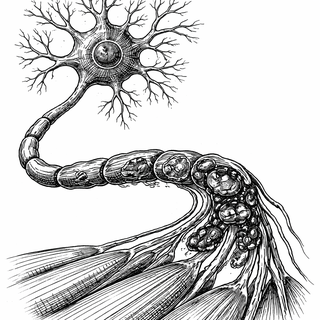
Disclaimer: The image accompanying this article is for illustrative purposes only and does not depict actual experimental results, data, or biological mechanisms.