Your brain has its own private security force. They're called microglia, and they're constantly patrolling your neural tissue, looking for problems. Damaged cells? They clean it up. Pathogens trying to sneak in? They attack. Synapses that need pruning? They handle it. They're the janitors, security guards, and landscapers of your central nervous system, all rolled into one.
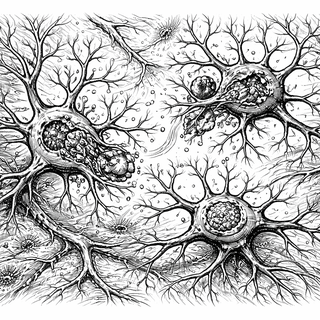
When microglia work properly, everything runs smoothly and you never think about them. When they malfunction, due to genetic mutations or just the wear and tear of aging, very bad things start happening. Neuroinflammation. Cellular debris piling up. Diseases like Alzheimer's getting traction they shouldn't have.
The question that researchers have been asking for years is almost childishly simple: what if you could just swap them out? Remove the broken microglia and install fresh ones?
Turns out, you can. And it's no longer just a lab curiosity. We're watching science fiction become clinical medicine in real time.
From Mouse Experiments to Saving Human Lives
In 2025, researchers halted a fatal neurological disease called ALSP in human patients using microglia replacement. ALSP (adult-onset leukoencephalopathy with axonal spheroids and pigmented glia, if you really want to know) is a brutal condition caused by mutations in a gene called CSF1R. These mutations make microglia go haywire. They start destroying brain tissue instead of protecting it. Patients decline rapidly, and there's been essentially nothing doctors could do about it.
Until now. Replacing the mutant microglia with healthy donor cells stopped disease progression. Not slowed it. Stopped it. In people who were otherwise heading toward rapid deterioration and death.
Five years ago, microglia replacement was a niche technique used in a handful of research labs. Today it's saving lives. That's remarkably fast for a transition from "interesting science" to "clinical medicine."
The Mouse Data Was Almost Too Good to Believe
Before anyone tried this in humans, the mouse experiments had to work. And work they did, spectacularly. A Stanford Medicine study took mice with a Tay-Sachs-like disease and replaced over half their microglia with healthy donor cells.
The numbers tell the story. Untreated mice lived about 135 days on average, maybe 155 if they were lucky. Treated mice? Some of them hit 250 days. That's nearly double the lifespan. In a disease where nothing else had worked, simply swapping out the broken immune cells bought an enormous amount of time.
Even more impressive: eight months after treatment, 85% of the microglia in treated brains were still donor-derived. The transplant didn't just work temporarily. It stuck. The new cells took up residence and stayed.
"We achieved efficient brain-restricted transplantation without systemic toxic preconditioning," the researchers noted. This is important because previous approaches to cell transplantation often required essentially poisoning the whole body to make room for new cells. The microglia replacement technique was more targeted. Treat the brain without wrecking everything else.
Oh, and donor cells didn't even need to be genetically matched. That's unexpected and very convenient for actually using this clinically.
The Bigger Picture: Beyond Rare Diseases
ALSP is rare. So is Tay-Sachs. If microglia replacement only worked for these genetic microgliopathies, it would still be meaningful to the families affected. But the implications go much further.
Microglia dysfunction appears in Alzheimer's, Parkinson's, and other neurodegenerative conditions. These aren't caused by microglia mutations the way ALSP is, but the microglia aren't doing their jobs properly. They're contributing to chronic inflammation. They're failing to clean up the protein aggregates that drive disease. They're part of the problem.
What if you could refresh them? What if, instead of trying to coax aging, dysfunctional microglia into working better, you could just install a new set that actually does the job?
We don't know yet if this will work for age-related neurodegeneration the same way it works for genetic microgliopathies. The biology is more complicated. But the fact that we can replace microglia at all, and have them survive and function for months afterward, opens possibilities that weren't there before.
What Still Needs to Work Out
Let's not get ahead of ourselves. Challenges remain, and researchers are clear-eyed about them.
Safety is paramount. Swapping immune cells in the brain is not something you want to do casually. There are risks of rejection, infection, and unintended effects on brain function. The long-term consequences of having donor-derived microglia patrolling your brain for decades are unknown because nobody has been doing this for decades yet.
Compatibility questions remain. The finding that genetic matching wasn't necessary in mice is encouraging, but human immune systems are more complicated. Whether this holds up in larger human trials with longer follow-up is still being determined.
Long-term function needs monitoring. Microglia do a lot of different jobs. Ensuring that donor cells can handle all of them, not just some of them, matters for overall brain health.
Researchers describe these as "solvable design targets." The hard part was proving the concept would work at all. Now it's engineering the details. That's a much better problem to have.
The Future of Brain Maintenance
Here's what's striking about this research: it reframes how we think about the brain's immune system. Instead of microglia being a fixed feature you're stuck with for life, they become something potentially modifiable. Like getting a blood transfusion, except for your brain's security staff.
We're not there yet. Microglia replacement is currently for people with fatal diseases where the alternative is worse. But the trajectory is clear. The techniques will improve. The safety profiles will be characterized. The indications will expand.
The day may come when refreshing your brain's immune cells is a routine part of healthy aging, as normal as getting a flu shot. It sounds like science fiction now, but so did a lot of things that are now standard medicine.
Your microglia have been on the job since before you were born. Maybe someday they'll get some reinforcements.
Reference: Ledford H. (2025). Swapping old immune cells in the brain with fresh ones could treat disease. Nature. doi: 10.1038/d41586-025-03008-5 | PMID: 40999092
Disclaimer: The image accompanying this article is for illustrative purposes only and does not depict actual experimental results, data, or biological mechanisms.