
Your retina has a weird distinction in anatomy: it's the only part of your central nervous system you can look at without cutting through bone. Every other part of the brain and spinal cord is locked away behind skull and vertebrae. But the retina just sits there behind your pupil, accessible to anyone with the right equipment and a cooperative subject.
Researchers have now exploited this anatomical quirk in spectacular fashion. A study in PNAS describes a technique for watching microglia, the brain's resident immune cells, patrol blood vessels in living retinas in real time. What they found in diabetic mice suggests that immune cells go haywire long before diabetes causes visible eye damage.
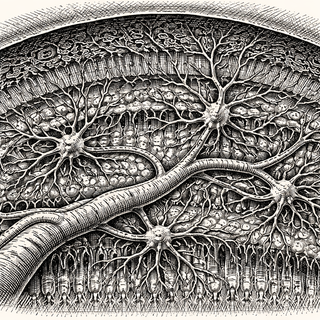
The Eye as a Window to the Brain (Literally This Time)
Microglia are the central nervous system's security force. They extend little processes that constantly probe their surroundings, looking for trouble. Dead cells, invading pathogens, damaged synapses: microglia are on the case. But when they get activated inappropriately, or stay activated too long, they can contribute to neurological diseases.
Studying microglia in living brains is difficult. You generally have to implant windows through the skull, which is invasive and might itself affect what you're trying to measure. But the retina offers another approach.
The researchers built an elegant imaging system that peers through the pupil into the retina using two-photon microscopy, a technique that uses infrared light to image living tissue at depth without damaging it. Their setup included a custom contact lens, a system for keeping the mouse's head perfectly still, and a specialized objective lens with enough working distance to focus deep into the eye.
The result is the ability to watch microglial dynamics around retinal blood vessels in real time, in a living animal, without cutting anything open. You can see the cells extending and retracting their processes, patrolling their territory, responding to their environment. It's like having a live security camera feed for the immune system of the eye.
The Security Guards Have Had Too Much Coffee
When they turned this system on diabetic mice, they discovered something unexpected. The microglia in diabetic retinas showed "enhanced surveillance." Their processes were more active, more mobile, constantly sampling the environment like paranoid security guards who've been chugging espresso.
This hypervigilance isn't visible with static imaging. If you just take snapshots, the diabetic microglia might look pretty similar to normal ones. It's only when you watch them over time that you see the difference: constant, excessive activity.
Here's why this matters: this enhanced surveillance was happening before the mice showed any visible signs of diabetic retinopathy, the eye disease that diabetes can cause. By the time you can see blood vessel damage or retinal changes in a standard eye exam, these immune cells have apparently been freaking out for a while.
This could be an early warning sign. It could also be part of the problem. Hyperactive microglia might contribute to the damage that eventually becomes visible. Understanding this dynamic could open new windows for diagnosis and treatment.
A Diabetes Drug Calms Things Down
Liraglutide is a drug that's already used to treat diabetes and obesity. It's a glucagon-like peptide-1 receptor agonist, if you want the technical name. When the researchers treated diabetic mice with liraglutide, the enhanced microglial surveillance normalized. The security guards stopped pacing nervously and returned to their normal patrol patterns.
This is interesting for several reasons. It suggests that some diabetes medications might protect vision not just by controlling blood sugar, but by directly normalizing immune function in the eye. The effect on microglia might be a separate, additional benefit beyond glucose control.
It also raises the possibility that microglial behavior could be a biomarker for treatment response. If you could watch microglia calm down in response to therapy, you'd have real-time feedback on whether a treatment was working at the cellular level, long before structural changes showed up on standard exams.
Looking Through the Window
The technique itself is arguably as important as the specific findings about diabetes. Having a way to watch central nervous system immune function in living subjects, non-invasively, opens up all kinds of possibilities.
For visual neuroscience, it provides tools for studying how retinal immune cells respond to various conditions: aging, glaucoma, infections, autoimmune diseases. For ophthalmology, it could enable earlier diagnosis of diseases that start with immune dysfunction before progressing to visible damage. For diabetes care specifically, it might help identify which patients are at highest risk for vision loss and track whether preventive treatments are working.
The eye has always been called a window to the soul. It turns out it's also a pretty good window to the brain, at least the immune part of it. Now we finally have cameras good enough to watch what's happening on the other side.
Reference: Sotani N, et al. (2025). Transpupillary in vivo two-photon imaging reveals enhanced surveillance of retinal microglia in diabetic mice. PNAS. doi: 10.1073/pnas.2426241122 | PMID: 41060759
Disclaimer: The image accompanying this article is for illustrative purposes only and does not depict actual experimental results, data, or biological mechanisms.