
There's a guitar in your closet. Maybe a keyboard. Possibly some watercolors from that phase you went through three years ago. They're gathering dust now, and every time you see them you feel a tiny pang of guilt for abandoning yet another hobby. Well, here's some news that might motivate you to pick them back up: those creative activities aren't just fun. According to a massive international study in Nature Communications, they might literally be keeping your brain young at the molecular level.
And we're not talking metaphorically young, like "young at heart." We're talking measurable, biological, show-up-on-lab-tests young.
Your Brain Has a Biological Odometer
Scientists can now estimate how old your brain is biologically, which is often different from how old it is chronologically. The tool they use is called an epigenetic clock. Without getting too deep into the biochemistry, your DNA accumulates certain molecular markers as it ages. Methylation patterns shift. Histone modifications change. These changes are predictable enough that researchers can look at a sample and estimate how "old" the tissue is based on its molecular signature.
Think of it like checking the mileage on a used car. Two cars might both be ten years old, but if one has 40,000 miles and the other has 150,000, they're not in the same condition. Your brain works similarly. Same chronological age, potentially very different biological wear.
The researchers in this study looked at tango dancers in Argentina, musicians in Canada, visual artists in Germany, and competitive video gamers in Poland. That's quite the international creative roundup. And across all these groups, they found the same pattern: people engaged in creative activities had biologically younger brains than their non-creative peers of the same chronological age.
The More You Do, The Younger You Get
Here's where it gets interesting. The brain-preserving effect wasn't just present or absent. It scaled with expertise. Beginners showed some benefit, but the real standouts were the experts. People who had been doing their creative activity for years and had achieved high skill levels showed the most dramatic biological age delays.
This suggests it's not just about dipping your toe into something creative once in a while. The benefit accumulates. The more you practice, the more you challenge yourself to improve, the more your brain appears to resist the normal aging process.
And the type of activity didn't seem to matter much. Dancing, painting, playing music, strategic gaming. All of them showed similar effects. Whatever keeps your brain actively engaged in learning, adapting, and creating appears to be protective.
What's Happening Inside Your Neurons
At the molecular level, cognitive aging is a messy process. DNA methylation patterns get thrown off balance. Histone modifications start going haywire. Mitochondria, the little power plants in your cells, begin sputtering. Oxidative stress builds up like rust accumulating on machinery that's been running too long without maintenance.
Creative activities seem to push back against this cascade. They require constantly learning new things. Maintaining focus and attention. Coordinating complex movements (whether you're dancing or just moving your fingers across piano keys). Adapting to challenges and solving problems in real time.
All of this keeps neural circuits firing in active, healthy patterns rather than settling into the kind of repetitive, low-demand routines that let decline set in. Your brain is a use-it-or-lose-it organ. Creative activities represent a particularly engaging way to use it.
Japanese researchers at NAIST recently discovered that declining levels of an epigenetic regulator called Setd8 in neural stem cells contributes to premature brain aging. Activities that keep the brain actively engaged may help maintain these and other protective molecular systems. The exact mechanisms are still being worked out, but the correlation between creative engagement and preserved brain youth is becoming harder to dismiss as coincidence.
Why This Beats Brain Training Apps
Here's what makes creative hobbies particularly appealing as a brain-health intervention: they're actually enjoyable. This matters more than you might think.
Brain training apps have been marketed for years as a way to keep your mind sharp. And some of them work, at least for the specific tasks they train. But there's a compliance problem. Sitting down to do your daily brain exercises feels like homework. It takes willpower. It's easy to skip. And the moment you stop, any benefits start fading.
Creative hobbies don't have this problem. People do them because they want to, not because they feel obligated. A guitar player doesn't need to remind themselves to practice the same way they need to remind themselves to do their Lumosity session. The intrinsic motivation is built in.
The Global Brain Health Institute notes that artistic engagement provides benefits beyond just the cognitive workout. There's social connection when you play with others or share your work. Emotional expression that might otherwise stay bottled up. A sense of purpose and accomplishment. These factors all contribute to overall brain health, and they come bundled with creative activities in a way that isolated cognitive exercises don't provide.
The Prescription is Actually Fun
Most health advice involves things you don't want to do. Eat less of what you enjoy. Exercise more than you'd like. Sleep when you'd rather be scrolling. The creativity-brain connection is the rare exception. The "treatment" is intrinsically rewarding.
Sign up for that dance class. Join a community band. Take up watercolors again. Learn to play chess or get serious about whatever strategy game catches your interest. The specific activity matters less than the engagement. Find something that challenges you, requires you to improve, and that you'll actually do consistently because you enjoy it.
Your neurons are aging right now. That's unavoidable. But the rate at which they age appears to be at least partially under your control. And one of the most effective interventions involves doing things you probably already want to do.
So go dust off that guitar. Your brain is waiting.
Reference: O'Leary K. (2025). Creativity keeps the brain young. Nature Medicine. doi: 10.1038/d41591-025-00063-3 | PMID: 41116084
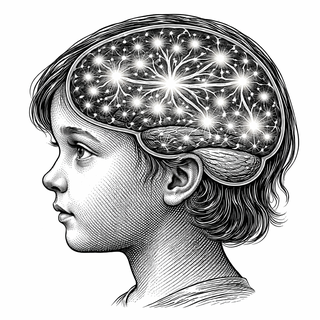
Disclaimer: The image accompanying this article is for illustrative purposes only and does not depict actual experimental results, data, or biological mechanisms.