
Here's something every addiction counselor and psychiatrist knows but that treatment protocols often ignore: substance use disorders almost never travel alone. They bring friends. Depression, anxiety, PTSD, bipolar disorder. These conditions pile up in the same patients with frustrating regularity, and trying to treat one while ignoring the others is like putting out a kitchen fire while the living room burns.
A systematic review in Neuroscience & Biobehavioral Reviews looked at brain imaging studies of patients with both substance use disorders and psychiatric conditions. What they found challenges the comfortable fiction that these are separate problems requiring separate treatments.
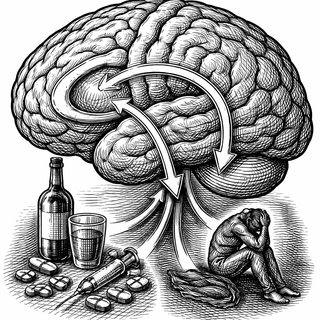
When addiction and mental illness coexist, the brain looks different than either condition alone would predict. And understanding that difference might be the key to treatments that actually work.
Comorbidity Is the Rule, Not the Exception
Let's start with some uncomfortable statistics. Among people with substance use disorders, rates of concurrent depression run between 20-40%. Anxiety disorders show up in similar proportions. PTSD is massively overrepresented, especially in people addicted to opioids or alcohol. Bipolar disorder and addiction co-occur so frequently that some researchers have suggested shared underlying mechanisms.
This isn't random bad luck. The same brain systems that go wrong in addiction overlap substantially with systems implicated in mood and anxiety disorders. Reward processing. Impulse control. Stress regulation. Executive function. These neural circuits are taking hits from multiple directions when comorbidity exists.
The clinical reality is that "pure" cases of addiction without psychiatric complications are actually the minority. Most patients walking into treatment programs bring multiple conditions with them. And yet our treatment approaches are often designed as if these conditions were separate entities that can be addressed independently.
What the Brain Scans Actually Show
When researchers put people with both substance use disorders and psychiatric conditions into brain scanners, patterns emerge. The usual suspects keep appearing across studies: abnormalities in reward circuitry, compromised prefrontal function, dysregulated stress systems.
The reward system (centered on the ventral striatum and related structures) shows altered responses in both addiction and depression. In addiction, it's often hyperactive to drug cues and hypoactive to natural rewards. In depression, it's generally underactive to everything pleasant. When both conditions are present, the reward system is getting pushed in multiple dysfunctional directions.
The prefrontal cortex, which handles impulse control and decision-making, looks compromised in both conditions. Addiction weakens the ability to override urges to use. Depression impairs motivation and cognitive flexibility. Put them together and you have someone who struggles both to resist substances and to muster the energy and flexibility to pursue alternatives.
Stress systems, including the amygdala and connected circuits, show hyperactivity across both conditions. Chronic stress drives both relapse to substance use and episodes of depression. When both conditions are present, the stress response is essentially running hot all the time, creating a self-perpetuating cycle.
The Whole Is Worse Than the Sum of Its Parts
Here's where the review findings get really interesting. Comorbidity doesn't just mean "addiction brain plus depression brain equals extra-bad brain." The combination produces patterns that aren't seen in either condition alone.
Some brain regions show more severe abnormalities in comorbid patients than you'd expect from adding together the effects of each condition. The damage appears to compound. Other regions show patterns specific to the combination, signatures that emerge only when both conditions are present.
This suggests that comorbidity might actually be its own thing, not just two conditions awkwardly coexisting. When substance use disorders and psychiatric conditions develop together, they may interact in ways that create a third pattern of neural dysfunction, distinct from what either condition would cause alone.
If this is true, it has major implications for treatment. You can't just apply addiction treatment plus depression treatment and expect the results to add up nicely. The combined condition may require its own approach.
Why Our Treatment Approaches Are Outdated
Traditional treatment models often handle addiction and psychiatric conditions sequentially. Get sober first, then address the depression. Or stabilize the mood, then tackle the substance use. This makes administrative sense (different specialists, different billing codes) but neurobiological nonsense.
If the conditions share underlying mechanisms, treating one while ignoring the other is working against yourself. The untreated condition keeps driving the circuits that perpetuate both. Depression makes staying sober harder. Substance use worsens depression. The patient bounces between programs, showing "treatment resistance" that's actually a predictable consequence of fragmented care.
Integrated treatment approaches that address both conditions simultaneously make more sense given what we know about the neuroscience. Target the shared mechanisms. Address reward dysfunction, prefrontal impairment, and stress dysregulation together rather than hoping one specialist can fix their piece while the rest of the system remains broken.
What Would Actually Help
Understanding the neural basis of comorbidity points toward several potential directions. Medications that target shared circuits might address multiple conditions with single agents. Psychotherapies that work on common processes (distress tolerance, cognitive flexibility, behavioral activation) might help across diagnoses. Treatment programs designed around the reality of comorbidity rather than administrative convenience might actually match patient needs.
This isn't just academic theorizing. The patients are real, and they're often failing in systems designed for cleaner, simpler cases. The person with opioid addiction and PTSD needs something different from the person with opioid addiction alone. The person with alcohol dependence and bipolar disorder can't be treated as two separate problems that happen to share a body.
Neuroimaging research is finally giving us the evidence base to argue for integrated approaches. The brain doesn't care about diagnostic categories or which specialist you're seeing this week. It's running shared circuits that go wrong in overlapping ways. Treatments that respect that reality have a better chance of working.
The Bigger Picture
Comorbidity is not a clinical inconvenience to be worked around. It's the norm. And the brain changes associated with it are telling us something important about how these conditions relate.
When addiction and psychiatric disorders coexist, they're probably not separate entities that happened to land in the same person. They're manifestations of shared vulnerabilities in reward, control, and stress systems. The neural substrates overlap. The mechanisms interact. The treatment implications are profound.
The patients who struggle most in our current system are often those with multiple conditions. They need approaches designed for their reality, not for the cleaner cases that fit more neatly into boxes. The neuroimaging evidence is accumulating. Now we need treatment systems that catch up.
Reference: Bhattacharyya S, et al. (2025). Psychiatric comorbidity in substance use disorders, a systematic review of neuro-imaging findings. Neuroscience & Biobehavioral Reviews. doi: 10.1016/j.neubiorev.2025.105812 | PMID: 40812726
Disclaimer: The image accompanying this article is for illustrative purposes only and does not depict actual experimental results, data, or biological mechanisms.