
Look. Your brain produces garbage. Not metaphorically - though sure, we've all had those thoughts - but actual metabolic waste that needs to go somewhere. And for the longest time, scientists assumed the brain just... handled it. Somehow. Like a teenager's bedroom that mysteriously never gets condemned by the health department.
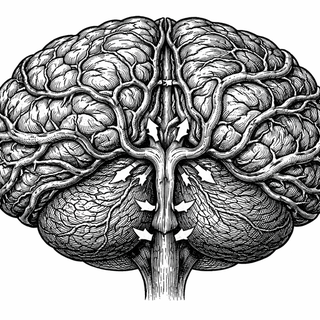
Then came the glymphatic system: the brain's own nocturnal cleaning crew that power-washes your neurons with cerebrospinal fluid while you sleep. But here's the thing nobody fully understood until now: what makes this system work better or worse? A team of researchers from Fudan University and the Chinese Academy of Sciences just dropped a study that basically says, "Hey, turns out when your brain's blood vessels are all swollen up, the cleaning crew can't get through."
Less Blood, More Brain Drain
The paper, published in Cell Reports, examined mice under six different states of consciousness - from wide awake and caffeinated to various flavors of anesthetized. Using multimodal MRI (which is exactly as fancy as it sounds), the team tracked how cerebrospinal fluid flows into the brain and correlates with cerebral blood volume.
Here's the punchline: glymphatic influx and cerebral blood volume are negatively correlated. When blood volume goes down, cerebrospinal fluid flow goes up. It's like trying to clean a crowded nightclub - you need some people to leave before the janitors can mop the floor.
The researchers found that states like dexmedetomidine sedation and ketamine/xylazine anesthesia boosted glymphatic influx significantly. Isoflurane alone? Actually decreased it compared to being awake. So not all unconscious states are created equal when it comes to brain maintenance.
Why Your Blood Vessels Are Being Selfish
The brain operates in a confined space - your skull isn't exactly expandable real estate. Blood and cerebrospinal fluid are essentially fighting for the same room. When arteries dilate and fill with more blood, there's less physical space for CSF to flow through those perivascular channels that act like the brain's drainage ditches.
Previous research established that vasomotion - those rhythmic 0.1-0.3 Hz oscillations where blood vessels pulse like a slow heartbeat - helps drive fluid through the system. But this study adds something new: it's not just about the dynamic pulsing. The overall, tonic level of blood volume matters too. Think of it as the difference between waves (vasomotion) and the tide level (cerebral blood volume). Both affect what washes up on shore.
A 2024 study in Cell showed that norepinephrine oscillations during sleep drive slow vasomotion, which pumps CSF through the brain like a gentle massage. The new research suggests CBV regulation operates alongside this mechanism - a kind of background setting that either helps or hinders the whole operation.
So What? (The Actually Important Part)
Here's where it gets interesting for humans. Neurodegenerative diseases like Alzheimer's are characterized by the buildup of protein garbage - amyloid beta, tau - that the glymphatic system should be clearing out. Research from Cambridge recently showed that impaired glymphatic function predicts dementia risk years in advance.
If cerebral blood volume is a controllable variable that affects waste clearance, that's potentially huge. Unlike sleep quality, which is notoriously hard to optimize, blood vessel tone can be targeted pharmacologically. The study suggests CBV modulation could become a therapeutic strategy for enhancing brain waste clearance in conditions where protein aggregation runs rampant.
The authors are careful to note this is a mouse study, and brains vary between species. But the core finding - that there's a consciousness-independent vascular component affecting glymphatic function - opens up new questions about how we might tune this system in humans.
The Bottom Line
Your brain is running a 24/7 waste management operation, and it turns out the plumbing gets backed up when there's too much blood hogging the pipes. This isn't about blood being bad (your neurons need that oxygen). It's about balance, timing, and the hidden hydraulic dance happening inside your skull every moment you're alive - or anesthetized, as the case may be.
The next time someone tells you to "clear your head," you can inform them that's actually a cerebrospinal fluid management issue, and perhaps they should consider dexmedetomidine. (Please don't actually do this.)
References
Li, J., Liu, X., Bo, B., Pei, M., Zhang, K., Tong, C., Jing, M., Zhang, S., Li, Y., Cang, J., Liang, Z., & Fang, F. (2026). Glymphatic influx is negatively correlated with cerebral blood volume in male mice. Cell Reports, 45(4), 117182. DOI: 10.1016/j.celrep.2026.117182 | PMID: 41904953
Hauglund, N. L., Pavan, C., Nedergaard, M., et al. (2024). Norepinephrine-mediated slow vasomotion drives glymphatic clearance during sleep. Cell, 188(1), 1-17. DOI: 10.1016/j.cell.2024.11.027 | PMID: 39788123
University of Cambridge. (2025). Dementia linked to problems with brain's waste clearance system. https://www.cam.ac.uk/research/news/dementia-linked-to-problems-with-brains-waste-clearance-system
Lohela, T. J., Lilius, T. O., & Bhargav, M. (2025). The glymphatic system in neurodegenerative diseases and brain tumors. PMC. https://pmc.ncbi.nlm.nih.gov/articles/PMC12821863/
Disclaimer: The image accompanying this article is for illustrative purposes only and does not depict actual experimental results, data, or biological mechanisms.