
Your brain is a glutton. It weighs about two percent of your body but demands roughly twenty percent of your glucose supply - the metabolic equivalent of a housecat that eats like a Great Dane. Getting all that sugar past the blood-brain barrier falls to a single molecular workhorse: a protein called GLUT1. When GLUT1 levels drop, the brain doesn't politely downshift. It panics.
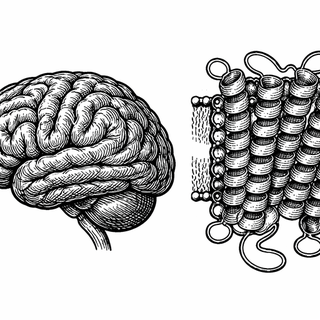
That panic has a name: GLUT1 deficiency syndrome (GLUT1DS), sometimes called De Vivo disease. Children born with a faulty copy of the gene encoding GLUT1 develop seizures, movement disorders, and developmental delays - their brains essentially running on fumes while the rest of the body has fuel to spare. It's like having a full gas tank but a crimped fuel line to the engine that matters most.
The Diet That Helps (But Doesn't Fix)
For decades, the main treatment has been the ketogenic diet - a high-fat, low-carb regimen that coaxes the body into producing ketone bodies, which slip past the blood-brain barrier through a different door entirely. And it works, sort of. About eighty percent of patients see dramatic seizure reduction (Klepper et al., 2020). But "sort of" is a heavy phrase when you're talking about a child's developing brain. The diet doesn't touch the underlying problem - low GLUT1 - and it struggles with movement disorders, varies wildly by age, and demands the kind of dietary discipline that would test a monk (Klepper, 2025).
What the field has wanted, for a long time, is a way to turn the actual GLUT1 dial back up.
Enter the RNA Nobody Was Watching
Here's where things get genuinely interesting. A team led by Maoxue Tang and Umrao Monani at Columbia University went looking for what regulates GLUT1 expression and found a long noncoding RNA - a stretch of genetic material that doesn't code for a protein but instead acts like a volume knob for the gene next door. This particular molecule, called SLC2A1-DT, sits antisense to the GLUT1 gene and quietly tunes its output (Tang et al., 2025).
Think of it like a thermostat. The brain's glucose needs aren't static; they shift with activity, development, and demand. GLUT1 levels have to respond quickly, and SLC2A1-DT appears to be part of that fine-tuning machinery. Raise the lncRNA, and GLUT1 goes up. Lower it, and GLUT1 drops. It's an elegant little feedback system, the kind of quiet regulatory layer that makes you realize how much of biology runs on whisper networks rather than shouted commands.
Giving Sick Mice a Molecular Boost
The team didn't stop at describing the mechanism. They packaged the lncRNA into viral vectors and delivered it directly to the brains of GLUT1-deficient mice - animals that model the human disease with its seizures and motor problems. The results were striking: GLUT1 expression climbed, brain glucose levels improved, and the animals got measurably better.
This matters for a reason beyond the obvious. No one had previously tried delivering an lncRNA itself as a therapeutic agent. Researchers have targeted lncRNAs for knockdown, silenced them, worked around them. But handing a cell more of a regulatory RNA and watching it crank up production of a needed protein? That's a new page in the playbook. The authors call it "a unique therapeutic paradigm," and for once the claim doesn't feel like overreach.
Why This Ripples Far Beyond a Rare Disease
GLUT1DS affects somewhere between one in 24,000 and one in 90,000 births - rare enough that most neurologists see only a handful of cases in a career. But GLUT1 itself is anything but niche. The same transporter that starves developing brains in GLUT1DS is also diminished in the brains of people with Alzheimer's disease, where reduced glucose transport compounds the neurodegeneration already underway (Winkler et al., 2015; Fakorede et al., 2025).
If an lncRNA can safely dial GLUT1 back up in a mouse brain, the question becomes: could the same approach help an aging brain hold onto its glucose supply? It's early - mouse-to-human is a long road paved with caveats - but the underlying logic is compelling. The brain's glucose economy matters across the entire lifespan, from development through neurodegeneration (Tang & Monani, 2021).
There's something quietly profound about a molecule that doesn't make protein, doesn't code for anything the cell obviously "needs," and yet holds a key to whether the brain gets fed. It's a reminder that the genome's most important conversations aren't always the loudest ones - and that sometimes the best therapy isn't a new drug, but learning to speak the cell's own regulatory language.
References
-
Tang M, Teng S, Peng Y, et al. A therapeutic role for a regulatory glucose transporter1 (GLUT1)-associated lncRNA in GLUT1-deficient mice. The Journal of Clinical Investigation. 2025. DOI: 10.1172/JCI193519. PMID: 41785035
-
Klepper J, Akman C, Armeno M, et al. Glut1 Deficiency Syndrome (Glut1DS): State of the art in 2020 and recommendations of the international Glut1DS study group. Epilepsia Open. 2020;5(3):354-365. DOI: 10.1002/epi4.12414. PMCID: PMC7469861
-
Klepper J. Glut1 Deficiency Syndrome: Novel Pathomechanisms, Current Concepts, and Challenges. Journal of Inherited Metabolic Disease. 2025;48(3):e70044. DOI: 10.1002/jimd.70044. PMCID: PMC12099281
-
Winkler EA, Nishida Y, Sagare AP, et al. GLUT1 reductions exacerbate Alzheimer's disease vasculo-neuronal dysfunction and degeneration. Nature Neuroscience. 2015;18(4):521-530. DOI: 10.1038/nn.3966. PMCID: PMC4734893
-
Fakorede S, Sodiq TA, Ajagbe AO, et al. Interplay of Glut1 alteration and Alzheimer's disease: A narrative review on glucose transport and energy metabolism. Journal of Alzheimer's Disease. 2025;108(2):470-486. DOI: 10.1177/13872877251377793. PMID: 40944317
-
Tang M, Monani UR. Glut1 deficiency syndrome: New and emerging insights into a prototypical brain energy failure disorder. Neuroscience Insights. 2021;16:26331055211011507. DOI: 10.1177/26331055211011507. PMCID: PMC8474335
Disclaimer: The image accompanying this article is for illustrative purposes only and does not depict actual experimental results, data, or biological mechanisms.