
The gut-brain axis continues to be the gift that keeps on giving. Every few months, scientists discover yet another way the microbes living in your intestines are meddling with your brain, and honestly, it's getting a little unsettling. The latest twist comes from a study in Cell Reports that found a specific bacterial metabolite called indole-3-carboxylate (I3CA) that essentially supercharges the immune cells responsible for attacking nerve tissue in multiple sclerosis. Even better (or worse, depending on your perspective), you can measure this troublemaker in blood samples, which might actually be useful.
The Antibiotic Clue
The story starts with mice that have MS-like disease driven by Th17 cells. These are a type of immune cell that, when they get too aggressive, start attacking the body's own myelin, the insulation around nerve fibers. In MS patients, this is a very bad thing.
Researchers wanted to know if gut bacteria were involved, so they did what scientists often do: they gave the mice antibiotics to wipe out their gut microbiome. Nuclear option, meet intestinal ecosystem.
Something interesting happened. Without their normal gut bacteria, the mice's Th17 cells became less aggressive. Their gene expression shifted away from "attack mode." It was like the cells had been taking performance-enhancing drugs, and someone had just cleared their system.
This was a big clue. Something produced by the normal gut microbiome was making these immune cells nastier. Time to figure out what.
The Very Glamorous Science of Poop Filtrate
To identify the mystery molecule, researchers took filtrates from mouse feces (yes, really) and applied them to Th17 cells growing in dishes. These filtrates contain all the small molecules present in gut contents while filtering out the bacteria themselves.
The result? The Th17 cells exposed to these fecal filtrates became better at causing brain inflammation. When transferred into mice, they caused worse disease. Something in that brown soup was activating a more aggressive immune response.
The team used metabolomics, which is essentially running samples through very expensive machines that can identify thousands of different molecules simultaneously. The analysis pointed to altered tryptophan-derived metabolites. Tryptophan is an amino acid you get from food, and gut bacteria process it into various byproducts. One of these byproducts, I3CA, emerged as a prime suspect.
Testing the Suspect
If I3CA was really the culprit, giving it to mice should make their disease worse. So the researchers fed mice I3CA orally and watched what happened.
The mice developed disease faster and more severely. Their Th17 cells became what scientists call "encephalitogenic," which is a mouthful that basically means "really good at attacking brain tissue." The metabolite was turning normal aggressive immune cells into highly effective nerve destroyers.
But here's where it gets clinically interesting. The researchers checked blood samples from actual human MS patients, not just mice. They found that I3CA levels correlated with disease severity. People with higher I3CA had higher levels of neurofilament light chain, a biomarker that indicates neurons are getting damaged. This wasn't just a mouse thing. It appeared to be happening in people too.
From "Why Does This Happen" to "What Can We Do About It"
Finding a mechanism is nice, but the real question is whether this knowledge can help anyone. There are a few angles here.
First, if a gut metabolite is driving disease severity, you might be able to intervene at the source. Maybe certain dietary changes could reduce I3CA production. Maybe specific probiotic or prebiotic interventions could shift the gut microbiome away from producing it. Maybe a drug could block whatever bacterial enzyme makes I3CA in the first place. These are all open questions, but at least now there's a target to aim at.
Second, having a blood biomarker that tracks with disease activity is genuinely useful. MS is notoriously variable. Some people have aggressive disease, others have mild cases, and predicting who's who is hard. If I3CA levels help predict severity or track response to treatment, that's clinically valuable information.
Third, this adds another piece to the puzzle of why MS is so influenced by environmental factors. Diet, geography, and lifestyle all affect MS risk in ways that have been hard to explain. If gut bacteria and their metabolites are major players, suddenly those connections start making more sense.
The gut-brain axis remains one of the wildest frontiers in medicine. Your intestines are basically running a chemistry lab that pumps products directly into your bloodstream, and your brain has opinions about what's in that mix. Understanding those opinions might be the key to treating diseases we've struggled with for decades.
Reference: Rebeaud J, et al. (2025). Gut-derived metabolites drive Th17 cell pathogenicity in multiple sclerosis. Cell Reports. doi: 10.1016/j.celrep.2025.116326 | PMID: 40975867
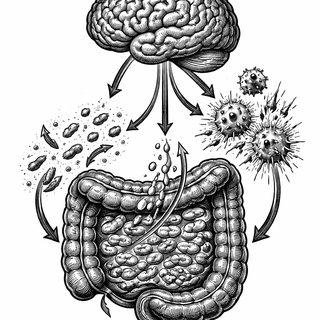
Disclaimer: The image accompanying this article is for illustrative purposes only and does not depict actual experimental results, data, or biological mechanisms.