I once had a patient, a retired librarian named Margaret, who could still recite Dewey Decimal categories from memory but couldn't remember what she'd had for breakfast. "My brain is betraying me," she said during one visit. She was wrong, as it turns out. It wasn't her brain pulling the strings. It was her gut.
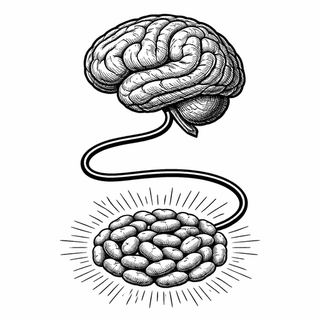
New research from Stanford Medicine and the University of Pennsylvania has uncovered something that would have seemed absurd even a decade ago: the bacteria living in your intestines can directly sabotage your memory as you age. And the really wild part? Fixing the communication line between your gut and brain can reverse this decline almost entirely.
The Accidental Discovery
The whole thing started when Timothy Cox, a graduate student at Penn, noticed something odd. Young mice housed with older mice were performing terribly on memory tests. These were spry two-month-old animals suddenly acting like they'd forgotten how to mouse.
What Cox and his team eventually traced was a cascade that reads like a biological Rube Goldberg machine. As mice (and likely humans) age, a specific gut bacterium called Parabacteroides goldsteinii becomes more abundant. This microbe produces medium-chain fatty acids that trigger inflammation in immune cells lining the gut. Those inflamed cells release a signaling molecule called IL-1β, which essentially puts the vagus nerve to sleep.
The vagus nerve is your body's information superhighway between gut and brain. It's the reason you get butterflies in your stomach when nervous, the reason certain foods make you feel calm or alert. When this nerve gets suppressed, the hippocampus - your brain's memory-formation center - stops receiving critical signals. Memories don't encode properly. Things slip away.
Old Mice, Young Tricks
Here's where it gets interesting. The researchers raised some mice in completely sterile, germ-free environments. These mice aged normally in every way except one: their memory stayed sharp. At 18 months old (roughly equivalent to a 65-year-old human), they performed memory tasks as well as two-month-old youngsters.
Then the scientists got creative. They transplanted gut bacteria from old mice into young, germ-free animals. Almost immediately, these young mice started failing memory tests. They'd become cognitively old despite being physically young.
The reverse experiment worked too. When researchers stimulated the vagus nerve in elderly mice using gut hormones like CCK or GLP-1 receptor agonists (the same class of drugs as Ozempic), something remarkable happened. Old, forgetful animals suddenly navigated mazes and recognized objects as deftly as their younger counterparts.
"The degree of reversibility of age-related cognitive decline in the animals just by altering gut-brain communication was a surprise," noted Dr. Christoph Thaiss, senior author of the study.
What This Means for Your Actual Human Brain
Before anyone runs to the pharmacy demanding vagus nerve stimulation, some caveats apply. P. goldsteinii exists in human microbiomes, but whether it plays the same role in our cognitive decline remains uncertain. Mouse guts are considerably less complex than ours.
That said, the implications are tantalizing. Vagus nerve stimulation is already an FDA-approved treatment for epilepsy and stroke recovery. John Cryan, a neuroscientist at University College Cork who was not involved in the study, noted that this research "provides a much clearer mechanistic pathway" for understanding how gut bacteria influence brain function.
The findings also lend credence to something nutritionists have suggested for years: diet matters for your brain. The Mediterranean diet, rich in fiber and fermented foods, has long been associated with lower rates of cognitive decline. This research suggests a potential mechanism - maintaining a healthier gut microbiome might preserve that crucial gut-brain dialogue.
The Bottom Line
Memory decline isn't inevitable. It's not simply neurons wearing out like brake pads on an old car. Instead, it appears to be an active process, driven in part by bacterial squatters in your intestines that accumulate over time. And active processes can potentially be interrupted, slowed, or even reversed.
Margaret, my retired librarian, would have appreciated the irony. All those years cataloguing knowledge, and the key to keeping it might have been in her gut all along.
References:
-
Cheng, Y.-T., & Mazmanian, S. K. (2026). Gut microbes affect cognition during ageing. Nature. DOI: 10.1038/d41586-026-00492-1
-
Cox, T. O., et al. (2026). Intestinal interoceptive dysfunction drives age-associated cognitive decline. Nature. DOI: 10.1038/s41586-026-10191-6
-
Stanford Medicine News. (2026, March 11). Enhancing gut-brain communication reversed cognitive decline, improved memory formation in aging mice. Link
-
Carabotti, M., et al. (2015). The gut-brain axis: interactions between enteric microbiota, central and enteric nervous systems. Annals of Gastroenterology, 28(2), 203-209. PMID: 25830558
Disclaimer: The image accompanying this article is for illustrative purposes only and does not depict actual experimental results, data, or biological mechanisms.