
So here's something that'll make you look at your nervous system differently: cancer cells have apparently been using your nerves like a private highway system, and we're only now figuring out the toll booth mechanism.
Small cell lung cancer (SCLC) is the overachiever nobody asked for. It's aggressive, spreads fast, and has a particularly nasty habit called perineural invasion - basically, tumor cells wrapping themselves around nerves and traveling along them like they're catching the express train to Metastasis City. A new study from researchers at Shanghai Chest Hospital just cracked the code on how these cells pull off this neural heist, and it involves a protein with a very science-y name and a surprisingly common supplement ingredient.
The Nerve of It All
Perineural invasion isn't your typical cancer spread. While most tumors rely on blood vessels or lymph nodes to get around, some clever cancer cells figured out they could infiltrate the space around nerve fibers and essentially use the nervous system as a biological subway. The researchers first confirmed what clinicians suspected: in surgical SCLC patients, perineural invasion is an independent predictor of worse outcomes. Translation? If cancer cells are cozying up to your nerves, things get complicated fast.
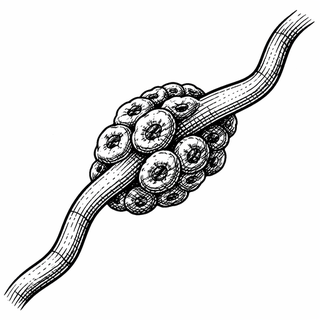
But the question remained: what makes these cancer cells suddenly develop a taste for neural tissue?
Enter STMN2 - The Unlikely Villain
The answer involves stathmin-2 (STMN2), a protein that normally minds its own business in neurons, helping regulate the tiny internal scaffolding that gives cells their shape. You might recognize STMN2 from its recent cameo in ALS research, where its loss contributes to motor neuron death.
Here's where it gets weird. The researchers found that when SCLC cells hang out near neural tissue, the nerve microenvironment cranks up STMN2 production in those cancer cells. It's like the nerves are accidentally handing the tumor cells a roadmap - and a set of keys.
But STMN2 doesn't just sit there. In a concentration-dependent manner (scientist-speak for "the more you have, the stronger the effect"), it kicks the beta-alanine metabolic pathway into high gear.
Wait, Beta-Alanine? Like the Supplement?
Yep. That same beta-alanine that gym bros take to feel tingly before deadlifts is playing a starring role in cancer cell invasion. The study showed that as STMN2 levels rise, beta-alanine accumulates inside the cancer cells. This metabolic shift supercharges the cells' ability to migrate and invade tissue.
The researchers weren't just speculating. They knocked down STMN2 in mouse models and watched neural invasion plummet. Then - and this is the elegant part - they gave the mice beta-alanine supplements. The invasion came roaring back. It's like proving the getaway car matters by taking away the keys, then handing them back.
Why This Actually Matters
SCLC is notoriously difficult to treat. Despite initial response rates of 60-70% to chemotherapy plus immunotherapy, most patients relapse within months. The five-year survival rate hovers around 12-30%, and we've made frustratingly slow progress compared to other cancers.
What makes this study valuable isn't just understanding why SCLC loves nerves. It's that the neural-STMN2-beta-alanine axis represents what researchers call a "metabolic vulnerability" - essentially a weak spot. If you can disrupt the beta-alanine pathway or block STMN2 upregulation, you might be able to cut off one of cancer's favorite escape routes.
The tumor-nerve crosstalk field has exploded recently, with researchers recognizing that nerves aren't just passive bystanders in cancer. They actively participate, sometimes helping tumors grow and spread. This study adds a crucial piece: the specific molecular handshake that lets SCLC cells exploit neural tissue.
The Bigger Picture
We're in the middle of a paradigm shift in how we think about cancer microenvironments. For decades, the focus was on blood vessels feeding tumors. Now we're realizing that nerves - through signaling molecules, neurotrophic factors, and metabolic crosstalk - play their own complicated role.
This study won't immediately change treatment protocols. But it does point toward new therapeutic angles: drugs targeting STMN2 expression, inhibitors of beta-alanine metabolism, or strategies to disrupt the neural microenvironment's influence on cancer cells. In a disease with few good options, every new angle counts.
The next time someone mentions small cell lung cancer, you can drop the fact that cancer cells are literally using neurons as travel agents. And that we finally know which protein is booking the tickets.
References
-
Zhou Y, Zhong R, Zhang Y, et al. Regulation of neuronal invasion of small cell lung cancer by STMN2/β-alanine-controlled metabolic reprogramming. Cell Reports. 2026;45(4):117208. DOI: 10.1016/j.celrep.2026.117208
-
Sun X, et al. Significance and mechanisms of perineural invasion in malignant tumors. Frontiers in Oncology. 2025. https://www.frontiersin.org/journals/oncology/articles/10.3389/fonc.2025.1572396/full
-
Marchetti L, et al. Stathmin-2 enhances motor axon regeneration after injury independent of its binding to tubulin. PNAS. 2025. https://www.pnas.org/doi/10.1073/pnas.2502294122
-
Liu Y, et al. Comprehensive characterization of β-alanine metabolism-related genes in HCC identified a novel prognostic signature related to clinical outcomes. Scientific Reports. 2024. PMCID: PMC11087131
-
Hijacking of the nervous system in cancer: mechanism and therapeutic targets. Molecular Cancer. 2025. https://link.springer.com/article/10.1186/s12943-025-02246-5
-
Current and future perspectives in extensive-stage small-cell lung cancer. PMC. 2025. PMCID: PMC11909689
-
Small Cell Lung Cancer: A Review. PubMed. 2025. PMID: 40163214
Disclaimer: The image accompanying this article is for illustrative purposes only and does not depict actual experimental results, data, or biological mechanisms.