
For over a century, neuroscientists believed that somewhere in your spinal cord sat a tidy little circuit - a "central pattern generator" - quietly orchestrating walking, swimming, and other rhythmic movements like some biological metronome. It was an elegant theory, really. One circuit, one rhythm, job done.
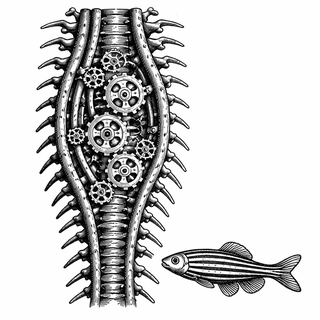
Turns out, that's a bit like describing a Formula 1 pit crew as "people who change tyres."
A new review in Nature Reviews Neuroscience by Abdeljabbar El Manira at the Karolinska Institutet has essentially torn up the old blueprint and drawn something far more interesting. The central pattern generator isn't a single rhythm machine - it's a modular, gear-shifting, sensory-integrating control system that would make automotive engineers weep with admiration.
The Old Story (Which Was Wrong, But Charmingly So)
Back in 1911, a physiologist named Thomas Graham Brown did something rather unsporting to some cats. He disconnected their spinal cords from their brains and from sensory feedback, and discovered - to everyone's surprise - that the spinal cord could still generate walking patterns on its own. No brain required. No sensory input needed. The spinal cord was running the show solo.
Graham Brown proposed the "half-center" model: two opposing neural centres that inhibit each other, flip-flopping between flexion and extension like an organic see-saw. It was beautifully simple, which is probably why neuroscience clung to it for decades.
The problem is that walking isn't simple. Neither is swimming, or running, or the peculiar shuffle one adopts when the kitchen floor is unexpectedly wet.
Enter the Zebrafish (Nature's Transparent Test Subject)
Here's where zebrafish earn their keep. These tiny, see-through fish have become the darlings of motor neuroscience because you can literally watch their neurons fire in real time. And what researchers have discovered by peering into their crystalline spinal cords is that the CPG isn't one circuit - it's several speed-specific modules stacked together.
Think of it like a bicycle's gear system. Adult zebrafish have three distinct modules: slow, intermediate, and fast. As the fish picks up speed, the spinal cord sequentially recruits each module - shifting gears, essentially. Different interneurons wake up, different motor neurons engage, and the whole system reconfigures itself for the new demands.
The shift isn't random. Interneurons are arranged topographically in the spinal cord - more ventral neurons handle slow speeds, more dorsal ones engage for fast swimming. It's anatomical organisation with a purpose, which is the sort of elegant solution that makes evolution look like it occasionally knows what it's doing.
This Isn't Just a Fish Thing
One might reasonably ask whether tiny transparent fish are representative of, say, humans who occasionally attempt to jog. The answer appears to be: surprisingly yes.
When researchers genetically removed the equivalent interneurons in mice, the animals could walk perfectly well but couldn't run properly. The gear-shifting principle - specific neural modules for specific speeds - seems to be conserved across vertebrates. Your spinal cord is almost certainly running similar modular software, even if no one has yet watched your neurons glow while you sprint for a bus.
The brainstem gets involved too. Two distinct midbrain regions control different gaits in mice: both contribute to slow, alternating-limb walking, but only one - the cuneiform nucleus - can trigger that high-speed, all-legs-together gallop used in escape behaviours. Speed and gait aren't afterthoughts; they're encoded in dedicated neural architecture.
Motor Neurons: Not Just Following Orders
Perhaps the most subversive finding in El Manira's review is the rehabilitation of motor neurons. For years, these cells were considered mere executors - the muscles' secretaries, taking dictation from the clever interneurons above them.
Not so, it turns out. Motor neurons actively participate in generating and shaping rhythm. They're not just reading the score; they're improvising. Proprioceptors - the sensory neurons that detect body position - have similarly been promoted from "occasional consultants" to "integral CPG components."
In zebrafish, researchers discovered a novel spinal organ where proprioceptive neurons have a dual function: they sense movement and directly inhibit rhythm-generating neurons. It's a sensorimotor hybrid circuit, merging rhythm generation with real-time feedback in the same cells. Central and peripheral, all in one economical package.
Why This Matters Beyond the Laboratory
Understanding how spinal circuits generate and modulate movement isn't merely academic navel-gazing. Spinal cord injuries disrupt these circuits, and the dream of restoring movement depends on understanding what's actually broken. If the CPG is modular, perhaps only certain modules need reactivation. If proprioceptive feedback is integral to rhythm generation, rehabilitation strategies should incorporate it from the start.
There's also the matter of evolution. The fact that gear-shifting principles appear conserved from fish to mice suggests these solutions are genuinely good ones - stable enough to persist across hundreds of millions of years of vertebrate divergence. The zebrafish swimming in a Stockholm laboratory and the human attempting to parallel park are running variations on very old code.
The Uncomfortable Truth
We've spent a century with a model that was elegant, intuitive, and substantially wrong. The real CPG is messier, more distributed, and far more clever than the half-centre hypothesis suggested. It doesn't just tick along like a metronome - it shifts gears, integrates sensory feedback, and reconfigures itself continuously based on what the animal needs to do.
Which is rather reassuring, when you think about it. The machinery keeping you upright and moving isn't some brittle clockwork mechanism. It's an adaptive, multilayered control system that's been refined by several hundred million years of quality assurance.
Your spinal cord, it turns out, is considerably more sophisticated than you are.
References
-
El Manira, A. (2026). Redefining the central pattern generator for vertebrate locomotion. Nature Reviews Neuroscience. DOI: 10.1038/s41583-026-01029-1
-
Stuart, D.G. & Hultborn, H. (2008). Thomas Graham Brown (1882-1965), Anders Lundberg (1920-), and the neural control of stepping. Brain Research Reviews. PMID: 18582502
-
Ryczko, D. et al. (2018). Midbrain circuits that set locomotor speed and gait selection. Nature. DOI: 10.1038/nature25448. PMCID: PMC5937258
-
Bhumbra, G.S. & Bhumbra, S.K. (2021). A spinal organ of proprioception for integrated motor action feedback. Neuron. DOI: 10.1016/j.neuron.2021.01.018. PMID: 33577748
-
Marder, E. & Calabrese, R.L. (1996). Principles of rhythmic motor pattern generation. Physiological Reviews. PMID: 8618961
Disclaimer: The image accompanying this article is for illustrative purposes only and does not depict actual experimental results, data, or biological mechanisms.