
So there's this protein in your brain called alpha-synuclein. In a healthy brain, it hangs out at synapses doing... honestly, scientists are still fuzzy on the details (classic neuroscience). But in Parkinson's disease, it goes full chaos mode - clumping together into sticky deposits called Lewy bodies that slowly suffocate dopamine-producing neurons. About 90% of the alpha-synuclein found in these brain-clogging protein hairballs is phosphorylated at a specific spot (serine-129, for the biochemistry nerds), compared to less than 4% in healthy brains. The correlation isn't subtle.
Here's where things get interesting. Researchers at Northwestern just discovered that a simple amino acid derivative - one that's already FDA-approved for a completely different disease - can dramatically reduce these toxic protein clumps and restore synaptic function in Parkinson's models.
The Accidental Parkinson's Treatment
N-acetyl-L-leucine (NALL, sold as Aqneursa) got FDA approval in 2024 for treating Niemann-Pick disease type C, a rare lysosomal storage disorder. But Dimitri Krainc and colleagues at Northwestern had a hunch it might do something useful in Parkinson's too.
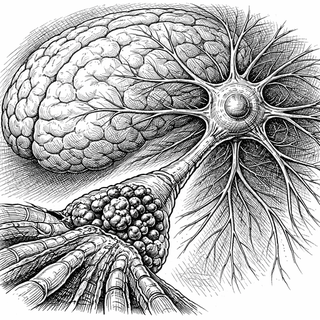
They tested NALL on dopaminergic neurons derived from patient stem cells - not just any patients, but people carrying the genetic mutations most commonly linked to familial Parkinson's (GBA1, LRRK2, VPS35) plus neurons from sporadic cases with no known genetic cause. The results were striking across the board: NALL treatment slashed levels of phosphorylated alpha-synuclein, the toxic form that accumulates in Lewy bodies.
How It Actually Works (The Cool Part)
When the team ran proteomic analysis to figure out what NALL was actually doing, they discovered it wasn't just randomly cleaning house. NALL cranks up production of a serine protease called HTRA1 - essentially a protein-chewing enzyme that's been shown to disaggregate alpha-synuclein fibrils and render them incapable of seeding further aggregation.
Think of HTRA1 as the brain's power-washing service. It doesn't just scrub the protein gunk - it breaks it down into fragments that can't recruit more alpha-synuclein into the toxic spiral. When the researchers blocked HTRA1, NALL's benefits disappeared. No protease, no cleanup.
But that's only half the story. NALL also boosted levels of parkin, another protein that goes haywire in Parkinson's (mutations in the parkin gene cause early-onset disease). More parkin meant better dopamine transporter function and faster synaptic vesicle recycling - basically, neurons started doing their jobs properly again.
From Petri Dish to Living Brain
The lab dish results were compelling, but the mouse data sealed it. LRRK2-R1441C knockin mice (which develop Parkinson's-like symptoms) received oral NALL treatment. The outcome: decreased phosphorylated alpha-synuclein, increased parkin levels, and improved dopamine-dependent motor learning.
These mice actually got better at tasks requiring dopamine signaling. That's not nothing.
Why This Matters for Patients
Current Parkinson's treatments are basically sophisticated symptom management. Levodopa replaces the dopamine you're losing, but it doesn't stop the disease from eating away at your neurons. Disease-modifying therapies that actually slow or halt progression remain the holy grail.
NALL hits multiple disease-relevant pathways simultaneously: clearing toxic protein, boosting protective proteins, improving synaptic function, and supporting both mitochondrial and lysosomal health. The fact that it's already FDA-approved and has a clean safety profile means clinical trials could potentially move faster than typical drug development timelines.
"This work demonstrates that NALL can influence several Parkinson's disease-relevant pathways," noted Dr. Pingping Song, the study's lead author. Whether that translates to slowing disease progression in humans remains the ten-million-dollar question.
The Fine Print
Before anyone starts raiding pharmacies: this is preclinical research. Patient-derived neurons and mouse models are crucial for understanding mechanisms, but human brains are their own special brand of complicated. The researchers are clear that controlled clinical trials will be needed to determine optimal dosing and whether NALL actually modifies disease course in humans.
Still, there's something satisfying about finding that a drug already approved for one rare neurological condition might unlock treatments for one of the most common. Sometimes the molecule you need is already sitting in someone else's medicine cabinet.
References
-
Song P, Chen C, Franchini R, et al. (2026). N-acetyl-l-leucine lowers α-synuclein levels and improves synaptic function in Parkinson's disease models. Journal of Clinical Investigation, 136(5):e196137. DOI: 10.1172/JCI196137 | PMID: 41766663 | PMC: PMC12948429
-
Melo TQ, et al. (2024). HTRA1 disaggregates α-synuclein amyloid fibrils and converts them into non-toxic and seeding incompetent species. Nature Communications, 15:2436. DOI: 10.1038/s41467-024-46538-8 | PMC: PMC10948756
-
Gupta N, et al. (2023). Synuclein phosphorylation: pathogenic or physiologic? npj Parkinson's Disease, 9:38. DOI: 10.1038/s41531-023-00487-z
-
Onyango IG, et al. (2025). Pathological Protein Targets in Parkinson's Disease: Progress Towards the Development of Disease-Modifying Therapies. CNS Drugs. DOI: 10.1007/s40263-026-01275-y
-
Cortelli P, et al. (2024). Trial of N-Acetyl-l-Leucine in Niemann–Pick Disease Type C. New England Journal of Medicine, 390:421-431. DOI: 10.1056/NEJMoa2310151
Disclaimer: The image accompanying this article is for illustrative purposes only and does not depict actual experimental results, data, or biological mechanisms.