The brain is not just neurons firing like caffeinated group chats. It is also an economy with sanitation crews, border patrol, compliance officers, and one very intense in-house security team. Microglia sit in that last category. They are the brain's resident immune cells - part janitor, part bouncer, part neighborhood gossip network. And when they go wrong, the consequences are not subtle. The new eLife paper on microglia replacement asks a sneaky, high-stakes question: if you swap in engineered stand-ins for microglia, can you figure out whether these cells are causing disease from the inside? For Aicardi-Goutières syndrome, the answer looks a lot like yes - and that is a big deal.
The brain's weirdest employees
Microglia come from a different developmental lineage than most other brain cells. They move into the brain early, set up shop, and then spend life monitoring the neighborhood for trouble. If neurons are the flashy startup founders, microglia are the operations team making sure the office does not literally catch fire.
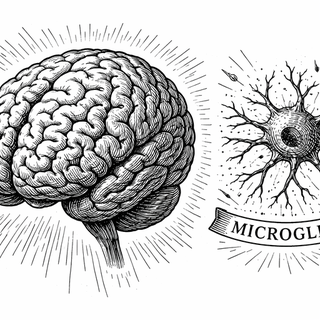
That matters in diseases driven by inflammation. Aicardi-Goutières syndrome, or AGS, is a rare inherited disorder that often hits early in life and can cause severe neurological problems. A major theme in AGS is runaway interferon signaling - basically the immune system acting like it got an emergency alert and never stopped screaming. Mutations in ADAR1, an RNA-editing gene, are one known cause. ADAR1 usually helps cells avoid mistaking their own RNA for viral invaders. Without it, sensors like MDA5 can go full conspiracy theorist.
A cleaner way to test the culprit
This study introduced a clever tool: ER-Hoxb8 conditionally immortalized macrophages. Translation - scientists can grow bone marrow-derived immune progenitors in a stable, manipulable form, edit them genetically, and then use them as replacement cells in a microglia-free mouse brain. It is a bit like building a workforce in the lab, changing one line in the employee handbook, and then seeing what happens when those workers take the night shift in the brain.
The authors showed these ER-Hoxb8 macrophages look a lot like standard bone marrow-derived macrophages in vitro. More importantly, when transplanted into brains missing microglia, they engrafted into brain tissue and adopted microglia-like features. That gives researchers a practical replacement system - not just for observing these cells, but for testing what specific mutations do inside the brain's immune compartment.
And then came the plot twist with legal implications for the prosecution.
The case against mutant microglia
The team used CRISPR to knock out Adar1 in these ER-Hoxb8 cells. In dishes, that caused interferon secretion and reduced macrophage production. So far, not shocking - AGS biology has been waving this flag for a while. They also found that knocking out Ifih1, the gene encoding MDA5, rescued those problems in vitro. Nice. Clean. Mechanistic. The sort of result that makes molecular biologists nod like they just heard a very satisfying bass line.
But in living brains, things got messier. Adar1-mutant cells failed to engraft properly, and the Ifih1 rescue did not fully save that defect in vivo. That is important because it suggests the brain is not just a petri dish with better branding. Real tissue adds extra rules, extra constraints, and extra ways for cells to fail.
The authors then pushed further using a patient-relevant ADAR1 mutation, D1113H. When they made replacement cells carrying that mutation, those microglia-like cells drove interferon production in vivo. That sharpens the argument that microglia are not innocent bystanders in AGS. They may be active contributors to the brain pathology itself.
Why this matters outside one rare disease
Rare diseases often act like brutal little stress tests for biology. AGS is uncommon, but the broader question - how brain immune cells fuel neurological damage - shows up everywhere from neurodevelopmental disorders to neurodegeneration. If you can swap in engineered microglia-like cells and watch what happens, you get a much better shot at separating cause from chaos.
There is also a practical angle. Primary microglia are hard to obtain and hard to manipulate at scale. ER-Hoxb8 cells can be expanded, frozen, genetically edited, and standardized. That makes them useful not just for one paper, but as a platform. In research terms, this is less "we found a thing" and more "we built a machine that can find more things."
The fine print, because biology loves fine print
This is still a mouse study. Microglia-like is not identical to native human microglia. Engraftment systems are powerful, but they are also artificial by design. And AGS is complicated - interferon signaling is central, but not the whole story. So nobody should sprint from this paper to "cure incoming."
Still, the logic here is strong. If mutant replacement cells alone can trigger interferon-related pathology in the brain, that is a serious piece of evidence. It suggests future therapies may need to target microglia directly, not just calm inflammation in a vague, hand-wavy way.
Which is maybe the funniest thing about the brain: even its cleanup crew can tank the whole company if the internal memos get corrupted.
References
Nemec KM, Uy G, Chaluvadi VS, et al. Microglia replacement by ER-Hoxb8 conditionally immortalized macrophages provides insight into Aicardi-Goutières syndrome neuropathology. eLife. 2025;13:RP102900. doi:10.7554/eLife.102900
Uggenti C, Lepelley A, Crow YJ. Self-awareness: nucleic acid-driven inflammation and the type I interferonopathies. Annual Review of Immunology. 2024;42:201-229. doi:10.1146/annurev-immunol-071722-035510
Deczkowska A, Keren-Shaul H, Weiner A, Colonna M, Schwartz M, Amit I. Disease-associated microglia: a universal immune sensor of neurodegeneration. Cell. 2023;186(18):3815-3831. doi:10.1016/j.cell.2023.07.020
Bennett FC, Bennett ML, Yaqoob F, et al. Therapeutic targeting of microglia in neurological disease: past, present, and future. Nature Reviews Neurology. 2024;20(2):95-113. doi:10.1038/s41582-023-00872-1
Jørgensen SE, Christiansen M, Ryo LB, et al. Aicardi-Goutières syndrome and other inherited interferonopathies in neurology. Lancet Neurology. 2024;23(6):561-576. doi:10.1016/S1474-4422(24)00081-7
Disclaimer: The image accompanying this article is for illustrative purposes only and does not depict actual experimental results, data, or biological mechanisms.