
Your brain has roughly 86 billion neurons. Each one sends out axons - those long, spindly projections that connect to other neurons - and somehow, against all odds, they find the right targets. It's like 86 billion people at a music festival all finding their correct meeting spot without smartphones. How does this not end in chaos?
Back in 1963, Roger Sperry (who later won a Nobel Prize for his trouble) proposed a beautifully simple idea: neurons follow chemical breadcrumbs. His chemoaffinity theory suggested that cells use molecular gradients like a GPS system - chemical signals that say "warmer, warmer, colder" as axons grow toward their destinations. It's elegant. It makes sense. And for 60 years, we've only been able to prove it works in relatively simple circuits, like the ones handling vision and smell.
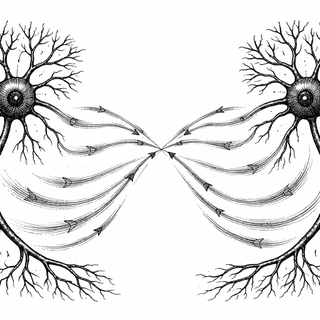
Testing the theory on the entire brain? That's been the neuroscience equivalent of saying "sounds great on paper" and then quietly avoiding the actual work.
Enter SPERRFY (Yes, Really)
A team of researchers decided enough was enough. They built something called SPERRFY - which stands for Spatial Positional Encoding for Reconstructing Rules of axonal Fiber connectivitY. (Scientists really commit to their acronyms.) The framework does something audacious: it takes Sperry's 60-year-old idea and tests whether it actually explains how the entire mouse brain is wired.
Here's what they did. They grabbed two massive datasets: the mouse connectome (a detailed map of which brain regions connect to which) and spatial gene expression data from the Allen Mouse Brain Atlas (which tells you what genes are turned on in different brain regions). Then they used canonical correlation analysis - a statistical method that finds relationships between two complex datasets - to ask: can we predict connectivity patterns based purely on gene expression gradients?
The answer, it turns out, is yes. And not just a little bit yes. The method uncovered hierarchical gradients - patterns of gene expression that organize brain wiring at both global scales (think major highways between brain regions) and local scales (the side streets in specific neighborhoods).
Why This Actually Matters
If you're thinking "okay, neat mouse study," hold on. This isn't just about validating a theory from the Kennedy administration. It's about cracking the code on neural wiring rules.
Right now, when neuroscientists look at brain connectivity, we're basically describing what we see. "This region connects to that region. Cool." But we don't have the underlying grammar - the rules that dictate why those connections exist in the first place. SPERRFY gives us a way to reverse-engineer those rules from genetic data.
Here's where it gets interesting for humans. The Allen Mouse Brain Atlas has mapped over 5,000 distinct cell types across the entire mouse brain using spatial transcriptomics. If we can link gene expression gradients to wiring patterns in mice, we can start making predictions about human brains. And if we can predict wiring patterns from genetics, we can start to understand what goes wrong in neurodevelopmental disorders where connections don't form correctly.
Think about autism spectrum disorders, schizophrenia, or intellectual disabilities - conditions where the brain's wiring seems to be fundamentally different. If we understand the genetic gradients that normally guide axons to their targets, we might be able to identify which genes, when disrupted, lead to miswiring. That's not just academic curiosity. That's a roadmap.
The Method Has Range
What I find genuinely clever about this approach is its versatility. Canonical correlation analysis has already been used to link genetics with brain connectivity in humans, particularly in diseases like Alzheimer's. The SPERRFY framework takes this further by grounding it in a biological theory we've trusted for decades but never fully validated at scale.
And the timing is perfect. In the last few years, we've seen an explosion in spatial transcriptomics technology. We can now map gene expression with single-cell resolution across entire brains. Combine that with increasingly detailed connectomes - the fruit fly connectome was completed in 2024, and human connectome efforts are accelerating - and suddenly these computational frameworks have the fuel they need to actually work.
What's Next?
The researchers didn't just validate Sperry's theory; they built a tool. SPERRFY is described as "versatile" for mapping genetic determinants of brain-wide circuits, which means other labs can use it to ask different questions. Want to know which genes are responsible for wiring the hippocampus? Run the analysis. Curious about how gene mutations might alter connectivity in a disease model? SPERRFY can help make predictions.
There's also tantalizing potential for integration with newer methods like Connectome-seq, which maps connectivity and gene expression at single-synapse resolution. Imagine combining that level of detail with SPERRFY's whole-brain gradient predictions. You'd have both the forest and the trees.
And if we're being optimistic (dangerous, I know), this could eventually inform therapeutic strategies. If you can identify which genetic gradients are disrupted in a patient, maybe - and this is a big maybe - you could design interventions that compensate for those deficits. Gene therapy is still in its awkward teenage years, but it's not science fiction anymore.
The Big Picture
At its core, this study is about taking an old, beloved idea and dragging it into the modern era with data and computational muscle. Sperry was right - neurons do follow chemical gradients to find their targets. But now we have the tools to see exactly how those gradients work across an entire brain, not just in a petri dish or a single pathway.
The brain's wiring isn't random, and it isn't magic. It's written in genetic code, expressed in spatial gradients, and now - finally - we're learning to read it.
References
Koike, J., Nakae, K., Hira, R., Yada, Y., & Naoki, H. (2026). A data-driven framework linking the connectome to spatial gene expression gradients inspired by chemoaffinity theory. Proceedings of the National Academy of Sciences, 123. DOI: 10.1073/pnas.2516572123
Related Research:
- Allen Mouse Brain Atlas spatial transcriptomics: Nature (2023)
- Gene network mapping and connectivity: PMC (2025)
- Canonical correlation analysis for brain-gene connections: Bioinformatics (2022)
- Connectome-seq single-synapse mapping: Nature Methods (2026)
Disclaimer: The image accompanying this article is for illustrative purposes only and does not depict actual experimental results, data, or biological mechanisms.