Think of your brain as a sprawling metropolis. The prefrontal cortex is downtown - the business district where rational decisions get made and executive orders flow to the rest of the city. The amygdala? That's the 24-hour alarm center, always monitoring for threats. Between them run information highways, and maintaining these roads are the city's unsung heroes: star-shaped cells called astrocytes, named for their resemblance to celestial bodies but spending their days doing distinctly unglamorous infrastructure work.
Now, what happens when this city experiences a disaster? Sometimes the alarm center goes haywire, blaring sirens that never stop. That's essentially what happens in post-traumatic stress disorder - a condition where the brain gets stuck replaying traumatic events, unable to file them away as "past" rather than "present danger."
The Sedative With a Side Gig
Dexmedetomidine (let's call it "dex" because life is short) is a medication anesthesiologists know well. It's used in operating rooms and ICUs because it sedates patients while letting them keep breathing on their own - a neat trick that makes it popular among the knock-you-out-but-not-too-much crowd. But researchers at several Chinese institutions recently discovered something unexpected: at doses too low to actually sedate anyone, dex appears to prevent fear memories from cementing themselves into long-term storage (Li et al., 2026).
Here's where it gets interesting. When we experience something terrifying, our brains don't just passively record the event. There's an active construction project - memory consolidation - where short-term memories get renovated into permanent structures. Block that construction, and the memory never becomes the kind of intrusive, flashback-triggering thing that haunts PTSD patients.
The Astrocyte Plot Twist
The real surprise wasn't that dex could affect fear memory - it was where in the brain this happened. The researchers zeroed in on the prelimbic prefrontal cortex, that downtown business district. And the key players weren't neurons, those glamorous cells everyone talks about. They were astrocytes.
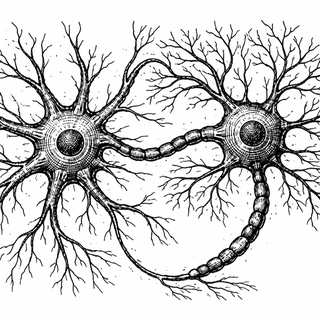
Astrocytes have spent decades being dismissed as mere support staff - the janitors of the brain, cleaning up chemical spills and keeping the lights on. But recent research has completely upended this view. These star cells actually participate in memory formation, regulate synaptic strength, and, it turns out, play a starring role in whether traumatic memories stick around.
The team found that dex works by blocking a transcription factor called Srebf1 from entering the nucleus of astrocytes. With Srebf1 stuck outside, a gene called Phgdh doesn't get switched on. And Phgdh matters because it's the main enzyme producing D-serine - a molecule that NMDA receptors need to function properly.
Why D-Serine Matters
NMDA receptors are the brain's coincidence detectors. They only fire when two things happen simultaneously: glutamate binding and the presence of a co-agonist like D-serine. This dual-key mechanism is fundamental to synaptic plasticity - the process by which connections between neurons strengthen and memories form. Less D-serine means less NMDA receptor activation means less memory consolidation. It's like removing cement from a construction site: the framework might be there, but nothing permanent gets built.
The elegance here is in the specificity. Dex isn't broadly suppressing brain function or erasing all memories. It's targeting one particular molecular pathway, in one particular cell type, in one particular brain region, during the specific window when traumatic memories would normally solidify.
From Mice to Medicine
This matters because PTSD prevention remains frustratingly difficult. About 14-24% of trauma surgery patients develop PTSD, and a 2022 clinical trial found that perioperative dex cut that rate nearly in half. But until now, we didn't really understand why it worked.
The mice in this study were subjected to fear conditioning - paired tones and shocks that normally create lasting fear memories. Those given low-dose dex showed significantly reduced fear responses when tested later, suggesting the traumatic associations never fully formed.
The implications are tantalizing. Imagine giving trauma patients a brief window of dex treatment right after injury, during those critical hours when memories are being consolidated. Not erasing what happened - just preventing the memory from becoming the permanent, intrusive, life-disrupting thing it might otherwise become.
The Astrocyte Renaissance
Perhaps the most exciting aspect of this research is what it reveals about astrocytes. These cells weren't supposed to be this important. They were the background characters, the infrastructure. Yet here they are, actively regulating memory formation, complete with their own molecular machinery for controlling which experiences become permanent fixtures and which fade away.
The brain's memory system isn't just neurons passing signals back and forth. It's a collaborative effort where star-shaped cells quietly decide whether today's trauma becomes tomorrow's recurring nightmare. Understanding this opens up entirely new avenues for treating conditions where memory goes wrong - not just PTSD, but potentially anxiety disorders, addiction, and the intrusive memories that plague so many psychiatric conditions.
For now, dex remains primarily a sedative, and this research needs replication and extension before changing clinical practice. But the door is open to a new kind of intervention: one that works with the brain's own consolidation machinery, guided by the humble astrocyte.
References:
-
Li K, Wei W, Zhang F, et al. (2026). Dexmedetomidine inhibits fear memory consolidation via the astrocyte-specific Srebf1-Phgdh pathway in the prelimbic prefrontal cortex. Cell Reports. DOI: 10.1016/j.celrep.2026.117125. PMID: 41849348
-
Zhang C, Xu Y, Zhang B, et al. (2023). Effect of Dexmedetomidine on Posttraumatic Stress Disorder in Patients Undergoing Emergency Trauma Surgery: A Randomized Clinical Trial. JAMA Network Open. PMCID: PMC10276303
-
Kol A, Bhatti A, Bhatti A (2024). Learning-associated astrocyte ensembles regulate memory recall. Nature. DOI: 10.1038/s41586-024-08170-w
-
Santello M, Toni N, Bhatti A (2024). Astrocytes and Memory: Implications for the Treatment of Memory-related Disorders. Current Neuropharmacology. PMCID: PMC11337689
-
Adamsky A, Kol A, Bhatti A, et al. (2018). Astrocytes contribute to remote memory formation by modulating hippocampal-cortical communication during learning. Nature Neuroscience. DOI: 10.1038/s41593-020-0679-6
Disclaimer: The image accompanying this article is for illustrative purposes only and does not depict actual experimental results, data, or biological mechanisms.