
There's something almost poetic about how your brain changes with the seasons - the way winter's shorter days mess with your circadian rhythms, making your neurons a little moodier, a little less synchronized. But here's a plot twist worthy of a late-night Netflix binge: researchers have discovered that the same genetic deletion can make your brain's synapses behave in completely opposite ways depending on whether you're wired for autism or schizophrenia.
The Neurexin Problem (Or: When Your Brain's Velcro Stops Working Right)
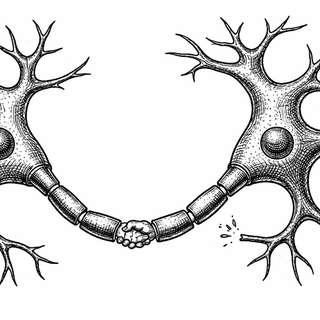
Picture neurexins as the molecular velcro that holds your synapses together. Specifically, NRXN1 sits on the "sending" side of your neurons, reaching across the tiny gap to shake hands with proteins on the receiving end. Without this handshake, neurons become the neurological equivalent of people shouting into the void at a crowded party - lots of noise, minimal communication.
Copy-number deletions in the NRXN1 gene have long been implicated in both autism spectrum disorder (ASD) and schizophrenia (SCZ). Scientists knew these deletions caused problems. What they didn't know was whether the problems were the same problems. (Spoiler: they're absolutely not.)
The Study That Changed Everything
A team led by Jay English and colleagues at multiple institutions decided to settle this question using induced pluripotent stem cells (iPSCs) - basically, they took skin cells from actual patients with ASD and SCZ who carried NRXN1 deletions, transformed them into neurons, and watched what happened.
The results were, scientifically speaking, wild.
ASD-associated NRXN1 deletions cranked up excitatory synaptic signaling while leaving inhibitory synapses completely alone. Meanwhile, SCZ-associated deletions turned down the volume on both excitatory AND inhibitory transmission. Same gene. Same type of deletion. Opposite effects.
If your brain were a stereo system, ASD deletions would be like someone maxing out the treble while leaving the bass untouched. SCZ deletions would be like turning both knobs down to near-silence.
Why the E/I Balance Matters (Hint: It's Everything)
Your brain maintains a delicate balance between excitatory signals (the "go" messages) and inhibitory signals (the "whoa there" messages). Roughly 80% of cortical neurons are excitatory, 20% inhibitory - a ratio your brain defends like a sourdough starter guards its pH.
When this excitatory/inhibitory (E/I) balance tips, bad things happen. Too much excitation can lead to seizures, sensory overload, and the kind of neural noise that makes information processing a nightmare. Too little activity means signals get lost in transmission.
The ASD neurons in this study showed enhanced transmission probability and irregular firing patterns - imagine a drummer who hits harder but loses the beat. Even more concerning, these neurons failed at something called synaptic scaling, a form of plasticity that helps developing brains adjust their sensitivity. When researchers silenced the ASD neurons to trigger an adaptive response, the neurons essentially shrugged and did nothing.
What This Means for Treatment
Here's where it gets clinically interesting. For years, researchers approached NRXN1 deletions as a single problem requiring a single solution. This study suggests that's like treating a fever and hypothermia with the same intervention because both involve temperature regulation.
The disorder-specific synaptic mechanisms identified here could reshape therapeutic strategies entirely. An ASD patient with NRXN1 deletion might benefit from approaches that dampen excitatory transmission, while an SCZ patient with the same deletion might need the exact opposite.
This finding also adds crucial nuance to population-level studies showing that NRXN1 deletions increase risk for multiple disorders - autism, schizophrenia, ADHD, epilepsy, and more. The deletion sets the stage, but the genetic background apparently directs the show.
The Bigger Picture
Perhaps most importantly, this research was only possible because of human iPSC technology. Previous studies found that mouse neurons with equivalent NRXN1 deletions don't show these phenotypes at all, suggesting there's something uniquely human about how this gene malfunction manifests.
That's simultaneously humbling and concerning - humbling because it reminds us how much we still don't understand about our own brains, concerning because it means we can't always trust mouse models to predict human outcomes.
The bottom line? Same genetic lesion, different clinical presentation, different underlying mechanism, potentially different treatment. Personalized medicine for neurodevelopmental disorders just got a lot more personal - and a lot more necessary.
References
-
English, J., McSweeney, D., Geng, J., et al. (2026). Distinct synaptic mechanisms underlie NRXN1 variant and disorder background-dependent phenotypes in iPSC-derived neurons. Cell Reports. DOI: 10.1016/j.celrep.2026.117115 | PubMed
-
Pak, C., et al. (2021). Cross-platform validation of neurotransmitter release impairments in schizophrenia patient-derived NRXN1-mutant neurons. PNAS. DOI: 10.1073/pnas.2025598118
-
Notaras, M., et al. (2023). Schizophrenia-associated NRXN1 deletions induce developmental-timing- and cell-type-specific vulnerabilities in human brain organoids. Nature Communications. DOI: 10.1038/s41467-023-39420-6
-
Rees, E., et al. (2024). Analysis of exonic deletions in a large population study provides novel insights into NRXN1 pathology. npj Genomic Medicine. DOI: 10.1038/s41525-024-00450-8
-
Südhof, T.C. (2020). Neurexins in autism and schizophrenia—a review of patient mutations, mouse models and potential future directions. Molecular Psychiatry. DOI: 10.1038/s41380-020-00944-8
Disclaimer: The image accompanying this article is for illustrative purposes only and does not depict actual experimental results, data, or biological mechanisms.