
Modern neuroscience has spent decades acting like the brain is a neuron-led republic with a few support staff in the hallway. That was always a little optimistic. The real operation looks more like a joint command with neurons, astrocytes, oligodendrocytes, and microglia all arguing over logistics, cleanup, wiring, and who gets to touch the synapses. The paper by Jin and colleagues drops a useful field update into that mess: if you want to understand human brain disease, you need a model where human brain cells can interact with each other inside a living brain, not just float around in a dish like interns with no badge access.[1]
Mission Brief: Build a Better Frankenbrain
The researchers took human pluripotent stem cell-derived neural progenitors and primitive macrophage progenitors, then co-transplanted them into newborn mouse brains.[1] Yes, that sounds like the opening scene of a movie that would definitely trigger a congressional hearing. The result was a chimeric brain model containing human neurons, human macroglia - meaning astrocytes and oligodendrocyte-lineage cells - and human microglia, all developing inside a mouse brain.[1]
Why bother? Because glia are not decorative caulk between neurons. Astrocytes help manage synapses, metabolism, and local traffic. Oligodendrocytes wrap axons in myelin so electrical signals do not travel like a dying phone on one percent battery. Microglia are the resident immune cells and quality-control officers, equal parts janitorial staff and internal affairs. They prune synapses, clear debris, and occasionally behave like a tactical unit that kicked in the wrong door.[2-4]
This matters because older models have obvious blind spots. Standard cell culture is simple but stripped down. Brain organoids are impressive, but they often mature incompletely and miss key environmental features of an actual living brain.[2] A recent review in Neuron made the same point bluntly: human-rodent chimeric models help bridge the gap between petri-dish biology and the messy, dynamic setting where human brain cells actually make decisions.[2]
Execution: Tiny Cellular Politics, Now in 3D
Jin and colleagues used super-resolution imaging and 3D reconstruction to watch what the human cells were doing in vivo.[1] The human microglia were not loafing. They pruned synapses from human neurons and, in some cases, engulfed neurons themselves.[1] That sounds rude, but synaptic pruning is normal brain development. Your nervous system overbuilds connections early, then cuts back the ones it does not need. The brain is many things. Wasteful, then ruthless, is one of them.[5]
The team also ran single-cell RNA sequencing and found human glial progenitor populations plus astroglial developmental stages that resembled those seen in the human brain.[1] That is a big operational win. A model is only useful if the cells act enough like the real thing to justify your coffee budget.
They also picked up specific communication pathways between human cell types. One standout was NRXN-NLGN3 signaling between neurons and astrocytes, which ties into synapse formation and maintenance.[1] Another was SPP1- and PTN-MK-mediated signaling between microglia and astroglia.[1] Translation for civilians: the support crew is not standing off to the side. They are in active radio contact with the firing line.
That fits the broader literature. Recent work keeps reinforcing that neuron-glia interactions are not side quests - they are part of the main campaign plan.[3,4] In related chimeric models, human microglia have already revealed disease-relevant behavior in Down syndrome and Alzheimer-related tau pathology, and microglial transplantation has shown therapeutic promise in a chimeric model of CSF1R-related leukoencephalopathy, a rare and brutal white matter disease.[4,6] So this new model is not just technically neat. It plugs into a very real push toward human-relevant disease testing.
Assessment: Why You Should Care, Even If You Did Not Wake Up Wanting Glial Biology
If these results hold up and the model keeps improving, the payoff is obvious. Many brain disorders are not purely neuron problems. Autism, schizophrenia, Alzheimer's disease, leukodystrophies, and inflammatory brain disorders all involve cross-talk between cell types. A model with human neurons talking to human glia inside living tissue gives researchers a better chance of catching the real chain of command instead of interrogating one random private in isolation.
There are still limits. A mouse brain is still a mouse brain. The host environment is not fully human, the developmental timing is mismatched across species, and no one should pretend this is a perfect miniature human cortex wearing a rodent trench coat.[2] But as a tool, it is strong. It addresses a genuine problem: we have been trying to understand multicellular human brain biology with systems that often remove half the cast.
Bottom line: this study pushes neuroscience away from neuron-only storytelling and toward something closer to reality. The brain is a coalition government. Neurons may handle the headlines, but glia run supply lines, surveillance, maintenance, and selective demolition. Ignore that, and your model misses the plot.
References
- Jin M, Ma Z, Zhang H, Dang R, Papetti AV, Stillitano AC, Zou L, Goldman SA, Jiang P. Chimeric brain models to study human glial-neuronal and macroglial-microglial interactions. Cell Reports. 2026;45(1):116794. doi: 10.1016/j.celrep.2025.116794. PubMed: 41499239
- Papetti AV, Jin M, Ma Z, Stillitano AC, Jiang P. Chimeric brain models: Unlocking insights into human neural development, aging, diseases, and cell therapies. Neuron. 2025;113(14):2230-2250. doi: 10.1016/j.neuron.2025.03.036. PubMed: 40300597
- Barry-Carroll L, et al. The molecular determinants of microglial developmental dynamics. Nature Reviews Neuroscience. 2024;25:414-427. doi: 10.1038/s41583-024-00813-1
- Taylor KR, Monje M. Neuron-oligodendroglial interactions in health and malignant disease. Nature Reviews Neuroscience. 2023;24:733-746. doi: 10.1038/s41583-023-00744-3
- Wright C, Vasistha NA. Synaptic pruning by microglia: Lessons from genetic studies in mice. Trends in Genetics. 2024. doi: 10.1016/j.tig.2024.08.002. PubMed: 39265565
- Chadarevian JP, et al. Therapeutic potential of human microglia transplantation in a chimeric model of CSF1R-related leukoencephalopathy. Neuron. 2024;112(16):2686-2707.e8. doi: 10.1016/j.neuron.2024.05.023. PubMed: 38897209
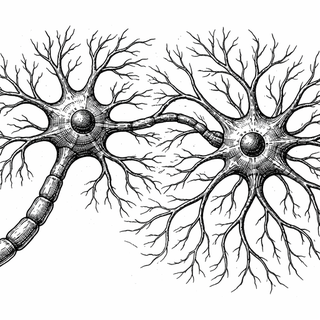
Disclaimer: The image accompanying this article is for illustrative purposes only and does not depict actual experimental results, data, or biological mechanisms.