
What if the cells we've been calling "support staff" in the brain were actually holding the whole operation together - and their slow, silent breakdown is what tips the balance toward Parkinson's disease?
That's more or less what a team of researchers just demonstrated, and it reshapes how we think about one of the most common neurodegenerative diseases on the planet.
A Gene With a Bigger Job Than We Thought
Here's the backstory. There's a gene called DNAJC6 that codes for a protein named auxilin - a molecular helper (or "co-chaperone," if you want the fancy term) that keeps cellular recycling running smoothly. Think of auxilin as the worker who strips the packaging off recycled materials so the cell can reuse them. Without it, the whole recycling plant jams up.
We already knew that mutations in DNAJC6 cause a rare, devastating form of juvenile Parkinson's. Kids with broken copies of this gene develop parkinsonism early in life (Abela et al., 2024). But here's where it gets interesting: what about the millions of people with sporadic Parkinson's - the common, late-onset kind with no single gene to blame?
Darsono, Hwang, and colleagues decided to look (Darsono et al., 2026). And what they found was quietly stunning.
Turned Down, Not Knocked Out
In postmortem brain tissue from people with sporadic Parkinson's, DNAJC6 expression was significantly dialed down in the substantia nigra - the very brain region where dopamine neurons wither away. Not mutated. Not missing. Just... quieter than it should be. Like a smoke alarm with dying batteries.
The team traced this dimming to two culprits. First, the transcription factors NURR1 and FOXA2 - think of them as the conductors who tell DNAJC6 when and how loudly to play - were themselves impaired. Second, LRRK2 (a protein already infamous in Parkinson's research) was destabilizing the auxilin protein after it was made. A one-two punch: less production, faster degradation.
They confirmed this wasn't just a postmortem artifact. Human stem cell-derived midbrain cultures showed the same pattern under multiple Parkinson's-associated conditions. The signal was consistent and clear.
The Plot Twist: It's Not Just About Neurons
Now here's the part that really shifts the weather pattern.
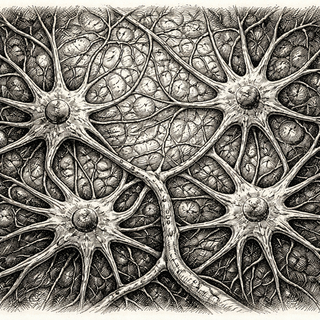
Astrocytes - those star-shaped glial cells that outnumber neurons and spend their lives maintaining the brain's ecosystem - also express DNAJC6. Robustly, in fact. And in sporadic Parkinson's contexts, their auxilin levels dropped too.
When the researchers specifically knocked down DNAJC6 in astrocytes, the consequences were sweeping. These cells lost their ability to clean up cellular debris (phagocytosis went haywire), their internal waste-processing systems (autolysosomes) broke down, their mitochondria sputtered, and they flipped into an inflammatory mode - essentially becoming hostile to the very neurons they're supposed to nurture.
It's a bit like discovering that the building's maintenance crew hasn't just stopped fixing things - they've started pulling wires out of the walls. Astrocytes weren't passive bystanders in neurodegeneration. They were active participants once their own molecular toolkit fell apart (Kam et al., 2022).
A Molecular Rescue Mission
The study doesn't stop at diagnosis. Using a CRISPRa system - a gene-editing approach that turns genes up rather than cutting them - delivered via AAV9 viral vectors into the substantia nigra of a Parkinson's mouse model, the team managed to boost DNAJC6 expression in both neurons and astrocytes simultaneously.
The results? Behavioral deficits improved. Neuropathology eased. It's not a cure, and mouse brains aren't human brains (they're smaller and considerably less anxious about mortgage rates). But as proof-of-concept, it's remarkable. The idea that you could epigenetically turn a gene's volume back up - in multiple cell types at once - and see meaningful improvement opens a genuinely new therapeutic corridor (Jacquemyn et al., 2023).
Why This Changes the Conversation
Most Parkinson's research has focused on neurons, and for good reason - they're the ones dying. But this study argues that the neighborhood matters as much as the house. When astrocytes lose their molecular tools, the whole tissue ecosystem degrades. It's the difference between a single tree falling and the soil itself going bad.
It also bridges a gap that's nagged the field for years: how do insights from rare genetic forms of Parkinson's connect to the common sporadic disease? The answer, at least for DNAJC6, is that you don't need a mutation to have a problem. Sometimes the gene just gets turned down - by inflammation, by aging, by the slow accumulation of cellular stress - and the effect cascades through neurons and glia alike.
If these findings hold up in further studies, targeting DNAJC6 in both neurons and astrocytes could represent something the Parkinson's field has been chasing for decades: a disease-modifying strategy that addresses root biology rather than just symptoms.
The custodians, it turns out, were worth paying attention to all along.
References
-
Darsono WHW, Hwang Y, Valencia E, et al. Dysregulation of astrocytic DNAJC6 contributes to sporadic Parkinson's disease pathogenesis. J Clin Invest. 2026. DOI: 10.1172/JCI194989
-
Abela L, Gianfrancesco L, Tagliatti E, et al. Neurodevelopmental and synaptic defects in DNAJC6 parkinsonism, amenable to gene therapy. Brain. 2024;147(6):2023-2037. DOI: 10.1093/brain/awae020
-
Kam TI, Hinkle JT, Dawson TM, Dawson VL. Astrocyte dysfunction in Parkinson's disease: from the perspectives of transmitted α-synuclein and genetic modulation. Transl Neurodegener. 2022;10:39. DOI: 10.1186/s40035-021-00265-y
-
Jacquemyn J, Kuenen S, Liang H, et al. Parkinsonism mutations in DNAJC6 cause lipid defects and neurodegeneration that are rescued by Synj1. npj Parkinsons Dis. 2023;9:19. DOI: 10.1038/s41531-023-00459-3
-
Kurian MA, et al. DNAJC6 Parkinson's disease: Endolysosomal dysfunction and emerging roles for oligodendrocytes. npj Parkinsons Dis. 2025. DOI: 10.1038/s41531-025-01162-1
Disclaimer: The image accompanying this article is for illustrative purposes only and does not depict actual experimental results, data, or biological mechanisms.