
A heart attack is brutally simple and weirdly overcomplicated at the same time. One clogged artery can starve heart tissue in minutes - that part is old news. But the damage, according to a new mouse study, does not stay politely inside the heart like a well-behaved plumbing disaster. It calls the brain, the brain calls the immune system, and suddenly the whole body is running a chaotic group chat nobody asked for. If you wanted a reminder that biology loves drama, there it is.
The paper behind the headline was not the Nature news story itself, but an underlying Cell study by Yadav and colleagues. In mice, the researchers traced a three-stop sabotage route after myocardial infarction - first the injured heart signals through TRPV1-expressing vagal sensory neurons, then the message lights up neurons in the hypothalamic paraventricular nucleus, and then sympathetic and immune signaling coming through the superior cervical ganglia helps make the aftermath worse, not better (Yadav et al., 2026).
The Brain Is Not Just Watching From the Cheap Seats
A myocardial infarction is what doctors call a heart attack - blood flow drops, oxygen vanishes, and part of the heart muscle starts dying. The standard view has been straightforward: reopen the artery fast, save as much heart as possible, then deal with the cleanup. Reasonable. Sensible. Very twentieth century.
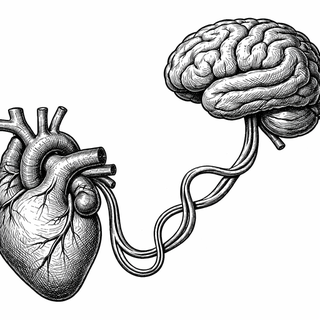
This new work argues that the cleanup crew might be setting the couch on fire.
The key idea is the heart-brain axis, meaning the heart and brain are in constant two-way contact through the autonomic nervous system and immune signaling. The vagus nerve carries sensory information from organs to the brain, while sympathetic pathways can ramp heart rate, stress chemistry, and inflammation. Usually that coordination keeps you alive. During a heart attack, it may also help turn a bad event into a bigger one.
In the mouse experiments, blocking any of the three major nodes in this loop reduced infarct damage, improved electrical stability, and preserved cardiac function. That does not mean we can start unplugging nerves in people next Tuesday. It does mean the heart attack story may be less "pipe clogged, tissue dies" and more "pipe clogged, body launches a panicked military response, friendly fire included."
Friendly Fire, Courtesy of Evolution
Why would the body do this? Because evolution is an excellent mechanic and a mediocre poet. It built systems for injury detection and rapid response, not for making modern humans feel emotionally supported after emergency angioplasty.
The brain is wired to treat injury as a whole-body problem. In other settings, that can help. A 2024 Nature paper showed almost the opposite side of this relationship: after a heart attack, monocytes moved into the brain and increased slow-wave sleep, which then dampened sympathetic output and limited cardiac inflammation. Deep sleep, in other words, was acting like a surprisingly competent field medic (Huynh et al., 2024, PMCID: PMC11998484).
So the same broad heart-brain conversation can either contain damage or amplify it depending on which circuits get the megaphone. That is the part worth underlining in red ink. The nervous system is not a side character here. It is in the command tent.
Recent reviews have been building toward this view. A 2025 JACC review argued that heart-brain communication is not some niche curiosity but part of a wider network linking autonomic, immune, and metabolic pathways in cardiovascular and neurologic disease (Tardo et al., 2025). A 2022 European Heart Journal review made a similar point from a broader clinical angle, noting that stress circuits, sympathetic activation, inflammation, and vascular disease all feed this two-way traffic (Rossi et al., 2022, PMCID: PMC9794190). Even a 2025 Circulation Research commentary zeroed in on myocardial infarction specifically, highlighting neuroinflammation as part of the story rather than background wallpaper (Liao et al., 2025).
Why This Matters Outside Mouse World
If these findings hold up and map onto humans, they open a very different therapeutic playbook. Right now, heart attack care is dominated by restoring blood flow and preventing clots. Necessary, life-saving, non-negotiable. But they do not fully prevent later remodeling, arrhythmias, heart failure, or lingering weakness of the heart. That lingering decline may partly come from neural and immune signals that keep hammering tissue after the original blockage.
That creates some interesting possibilities. Could drugs that quiet specific inflammatory signals reduce post-MI remodeling? Could targeted neuromodulation blunt harmful sympathetic feedback without flattening the useful parts of autonomic control? Could sleep quality after a heart attack be more than comfort food for the exhausted, and actually part of cardiac recovery? Suddenly "rest after a heart attack" sounds less like grandma advice and more like systems biology wearing orthopedic shoes.
The catch is obvious. These were mouse experiments. Mouse studies are valuable, but mice also live in a universe where researchers can selectively silence neural circuits with the confidence of a sci-fi villain. Humans are harder. The relevant nerves are shared with lots of basic functions, and the line between calming harmful signaling and causing collateral damage is not something you want to test with vibes.
Still, the conceptual shift is real. A heart attack may start in the coronary arteries, but its aftermath is negotiated across the nervous and immune systems too. The heart is the blast site. The brain is on comms. And the immune system, bless its aggressive little soul, may be both backup and problem.
References
- Yadav S, Ninh VK, Lovelace JW, et al. A triple-node heart-brain neuroimmune loop underlying myocardial infarction. Cell. 2026;189(3):800-817.e20. DOI
- Huynh P, Hoffmann JD, Gerhardt T, et al. Myocardial infarction augments sleep to limit cardiac inflammation and damage. Nature. 2024;635:168-177. DOI PMCID
- Tardo DT, Cortes-Canteli M, Fuster V, Sachdev PS, Kovacic JC. The Heart-Brain-Metabolism Axis in Cardiovascular and Neurologic Disease. Journal of the American College of Cardiology. 2025;86(25):2663-2686. DOI
- Rossi A, Mikail N, Bengs S, et al. Heart-brain interactions in cardiac and brain diseases: why sex matters. European Heart Journal. 2022;43(39):3971-3980. DOI PMCID
- Liao K, Yu J, Mohammadigoldar Z, et al. Heart-Brain Crosstalk in Myocardial Infarction: Role of Heart Extracellular Vesicles in Neuroinflammation. Circulation Research. 2025;136(11):1513-1515. DOI
Disclaimer: The image accompanying this article is for illustrative purposes only and does not depict actual experimental results, data, or biological mechanisms.