
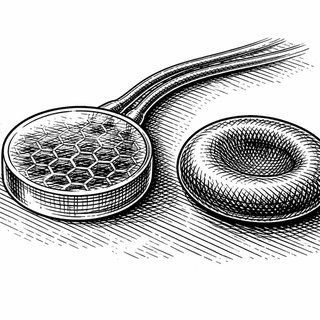
When the team at TU Delft first saw the signal-to-noise ratios coming off their new graphene electrodes, they thought something was wrong with the equipment. Electrodes this small - just 10 micrometers across, roughly the width of a red blood cell - aren't supposed to pick up brain signals this cleanly. But the numbers held. And suddenly, a problem that's been haunting neuroscience for over a decade had a brand new solution sitting on a transparent chip.
The "You Can't Have Both" Problem
Here's the thing. Neuroscientists have been stuck in an annoying trade-off for years. You can watch neurons fire under a microscope using fancy fluorescent markers (calcium imaging), or you can listen to them crackle with electricity using metal electrodes. But doing both at the same time? That's like trying to photograph a concert while also recording the audio - except your camera keeps blocking the microphone.
Traditional metal electrodes are opaque. They literally cast shadows over the neurons you're trying to image. Graphene - that impossibly thin sheet of carbon atoms that won 2010's Nobel Prize - promised to fix this. It's transparent, it conducts electricity, and it's thinner than basically anything humans have ever made. The catch? Actually building reliable graphene electrodes has been a nightmare (Masvidal-Codina et al., 2024).
The Transfer Problem (Or: Why Everyone's Graphene Kept Falling Apart)
The standard recipe for graphene electrodes goes something like this: grow graphene on a copper sheet, then carefully peel it off and stick it onto your target surface. If that sounds like trying to move a soap bubble with chopsticks, you're not far off. This manual transfer process introduces wrinkles, tears, and contamination - basically turning a miracle material into an unreliable mess.
The TU Delft team, led by researchers including Nerea de Alvarez de Eulate and colleagues, said "forget the transfer" entirely. They grew their multilayer graphene directly on the transparent substrate using chemical vapor deposition. No peeling. No praying. Just graphene, right where they wanted it (de Alvarez de Eulate et al., 2026).
Tiny Electrodes, Big Signals
The resulting microelectrode arrays packed electrodes as small as 10 micrometers in diameter - roughly four times smaller than the width of a human hair. And here's where it gets wild: these little graphene circles recorded extracellular brain signals with signal-to-noise ratios up to about 25 dB. For context, that's remarkably clean for electrodes this size.
The team tested their arrays on cerebellar brain slices from rats, picking up spontaneous spiking activity from Purkinje cells - those beautifully branched neurons that help coordinate your movements. The recordings were sharp enough to detect individual neural spikes, which is exactly the kind of resolution neuroscientists need to understand how brain circuits actually work.
Perhaps the most interesting finding? The limiting factor wasn't the electrode technology itself. It was the physical contact between the electrode and the brain tissue. The graphene was ready to perform; it was just waiting for the tissue to cooperate.
Why This Actually Matters
Look. We're living through a golden age of brain-mapping ambitions. Projects worldwide are trying to decode neural circuits, develop brain-computer interfaces, and figure out what goes sideways in conditions like epilepsy and Parkinson's disease. All of that requires watching and listening to neurons simultaneously - the exact multimodal capability these transparent graphene arrays enable.
Recent work from other groups has shown what's possible when you nail this combination. Ramezani and colleagues used transparent graphene arrays to predict calcium activity deep in the brain from surface recordings alone (Ramezani et al., 2024). Meanwhile, advances in flexible high-density arrays are pushing toward chronic implants that can record stable signals for months (Garcia-Cortadella et al., 2021).
The transfer-free fabrication method is the real game-changer here, though. By removing the most unreliable step in the manufacturing process, these arrays could actually be scaled up for mass production - something that's been a fantasy for graphene neurotech until now.
The Bottom Line
We're not at the finish line yet. These experiments were done in brain slices, not living brains, and the electrode-tissue coupling still needs optimization. But the proof of concept is solid: you can grow graphene directly where you need it, make electrodes smaller than most cells, and still get recordings clean enough to make neuroscientists do a double-take.
The brain is already the most complicated thing we know of in the universe. At least now we have a see-through window to watch it work.
References:
-
de Alvarez de Eulate, N., Pavlou, C., Leon Gonzalez, G., et al. (2026). Transparent Transfer-Free Ultrasmall Multilayer Graphene Microelectrodes Enable High Quality Recordings in Brain Slices. Advanced Science, 2517524. DOI: 10.1002/advs.202517524
-
Masvidal-Codina, E., Smith, T.M., Rathore, D., et al. (2024). Nanoporous graphene-based thin-film microelectrodes for in vivo high-resolution neural recording and stimulation. Nature Nanotechnology, 19, 514-523. DOI: 10.1038/s41565-023-01570-5. PMID: 38212522.
-
Ramezani, M., Kim, J.H., Liu, X., et al. (2024). High-density transparent graphene arrays for predicting cellular calcium activity at depth from surface potential recordings. Nature Nanotechnology, 19, 504-513. DOI: 10.1038/s41565-023-01576-z. PMID: 38212523.
-
Garcia-Cortadella, R., Schafer, N., Cisneros-Fernandez, J., et al. (2021). Switchable Transparent and Opaque Graphene Neural Probes. Nano Letters, 21(9), 3726-3733. DOI: 10.1021/acs.nanolett.0c04024.
Disclaimer: The image accompanying this article is for illustrative purposes only and does not depict actual experimental results, data, or biological mechanisms.