
A six-month-old infant, previously healthy and hitting every milestone, is suddenly seized by convulsions during a warm bath. The episode lasts seventeen minutes. The ER finds nothing. The EEG is normal. The MRI is clean. The parents are told not to worry. Then it happens again - triggered by a low fever, then by nothing at all. By eighteen months, the seizures are relentless, development is slipping backwards, and a genetic test finally delivers the verdict: a single mutation in the SCN1A gene, a condition called Dravet syndrome. One letter in three billion, and an entire life is rewritten.
This is the brutal arithmetic of sodium channelopathies - a family of disorders where the tiniest typo in your DNA turns the brain's electrical system into something between a short circuit and a five-alarm fire.
Your Brain Runs on Salt (No, Seriously)
Here is something that would sound absurd if it were not absolutely true: your ability to think, feel, remember your ex's birthday, and argue about parking spaces depends entirely on sodium ions flowing through microscopic protein gates in your neurons. These voltage-gated sodium channels (VGSCs) are the biological switches that generate action potentials - the electrical impulses your brain uses to do literally everything.
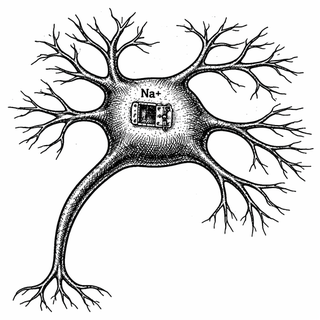
There are nine types of these channels, but four of them - encoded by the genes SCN1A, SCN2A, SCN3A, and SCN8A - are the main characters in this particular drama. When they work correctly, they open and close with exquisite timing, like a symphony conductor keeping billions of neurons in rhythm. When they don't, the result ranges from severe epilepsy to profound autism spectrum disorder, often both, often beginning in infancy (Brunklaus et al., 2022).
The cruelty is in the specificity. A gain-of-function mutation (the channel fires too much) tends to produce devastating seizures. A loss-of-function mutation (the channel goes quiet) leans toward autism and developmental delay. Same gene family, opposite errors, different catastrophes. The brain, it turns out, is not interested in your preferences for symmetry.
The Old Playbook (and Why It Wasn't Enough)
For decades, treatment meant throwing broad-spectrum anti-seizure medications at these conditions and hoping for the best. Some helped. Many didn't. Worse, certain standard epilepsy drugs - sodium channel blockers like carbamazepine - actually worsened seizures in Dravet syndrome patients, because blocking an already-deficient channel is approximately as useful as putting a padlock on a door that won't open (Guerrini, 2012). The field was treating the symptom while the genetic script kept running its flawed code underneath.
What changed everything was the genomic revolution. Once clinicians could sequence a child's DNA and pinpoint the exact mutation, the question shifted from "how do we suppress seizures?" to "how do we fix the specific molecular error causing them?"
Enter the Gene Editors, Stage Left
A new review in Trends in Molecular Medicine by Robinson, Wettschurack, and colleagues maps the extraordinary landscape of precision therapies now converging on sodium channelopathies (Robinson et al., 2025). The toolkit reads like science fiction that forgot to stay fictional:
Antisense oligonucleotides (ASOs) are short synthetic RNA fragments designed to tweak gene expression. Zorevunersen, developed by Stoke Therapeutics and Biogen, targets Dravet syndrome by boosting protein production from the healthy copy of SCN1A. Phase 1/2 results showed median seizure reductions of 85% at three months, with improvements in cognition and behavior. A global Phase 3 trial (EMPEROR) dosed its first patient in August 2025.
AAV gene therapy takes a more ambitious approach. Encoded Therapeutics' ETX101 delivers a regulatory gene via a viral vector directly into the brain - a one-time injection that aims to restore Nav1.1 expression permanently. Across 19 participants in early trials, seizures dropped by 78%, with no treatment-related serious adverse events. A pivotal trial is expected in 2026.
CRISPR-based strategies - including base editing, prime editing, and CRISPRa/CRISPRi - represent the most surgically precise tools yet, capable of correcting or compensating for mutations at the DNA level. Preclinical work in mouse models and human induced pluripotent stem cell (hiPSC) platforms has shown these approaches can increase SCN1A expression and reduce seizures in animal models.
One does not need to be sentimental to find this remarkable. We have gone from "we don't know why your child is seizing" to "we can identify the exact nucleotide responsible and design a molecule to fix it" in roughly one generation.
The Plot Twist Nobody Expected
Perhaps the most striking development is what these therapies are revealing about the diseases themselves. When you correct the underlying genetic error - rather than simply dampening seizures - patients show improvements in cognition, behavior, and development that no anti-seizure medication ever achieved. Zorevunersen patients didn't just seize less; they began developing new skills (Bhatt et al., 2023). ETX101 participants showed measurable gains on standardized developmental scales.
This suggests that these conditions are not merely "epilepsy plus developmental problems." They are unified disorders where the same sodium channel dysfunction drives both the seizures and the cognitive impairment. Fix the channel, and you address the whole syndrome - not just the part that looks most alarming on a hospital monitor.
What Remains to Be Written
Challenges persist, naturally. Delivering gene therapies across the blood-brain barrier remains technically demanding. The timing of intervention matters enormously - earlier treatment, before extensive neural damage, likely yields better outcomes. And for the hundreds of distinct mutations across SCN1A, SCN2A, SCN3A, and SCN8A, no single therapy will fit every patient. The promise of precision medicine is also its burden: each genetic variant may ultimately require its own tailored approach (Hack et al., 2024).
But for families like the one in that opening paragraph - families who have spent years cycling through medications, managing emergencies, mourning milestones that never arrived - the trajectory is unmistakable. We are moving from a world where a sodium channel mutation was a life sentence to one where it might be a problem with a molecular solution.
The infant in the bathtub deserved better than we could offer a decade ago. The science, at last, is catching up to the urgency.
References
-
Robinson M, Wettschurack K, Halurkar MS, et al. Precision medicine for sodium channelopathy-related autism and epilepsy. Trends in Molecular Medicine. 2025. DOI: 10.1016/j.molmed.2025.09.007. PMID: 41162233
-
Brunklaus A, Feng T, Brünger T, et al. Gene variant effects across sodium channelopathies predict function and guide precision therapy. Brain. 2022;145(12):4275-4286. DOI: 10.1093/brain/awac006. PMID: 35037686
-
Bhatt GS, Bhatt RG, Ganesan SL. Genetic therapeutic advancements for Dravet Syndrome. Epilepsy & Behavior. 2023;138:108776. DOI: 10.1016/j.yebeh.2022.108776. PMID: 35653814
-
Hack JB, Bhatt D, Bhatt GR, et al. Patients carrying pathogenic SCN8A variants with loss- and gain-of-function effects can be classified into five subgroups. Epilepsia. 2024. DOI: 10.1111/epi.18118
-
Guerrini R. Dravet syndrome: the main issues. Journal of Child Neurology. 2012;27(6):795-801. DOI: 10.1177/0883073812450580
Disclaimer: The image accompanying this article is for illustrative purposes only and does not depict actual experimental results, data, or biological mechanisms.