
It was supposed to be a straightforward collaboration task. Pairs of people, sitting together, taking turns solving problems. But when Yifan Wang and colleagues at the cognitive neuroscience lab looked at the brain data streaming in from their heroin-abstinent participants, the expected patterns of neural coordination between partners were barely there. The brains that should have been "clicking" during teamwork were, for the most part, operating like two radios tuned to different stations.
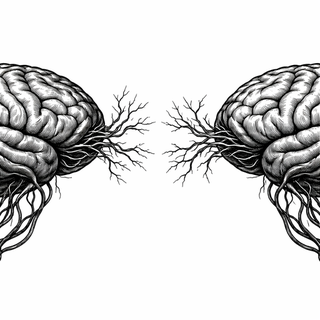
That observation cracked open something researchers have long suspected but struggled to prove: heroin doesn't just hijack your reward circuitry. It rewires how your brain connects with other people's brains in real time.
Your Brain on Teamwork (And Why It Matters)
Here's something wild about being human: when you collaborate with someone, your brains actually start firing in sync. It's called interpersonal neural synchronization, or INS, and it's basically the neurological equivalent of two musicians locking into the same groove. Your prefrontal cortex lights up, their prefrontal cortex lights up, and for a while you're running on a shared frequency. This synchronization, predominantly occurring in the prefrontal and temporoparietal regions, has been shown to correlate with effective collaboration, emotional alignment, and strategic interaction (In & Park, 2025).
It's a key part of how we solve problems together, read each other's intentions, and do that uniquely human thing called perspective-taking - imagining what the world looks like from inside someone else's head.
What the Study Actually Did
Wang et al. (2026) strapped functional near-infrared spectroscopy (fNIRS) headsets onto 38 pairs of people with heroin use disorder (HUD) who were in abstinence, plus 30 healthy control pairs. Everyone completed a turn-based group problem-solving task while the fNIRS equipment tracked blood flow changes across their brains - both within each person's head and, critically, between the two partners simultaneously.
This dual-brain setup, called hyperscanning, is like having a seismograph on two fault lines at once. You don't just see what's happening in one brain - you see whether the two brains are shaking in rhythm.
The Findings: A Social Brain Running on Fumes
The results were striking across every level they measured:
Worse problem-solving. The HUD pairs performed more poorly on both individual and group tasks. No surprise there, maybe. But the why is where it gets interesting.
Reduced perspective-taking. The heroin-abstinent individuals showed less perspective-taking behavior - meaning they weren't doing as much mental "stepping into the other person's shoes" during collaboration. It's hard to be a good teammate when you can't model what your partner is thinking.
Quieter key brain regions. Two areas showed reduced activation: the right inferior frontal gyrus (rIFG), a region linked to understanding others' actions and intentions, and the left orbitofrontal cortex (lOFC), which helps with social decision-making and value computation. The right dorsolateral prefrontal cortex also showed weakened internal connectivity.
Broken brain-to-brain sync. The rIFG-centered interpersonal neural synchronization was disrupted. Those two-radio-stations-on-different-frequencies? That's exactly what happened. The neural handshake that normally occurs between collaborating brains just wasn't landing.
And here's the kicker: the aberrant lOFC signatures and the resulting failure to establish INS directly contributed to the groups' poorer performance. It wasn't just that their individual brains were struggling - they couldn't build the neural bridge to their partner.
The Withdrawal Connection No One Talks About
Perhaps the most clinically provocative finding was the comorbidity pattern. These behavioral and neural deficits didn't exist in isolation - they co-occurred with emotional disturbances and sleep problems, hallmarks of protracted withdrawal. Months or even years after the last dose, the social brain is still paying the bill.
This echoes broader research showing that opioid use fundamentally disrupts the social bonding system. The endogenous opioid system - your brain's own internal opioid supply - plays a central role in forming and maintaining social connections. Chronic heroin use essentially hijacks that system, creating a vicious cycle where social isolation drives drug use and drug use deepens isolation (Christie, 2021). Reduced empathic capacity has been documented across multiple drug classes, with overlapping neural substrates in the insula and related regions suggesting shared vulnerability (Cox & Reichel, 2022).
Why This Matters Beyond the Lab
Addiction treatment has historically focused on the individual: their cravings, their triggers, their willpower. But as Heilig et al. argued in a landmark Nature Reviews Neuroscience paper, addiction neuroscience has neglected social factors to its own detriment, missing how social exclusion and marginalization feed the cycle (Heilig et al., 2016).
Similar fNIRS hyperscanning work in alcohol use disorder has shown reduced inter-brain synchronization in the right middle frontal cortex during both cooperation and competition (Guo et al., 2023), suggesting this isn't a heroin-specific story. It's a substance-use-disorder story, and the social brain is ground zero.
What Wang's study adds is a roadmap. If we know that the lOFC and rIFG are the specific bottleneck points where social cognition breaks down - and that this breakdown directly undermines group functioning - then we have targets. Targeted cognitive rehabilitation, social skills training, or even neurostimulation protocols aimed at these regions could potentially help people in recovery rebuild not just sobriety, but the capacity to actually connect with other humans.
Because at the end of the day, recovery doesn't happen in a vacuum. It happens between people. And if the neural machinery for "between people" is still broken long after the drugs are gone, that's a problem we can't afford to ignore.
References
-
Wang, Y., Li, W., Fu, W., Zhang, J., Dang, J., Li, Y., Ball, L. J., & Duan, H. (2026). Social cognitive deficits and altered multi-brain dynamics during problem-solving in heroin abstainers: An fNIRS hyperscanning study. Biological Psychiatry. https://doi.org/10.1016/j.biopsych.2026.03.1007
-
Christie, N. C. (2021). The role of social isolation in opioid addiction. Social Cognitive and Affective Neuroscience, 16(7), 643-656. PMCID: PMC8259283. https://doi.org/10.1093/scan/nsab029
-
Cox, S. S., & Reichel, C. M. (2022). The intersection of empathy and addiction. Pharmacology Biochemistry and Behavior, 223, 173509. PMCID: PMC10518853. https://doi.org/10.1016/j.pbb.2022.173509
-
Heilig, M., Epstein, D. H., Nader, M. A., & Shaham, Y. (2016). Time to connect: bringing social context into addiction neuroscience. Nature Reviews Neuroscience, 17(9), 592-599. PMCID: PMC5523661. https://doi.org/10.1038/nrn.2016.67
-
Guo, L., Huang, C., Lu, J., Wu, X., Shan, H., Chen, T., & Shao, S. (2023). Decreased inter-brain synchronization in the right middle frontal cortex in alcohol use disorder during social interaction: An fNIRS hyperscanning study. Journal of Affective Disorders, 330, 267-275. PMID: 36828147. https://doi.org/10.1016/j.jad.2023.02.072
-
In, S., & Park, J.-H. (2025). Integrated understanding of interpersonal neural synchronization (INS) in social interaction: A systematic review of fNIRS-based hyperscanning studies. Alzheimer's & Dementia. PMCID: PMC12724933. https://doi.org/10.1002/alz70861_108583
Disclaimer: The image accompanying this article is for illustrative purposes only and does not depict actual experimental results, data, or biological mechanisms.