
What if the same cells that protect you from the flu decided to set up shop inside your brain after a stroke - not to help, but to make things dramatically worse?
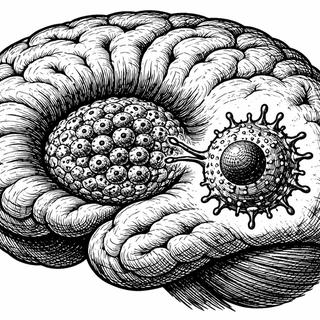
That's essentially what researchers at Tongji Hospital discovered when they went looking for answers to a frustrating question: why do some stroke patients keep getting worse long after the initial damage should have stopped?
The Unwelcome Tenants
Here's something most people don't realize about strokes: the initial blood flow interruption is just act one of a much longer drama. In the weeks and months that follow, your immune system gets involved - and like an overzealous HOA, it sometimes does more harm than good.
The culprits in this case? B lymphocytes, those antibody-producing cells that usually patrol your bloodstream hunting for viruses and bacteria. A team led by Sheng Yang and colleagues found that after a stroke, these cells migrate into the damaged brain tissue and - here's the wild part - start building structures that look remarkably like the germinal centers you'd normally find in lymph nodes.
Think of germinal centers as B cell boot camps where immune cells train and multiply. Useful in your spleen. Profoundly unhelpful in your post-stroke brain.
The Recruitment Drive
So how do B cells even know to show up? The brain isn't exactly sending out Evites.
It turns out microglia - the brain's resident immune cells - are doing the recruiting. When stroke damage occurs, microglia release a signaling molecule called MIF (macrophage migration inhibitory factor), which essentially acts like a "come hither" beacon for B cells. The B cells detect this signal through receptors called CD74 and CXCR4, and they come running.
But wait, it gets worse. The researchers discovered that once B cells arrive, they don't just hang around - they start proliferating locally. Using clever parabiosis experiments (where two mice share a circulatory system), the team showed that most of the B cells accumulating in stroke-damaged brains weren't recent arrivals from the bloodstream. They were born right there in the lesion. The brain had become a B cell factory.
The Interferon Problem
The B cell clusters weren't just sitting there looking ominous. They were actively cranking out interferon-related signals - the same inflammatory pathways that help you fight viral infections but that can wreak havoc when activated inappropriately in neural tissue.
This interferon signaling fueled a vicious cycle: more inflammation led to more tissue damage, which attracted more immune activity, which caused more inflammation. Post-stroke cognitive decline - which affects up to 70% of stroke survivors within the first year - may have just found one of its mechanisms.
Actually Good News for Once
The researchers didn't just identify the problem. They tested solutions.
When they depleted B cells using anti-CD20 antibodies (similar to rituximab, a drug already used for other conditions), stroke outcomes improved dramatically. Less brain damage. Less demyelination. Better neurological recovery.
Even more precisely, when they blocked the MIF signaling pathway that microglia use to recruit B cells, they saw similar benefits without needing to wipe out B cells system-wide. Same story with blocking interferon receptors.
This matters because B cell depletion therapies carry real risks - prolonged immunosuppression means higher infection rates. But if you can interrupt the specific conversation between microglia and B cells, you might be able to prevent the ectopic follicle problem without leaving patients defenseless against actual pathogens.
The Bigger Picture
This research fits into a growing recognition that chronic neuroinflammation after stroke isn't just collateral damage - it's an active driver of long-term disability. Activated microglia and accumulated lymphocytes can be found in stroke lesions decades after the event. That's not cleanup; that's ongoing destruction.
The finding also connects to work in other neurological conditions. Ectopic lymphoid follicles have been found in about 40% of progressive multiple sclerosis cases, associated with worse cortical degeneration. The brain, it seems, really doesn't appreciate uninvited immune structures.
For stroke patients, this opens therapeutic doors that didn't exist before. Current treatments focus almost entirely on the acute phase - restoring blood flow within a narrow time window. But if B cell-driven inflammation is fueling chronic damage, interventions targeting these pathways could help patients months or even years after their strokes.
References
-
Yang S, Zhang H, Xu LL, et al. Ectopic B lymphocyte follicles exacerbate ischemic brain damage via MIF-CD74/CXCR4 and interferon signaling. The Journal of Clinical Investigation. 2026. DOI: 10.1172/JCI196905
-
Iadecola C, Buckwalter MS, Bhattacharya A. Immune Pathways in Etiology, Acute Phase, and Chronic Sequelae of Ischemic Stroke. Circulation Research. 2020. DOI: 10.1161/CIRCRESAHA.121.319994
-
Doyle KP, Buckwalter MS. Immunological mechanisms in poststroke dementia. Current Opinion in Neurology. 2020. PMCID: PMC7260029
-
Zhan J, et al. Ectopic lymphoid follicles in progressive multiple sclerosis: From patients to animal models. Immunology. 2021. DOI: 10.1111/imm.13395. PMCID: PMC8476159
-
Malone K, et al. The immunopathology of B lymphocytes during stroke-induced injury and repair. Seminars in Immunopathology. 2022. DOI: 10.1007/s00281-022-00971-3
Disclaimer: The image accompanying this article is for illustrative purposes only and does not depict actual experimental results, data, or biological mechanisms.