
Here's the thing nobody wants to say out loud: writing about Huntington's disease as an "investment opportunity" feels kind of gross. We're talking about a condition that steals people's ability to move, think, and be themselves - usually right in the middle of their lives. So framing it as a strategic scientific bet? Yeah, that sits weird. But here's why it matters anyway: if we crack Huntington's, we might just crack a whole bunch of other brain diseases at the same time. And that's worth leaning into the discomfort.
The Genetic Equivalent of a Smoking Gun
Most brain diseases are like trying to solve a murder mystery where everyone's a suspect and half the evidence is missing. Alzheimer's? Could be genetics, lifestyle, bad luck, or your brain just deciding to betray you. Parkinson's? Multiple theories, zero certainty. But Huntington's disease shows up with a signed confession.
It all comes down to a three-letter sequence in your DNA: CAG. Normally, this sequence repeats 10 to 35 times in the huntingtin gene. No problem. But if you inherit 40 or more repeats? You will develop Huntington's disease. Not "might." Not "probably." Will. It's one of the only brain diseases with that kind of genetic certainty - a stark clarity that makes it scientifically invaluable.
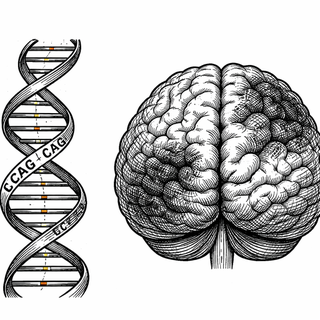
Think of it like this: those extra CAG repeats are instructions to build a huntingtin protein that's too long and gets all tangled up. These toxic protein clumps accumulate in brain cells - especially in a region called the striatum that controls movement - and eventually those neurons just... give up. The result is the hallmark symptoms: involuntary movements (called chorea, because apparently it looks like dancing), cognitive decline, and psychiatric changes.
Why This "Rare" Disease Punches Above Its Weight
Huntington's affects roughly 3 to 7 people per 100,000 worldwide. By the numbers, it's rare. But here's where it gets interesting: that rarity comes with some serious scientific perks.
First, you can see it coming from miles away. A blood test can tell you decades before the first symptom whether you carry the expanded CAG repeat. Few neurological diseases offer that kind of foresight. Researchers can actually study what happens in people's brains 20+ years before they show any symptoms - finding elevated markers of neurodegeneration, brain shrinkage, and even the CAG repeats continuing to expand in blood cells. It's like having a crystal ball, except the crystal ball is full of sobering medical data.
Second, the Huntington's community is remarkably organized. Patients, families, researchers, and advocacy groups work together with a level of coordination that would make a Swiss watchmaker jealous. Clinical trials can recruit efficiently. Data gets shared. Everyone's rowing in the same direction because everyone knows exactly what they're up against.
Third - and this is the kicker - every breakthrough in Huntington's teaches us something about how to fix brains in general. Gene therapies, methods to measure neurodegeneration, strategies to protect dying neurons - all of it has spillover effects for Alzheimer's, Parkinson's, ALS, and beyond.
The Science Is Getting Wild (In a Good Way)
Remember those CAG repeats? Turns out they don't just sit there quietly being terrible. They keep expanding after you're born, like some kind of genetic slow-motion car crash. A recent study in Cell found that in the striatal neurons that die in Huntington's, those repeats can balloon from 40-45 copies all the way up to 500+. Once they hit around 150 repeats, neurons start losing their identity, flipping on genes for cell death, and basically rage-quitting.
This is huge. It means the disease isn't just about what you inherited - it's about what continues to happen in your brain over time. And if we can slow down or stop that expansion? We might be able to delay or prevent the disease entirely. Scientists are now targeting the DNA repair proteins (with names like MSH3 and PMS1) that accidentally make the expansions worse, and early results suggest this could actually work.
Gene Therapy Is No Longer Science Fiction
In what might be the most encouraging development in years, gene therapy trials are showing real promise. UniQure's AMT-130 therapy involves drilling tiny holes in the skull (stay with me here), threading a catheter into the brain's caudate nucleus and putamen, and delivering a virus that ferries in new DNA instructions. These instructions tell neurons to produce a molecule that permanently blocks production of the mutant huntingtin protein.
The preliminary results? A 75% reduction in disease progression over three years compared to people who didn't get the treatment. That's not a cure, but it's the first time any treatment has meaningfully slowed Huntington's down. Other approaches - antisense oligonucleotides, small molecules, even stimulating the brain's own ability to generate new neurons that can repair damaged circuits - are all in the pipeline.
The Investment Thesis (Without the Ick Factor)
So why call Huntington's disease "the best investment in neuroscience"? Because it offers something vanishingly rare in brain research: a clear target, a measurable timeline, an engaged community, and methods that will echo across the entire field.
Roy Maimon, the neuroscientist who wrote the original essay making this argument, put it simply: Huntington's is a proving ground. If we can intervene before neurons die, we demonstrate that brain repair is possible. If we can develop biomarkers sensitive enough to detect changes decades before symptoms, we can use those same tools in Alzheimer's research. If we can design gene therapies that work in Huntington's, we have a template for dozens of other conditions.
The brain is maddeningly complex. Most of the time, we're fumbling around in the dark, hoping our interventions do more good than harm. Huntington's disease is one of the few places where someone left the lights on. We know the gene. We know the mutation. We know which cells die first. We know who will get the disease before they ever feel sick. That kind of clarity is worth its weight in research dollars - not because Huntington's patients matter more than anyone else, but because solving this puzzle gives us tools to help everyone.
And yeah, calling a devastating disease a "strategic opportunity" still feels uncomfortable. But if that discomfort motivates more funding, better treatments, and ultimately a cure? I'll take it.
References
-
Handsaker, R.E., et al. (2025). Long somatic DNA-repeat expansion drives neurodegeneration in Huntington's disease. Cell. https://doi.org/10.1016/j.cell.2024.12.006
-
Schobel, S., et al. (2025). Somatic CAG repeat expansion in blood associates with biomarkers of neurodegeneration in Huntington's disease decades before clinical motor diagnosis. Nature Medicine. https://doi.org/10.1038/s41591-024-03424-6
-
Lee, J.M., et al. (2022). Huntington disease: natural history, biomarkers and prospects for therapeutics. Nature Reviews Neurology. https://doi.org/10.1038/nrneurol.2014.24
-
Maimon, R. (2026). Huntington's disease is the best investment in neuroscience today. Trends in Molecular Medicine. https://doi.org/10.1016/j.molmed.2026.01.001
-
Genetic modifiers of somatic expansion and clinical phenotypes in Huntington's disease. (2025). Nature Genetics. https://www.nature.com/articles/s41588-025-02191-5
-
Huntington's disease treated for first time using gene therapy. (2025). Nature. https://doi.org/10.1038/d41586-025-03139-9
-
Brain's Own Repair Mechanism: New Neurons May Reverse Damage in Huntington's Disease. University of Rochester Medical Center. https://www.urmc.rochester.edu/news/story/brains-own-repair-mechanism-new-neurons-may-reverse-damage-in-huntingtons-disease
-
HDBuzz: Why Huntington's Disease May Be Neuroscience's Best Investment. https://en.hdbuzz.net/a-guest-perspective-for-gratitude-day-why-huntingtons-disease-may-be-neurosciences-best-investment/
Disclaimer: The image accompanying this article is for illustrative purposes only and does not depict actual experimental results, data, or biological mechanisms.