
If you Google "amnesia," you'll find page after page telling you that memories get erased - wiped clean like a hard drive that took a magnet to the face. Turns out, most of those search results are selling you an outdated story. A massive new review in Psychological Review is making a pretty compelling case that your "lost" memories aren't gone at all. They're just really, really bad at answering the phone.
The "Delete vs. Can't Find" Problem
Here's the thing. For decades, the neuroscience playbook said that when certain treatments or manipulations mess with memory - think drugs that block protein synthesis, or carefully timed interference right after learning - the memory trace itself gets destroyed. Poof. Gone. Like it was never there.
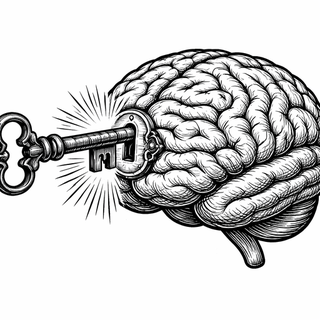
But Joaquin Alfei, Ralph Miller, Tomas Ryan, and Gonzalo Urcelay went through a mountain of evidence from both behavioral and neurobiological studies and came to a very different conclusion: those memories aren't erased. They're just trapped behind a really unhelpful filing system (Alfei et al., 2026).
Think of it like this. You definitely put your car keys somewhere. You can picture yourself setting them down. But without the right cue - retracing your steps, checking pockets, swearing loudly - those keys might as well not exist. Your brain does basically the same thing with memories, except instead of keys, it's that thing your professor said right before the exam.
Shining a Literal Light on Lost Memories
The evidence backing this up is wild. Back in 2015, a team at MIT used optogenetics - basically, genetically engineering brain cells to respond to laser light - to reactivate memory cells in mice that had been given amnesia-inducing drugs. The mice had every reason to have "lost" those memories. But when researchers flipped the light switch on specific engram cells, the memories came flooding back, complete with the appropriate fear responses (Ryan et al., 2015; PMCID: PMC5583719).
Let that sink in. The memory was still physically there - encoded in the pattern of connections between neurons. The brain just couldn't access it through normal channels. It's like having a book in a library with no catalog entry. The book exists. You just have zero idea which shelf it's on.
Follow-up work doubled down on this idea, showing that these "silent engrams" persist for over a week even under amnesia conditions, retaining their cell-to-cell connectivity the whole time (Roy et al., 2017; PMCID: PMC5699085).
So What's Actually Happening When We "Forget"?
The review makes a bold claim: when you do something to a freshly formed or recently reactivated memory - whether it's a drug, a competing experience, or some lab manipulation - you're not erasing the original. You're creating new learning that interferes with the old stuff. The original memory becomes buried under the new information, like trying to hear your friend at a concert when the bass drops.
This interference makes the original memory highly dependent on specific retrieval cues. Give someone the right cue, and boom - the "lost" memory is back. No magic required.
Recent work from Ryan's lab showed this even applies to plain old everyday forgetting. Using mice and object recognition tasks, they demonstrated that natural forgetting works like a reversible dimmer switch on engram cells, not an off button (O'Leary et al., 2024; PMCID: PMC11537488).
Why This Matters Beyond the Lab
Look. This isn't just nerds arguing about mice. If memories genuinely survive the things we thought destroyed them, that changes the game for treating conditions like PTSD, phobias, and addiction - all of which involve memories that clinicians have tried to "erase" through reconsolidation-based therapies. If those traumatic memories aren't actually being deleted but just temporarily suppressed, we need fundamentally different treatment strategies.
It also reframes what an engram - the physical trace of a memory - actually is. Rather than being a fragile thing that protein synthesis can shatter, engrams appear to be remarkably durable patterns of connectivity between neuron ensembles (Josselyn & Tonegawa, 2020; PMCID: PMC7577560). The hardware is sturdy. It's the software - the retrieval process - that's the weak link.
The Bottom Line
Your brain is less like a computer deleting files and more like a hoarder who can't find anything in the pile. The stuff is in there. All of it, potentially. The real challenge isn't getting memories to stick - it's building better search engines to pull them back out.
And honestly? That's way more hopeful than the alternative. Because if memories are just inaccessible rather than destroyed, the door is always open to getting them back. We just need the right key.
Which, ironically, is also something you probably can't find right now.
References
-
Alfei, J. M., Miller, R. R., Ryan, T. J., & Urcelay, G. P. (2026). Rethinking memory impairments: Retrieval failure. Psychological Review, 133(2), 411-449. https://doi.org/10.1037/rev0000538
-
Ryan, T. J., Roy, D. S., Pignatelli, M., Arons, A., & Tonegawa, S. (2015). Engram cells retain memory under retrograde amnesia. Science, 348(6238), 1007-1013. https://doi.org/10.1126/science.aaa5542 | PMCID: PMC5583719
-
Roy, D. S., Muralidhar, S., Smith, L. M., & Tonegawa, S. (2017). Silent memory engrams as the basis for retrograde amnesia. Proceedings of the National Academy of Sciences, 114(46), E9972-E9979. https://doi.org/10.1073/pnas.1714248114 | PMCID: PMC5699085
-
Josselyn, S. A., & Tonegawa, S. (2020). Memory engrams: Recalling the past and imagining the future. Science, 367(6473), eaaw4325. https://doi.org/10.1126/science.aaw4325 | PMCID: PMC7577560
-
O'Leary, J. D., Bruckner, R., Autore, L., & Ryan, T. J. (2024). Natural forgetting reversibly modulates engram expression. eLife, 13, e92860. https://doi.org/10.7554/eLife.92860 | PMCID: PMC11537488
Disclaimer: The image accompanying this article is for illustrative purposes only and does not depict actual experimental results, data, or biological mechanisms.