Late at night, when your brain's internal clock is telling you to wind down, neurons across your cortex are shifting into different activity patterns - some regions quieting, others humming along like overnight security guards. It's a reminder that your brain is constantly adjusting its own dials. But what if we could help it along? What if we could nudge those neural networks into better states with something as simple as a steady electrical current?
That's exactly what a team of researchers from Washington University in St. Louis just cracked. And honestly, the math behind it is kind of beautiful.
The Problem: Brain Stimulation Has Been Flying Blind
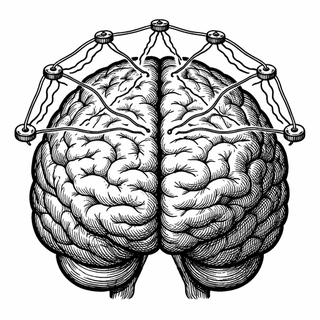
Here's the thing. We've had tools to zap the brain for years. Transcranial direct current stimulation (tDCS) - basically a gentle electrical current applied through electrodes on your scalp - has shown promise for everything from depression treatment to cognitive enhancement. It's like giving specific brain regions a cup of coffee, bumping up their excitability just enough to make a difference.
But here's the problem: we've been guessing. We know tDCS does something to brain networks, but figuring out exactly how much current, applied where, to achieve a specific brain state? That's been more art than science.
Enter the Control Freaks (Affectionately)
The new study, published in IEEE Transactions on Automatic Control, takes a control theory approach to the brain. Control theory is the engineering discipline that helps you steer rockets, stabilize robots, and keep your thermostat from turning your house into a sauna. The researchers asked: can we apply these same principles to neural networks?
The answer is yes - with some clever mathematics.
They focused on Hopfield-type neural networks, a class of computational models that earned John Hopfield a 2024 Nobel Prize in Physics. These networks model how interconnected brain regions influence each other, with activity flowing back and forth like gossip at a party where everyone knows everyone.
The Big Insight: Constant Inputs Can Steer the System
The paper's key contribution is showing that you don't need fancy, rapidly changing stimulation patterns to control these networks. Constant or piecewise constant inputs - think steady electrical currents rather than complex waveforms - can do the job. The researchers developed explicit algebraic conditions that tell you exactly what input you need to get from brain state A to brain state B.
Even better, they showed that for simple electrode setups (the kind actually used in tDCS), the set of reachable brain states forms a nice, predictable mathematical structure. You can compute it using standard linear algebra techniques. No supercomputer required.
Why This Actually Matters
Look. The brain is not a thermostat. It's a massively complex dynamical system with billions of neurons, nonlinear dynamics, and more feedback loops than a prog rock album. But that's precisely why we need principled approaches to brain stimulation.
Current research shows that tDCS can modify brain network connectivity and potentially help with conditions ranging from mild cognitive impairment to epilepsy. But outcomes vary wildly between individuals, and nobody really knows why. Having a mathematical framework that links input currents to network dynamics could help personalize treatments.
Imagine a future where your tDCS protocol is calculated specifically for your brain's connectivity pattern. Where the doctor doesn't just stick electrodes on your head and hope for the best, but actually computes the optimal stimulation to achieve a therapeutic target.
The Catch (There's Always a Catch)
This is still theoretical work. The researchers validated their approach with simulations, not actual human brains. Real brains are noisier, squishier, and considerably more complicated than even sophisticated mathematical models. The framework also assumes you know the brain's connectivity matrix and current state - information that's not exactly easy to measure.
But that's how science works. First, you prove the concept. Then you refine it. The integration of machine learning with tDCS is already progressing, and tools like this mathematical framework give ML approaches something rigorous to optimize against.
The Bottom Line
Your brain is a dynamical system, and dynamical systems can be controlled. This paper gives us a cleaner set of tools for thinking about how simple, steady inputs can steer neural network activity toward desired states. It's not brain control in the sci-fi sense. It's more like finally getting a proper instruction manual for a device we've been using on the "hit it until it works" setting.
And for anyone dealing with neurological or psychiatric conditions where brain stimulation might help? That's a pretty good development.
References
-
Tamekue, C., Chen, R., & Ching, S. (2026). On the control of recurrent neural networks using constant inputs. IEEE Transactions on Automatic Control, 71(3), 1737-1752. DOI: 10.1109/tac.2025.3615934 | PMCID: PMC13008370
-
arXiv preprint: https://arxiv.org/abs/2410.17199
-
Profile of John Hopfield and Geoffrey Hinton: 2024 Nobel laureates in Physics. PNAS. https://www.pnas.org/doi/10.1073/pnas.2423094122
-
Effects of transcranial direct current stimulation on modulating executive functions in healthy populations: a systematic review and meta-analysis. Frontiers in Human Neuroscience (2024). https://www.frontiersin.org/journals/human-neuroscience/articles/10.3389/fnhum.2024.1485037/full
-
Transcranial direct current stimulation (tDCS) in depression induces structural plasticity. Scientific Reports (2023). https://www.nature.com/articles/s41598-023-29792-6
-
Recent Advancements of Transcranial Direct Current Stimulation and Machine Learning. The Artificial Intelligence Review (2025). https://www.sciltp.com/journals/tai/articles/2602003087
Disclaimer: The image accompanying this article is for illustrative purposes only and does not depict actual experimental results, data, or biological mechanisms.