
Fifty-eight people walked into a lab in China, sat down at computers, and were handed a surprisingly simple task: lie for money. In the first round, they played as "instructors" in a card game where fibbing about hidden cards meant bigger payouts. Easy enough. Then came the twist - researchers asked them to watch recordings of other people playing the same game and rate how morally acceptable the cheating was. All while an fMRI machine mapped the electrical fireworks happening between their ears.
The results? Oh, they're delicious. Turns out there's a very specific brain region that determines whether you practice what you preach - and it can be hacked.
The Brain's Moral GPS (That Sometimes Loses Signal)
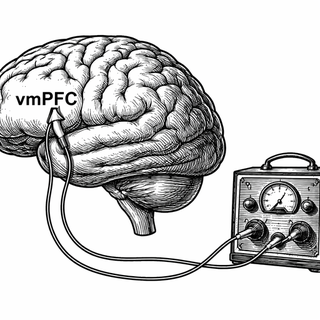
The star of this neural drama is the ventromedial prefrontal cortex, or vmPFC if you're into the whole brevity thing. This chunk of brain tissue sits right behind your eyes, deep in the frontal lobe, acting as a kind of command center for integrating emotions, values, and decisions. It's the part that's supposed to remind you "hey, remember when you said stealing is wrong?" while you're eyeing that extra cookie.
Researchers from the University of Science and Technology of China, led by Valley Liu and Hongwen Song, wanted to figure out why knowing the right thing doesn't always translate into doing it. Their study, published in Cell Reports, used multivariate pattern analysis - basically looking at the shape of brain activity rather than just how bright it glows - to spot the difference between moral consistent folks and the rest of us.
What They Actually Found
Here's where it gets interesting. In people who judged others and themselves by the same standards, the vmPFC showed remarkably similar activity patterns during both tasks. Their brains were singing the same moral tune whether they were doing or judging.
But in morally inconsistent participants - the ones who rated their own cheating as "meh, no big deal" while clutching pearls at identical behavior from strangers - the vmPFC went quiet during the cheating task. Worse, it showed weaker connections to other brain regions involved in reward processing and ethical reasoning. The moral filing cabinet was there; it just wasn't being accessed.
"Individuals exhibiting moral inconsistency are not necessarily blind to their own moral principles," the researchers note. "They are just biologically failing to consider and apply them in their own moral behavior."
Zapping Brains for Science
The researchers didn't stop at observation. In a second experiment with 52 participants, they pulled out transcranial temporal interference stimulation (tTIS) - essentially using electrical fields to temporarily disrupt the vmPFC. Half got the real brain zap; half got a convincing fake.
The results were stark: people whose vmPFCs were disrupted became measurably more hypocritical. By messing with this one brain region, scientists literally dialed up the gap between what people said was right and what they actually did.
Why This Matters Beyond the Lab
Previous research has established that vmPFC damage produces consistent changes in moral behavior, often making people more "utilitarian" in their ethical reasoning - willing to harm one person to save five, for instance. But this study adds a critical piece: the vmPFC isn't just about what you decide is moral. It's about whether you bother to consult your moral code when you're the one making choices.
The implications ripple outward. Classic psychological research on moral hypocrisy, pioneered by C. Daniel Batson, has long shown that people want to appear moral without paying the cost of actually being moral. Now we have a neural address for where that disconnect lives.
Can You Train Your Inner Hypocrite?
Senior author Hongwen Song suggests we might treat moral consistency "like a skill that can be strengthened through deliberate decision making." It's a hopeful thought - that the gap between our ideals and actions isn't fixed, but something the brain can learn to bridge with practice.
So the next time you catch yourself judging someone for the exact thing you did last Tuesday, maybe give your vmPFC a little mental nudge. It's trying to do its job. Sometimes it just needs a reminder to check the files.
References:
-
Liu, V., Kong, Z., Fu, J., Zheng, L., Wang, I., Wang, M., Du, Y., Zuo, L., Qiu, B., Zhong, C., Zhu, L., Yuan, Z., Zhang, X., & Song, H. (2026). Moral inconsistency is based on the vmPFC's insufficient representation across tasks and connectedness. Cell Reports, 117058. DOI: 10.1016/j.celrep.2026.117058
-
Hiser, J., & Koenigs, M. (2018). The multifaceted role of the ventromedial prefrontal cortex in emotion, decision making, social cognition, and psychopathology. Biological Psychiatry, 83(8), 638-647. PMCID: PMC5862740
-
Schneider, B., & Koenigs, M. (2017). Human lesion studies of ventromedial prefrontal cortex. Neuropsychologia, 107, 84-93. PMCID: PMC5866785
-
Monin, B., & Merritt, A. (2012). Moral hypocrisy, moral inconsistency, and the struggle for moral integrity. In M. Mikulincer & P. R. Shaver (Eds.), The Social Psychology of Morality. American Psychological Association.
Disclaimer: The image accompanying this article is for illustrative purposes only and does not depict actual experimental results, data, or biological mechanisms.