
Somewhere in a University of Chicago lab, a research team was staring at data that didn't add up. The textbooks said certain synaptic genes should be humming along during brain development, cranking out proteins like a well-oiled factory. But the numbers told a different story. Hundreds of genes were being actively silenced - not by the usual suspects of transcription factors or epigenetic marks, but by something sneakier. The cell was building its own mRNA messages and then deliberately destroying them. On purpose. At scale.
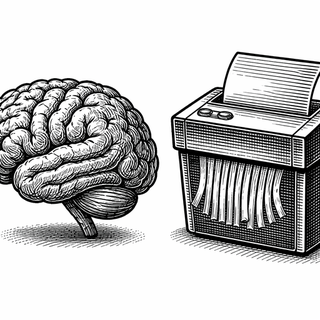
Welcome to the weird and wonderful world of alternative splicing-triggered nonsense-mediated mRNA decay, or AS-NMD if you prefer acronyms that sound like a garage band nobody's heard of.
The Cellular Paper Shredder
Here's the setup. Your cells make mRNA - the molecular messenger that carries instructions from DNA to the protein-building machinery. But before that mRNA gets shipped out, it goes through a process called splicing, where unnecessary bits (introns) get cut out and the useful bits (exons) get stitched together. Think of it like editing a rough draft before publishing.
Now, sometimes your cells deliberately splice in a troublemaker: a "poison exon." This little segment contains a premature stop sign - a codon that tells the cell "stop reading here." The result? The mRNA gets flagged as defective and sent to the cellular recycling bin through a quality control system called nonsense-mediated decay. The message never becomes protein. It's like writing a letter, sealing it in an envelope, then running it through a shredder before it hits the mailbox.
Why would a cell do something so seemingly wasteful? Because sometimes the best way to control a garden is to prune.
3,000 Hidden Switches in the Developing Brain
In a study published in The Journal of Clinical Investigation, Hu, Yang, Qiu, and colleagues mapped out over 3,000 of these poison exon events in developing mouse and human brains (Hu et al., 2025). That's not a typo. Three thousand genes being regulated by this splice-and-shred mechanism, many of them previously unknown.
What makes this particularly striking is what those genes do. Many encode synaptic proteins - the molecular hardware that lets neurons talk to each other. During early brain development, these synaptic genes need to stay quiet until the right moment. AS-NMD acts like a seasonal frost, keeping certain seeds dormant until the ecosystem is ready for them to bloom.
The team also found that more than 200 of these AS-NMD-regulated genes are already known culprits in neurodevelopmental disorders (NDDs), including autism spectrum disorder and developmental epileptic encephalopathy. That's a remarkable overlap, and it hints at a mechanism that, when disrupted, could cascade into the kinds of conditions affecting millions of children worldwide. Previous work has established that poison exons play critical roles in brain development and that NMD itself is tightly regulated by neuron-specific factors - but nobody had mapped the landscape at this scale before.
Turning Off the Shredder (On Purpose)
Here's where the story gets genuinely exciting. The researchers zeroed in on a gene called GRIA2, which encodes a subunit of AMPA receptors - the brain's main fast-acting excitatory switches. Mutations in GRIA2 cause a spectrum of neurodevelopmental problems, from intellectual disability to severe seizures. The team discovered a poison exon in GRIA2 that was keeping its protein levels artificially low through NMD.
Then they did something clever. Using antisense oligonucleotides (ASOs) - short synthetic DNA-like molecules that can be designed to block specific splicing events - they prevented the poison exon from being included. The shredder got bypassed. GRIA2 mRNA survived, and functional protein levels went up.
This approach, called splice-switching therapy, already has a track record. The FDA has approved several ASO-based drugs, most notably nusinersen for spinal muscular atrophy, which works by a similar splice-correcting principle. What this study does is hand researchers a catalog of 3,000-plus new potential targets where the same strategy might work.
Why This Matters Beyond the Bench
For families navigating diagnoses like autism or epileptic encephalopathy, the treatment landscape is often frustratingly limited. Many of these conditions stem from haploinsufficiency - having only one working copy of a critical gene isn't enough. If the remaining good copy is being partially silenced by AS-NMD, then blocking that silencing could restore protein levels without needing to introduce new genetic material. No gene therapy vectors. No CRISPR. Just a precisely targeted molecular nudge.
There's something almost poetic about it. The cell's own editing system, evolved over millions of years to fine-tune brain development, becomes both the problem and the solution. The same mechanism that keeps synaptic genes quiet at the wrong time could be co-opted to turn them back on at the right time.
The developing brain, it turns out, isn't just building circuits. It's constantly deciding which blueprints to shred and which to keep. Understanding that decision - and learning when to overrule it - might be one of the most promising paths toward treating some of our most challenging neurological conditions.
References:
-
Hu, K., Yang, R., Qiu, J., Feng, X., LaPre, K. J., Tanouye, J., Yang, Y., & Zhang, X. (2025). Alternative splicing-triggered mRNA decay informs splice-switching targets for neurodevelopmental disorders. The Journal of Clinical Investigation. DOI: 10.1172/JCI197271
-
Carvill, G. L., & Mefford, H. C. (2020). Poison exons in neurodevelopment and disease. Current Opinion in Genetics & Development, 65, 98-102. DOI: 10.1016/j.gde.2020.05.030
-
Lee, P. J., Yang, S., Sun, Y., & Guo, J. U. (2021). Regulation of nonsense-mediated mRNA decay in neural development and disease. Journal of Molecular Cell Biology, 13(4), 269-281. DOI: 10.1093/jmcb/mjab022
-
Saha, A., Battle, A. (2024). Alternative splicing coupled to nonsense-mediated decay coordinates downregulation of non-neuronal genes in developing mouse neurons. Genome Biology, 25, 167. DOI: 10.1186/s13059-024-03305-8
-
Davies, B., Bhatt, D. (2019). AMPA receptor GluA2 subunit defects are a cause of neurodevelopmental disorders. Nature Communications, 10, 3094. DOI: 10.1038/s41467-019-10910-w
Disclaimer: The image accompanying this article is for illustrative purposes only and does not depict actual experimental results, data, or biological mechanisms.