Somewhere around 2013, Madeline Lancaster was staring at a clump of stem cells that had done something no one asked them to do. Instead of growing into a flat, well-behaved sheet of neurons - the kind that fills textbooks and grant applications - the cells had self-organized into a three-dimensional blob that looked suspiciously like a developing human brain. The old assumption, that you needed an actual skull and a body and millions of years of evolution to get anything resembling brain architecture, was suddenly looking shaky. That little blob, roughly the size of a lentil, was about to change everything.
From Lentils to Legit Brain Models
Those first cerebral organoids, grown by Lancaster and Jürgen Knoblich at the Institute of Molecular Biotechnology in Vienna, were humble things. Pea-sized clusters of neural tissue, they had rudimentary structures echoing what a human brain does in the first trimester of development (Lancaster et al., 2013). Not exactly planning your weekend, but enough to make the neuroscience world collectively lose its mind (pun fully intended).
Fast-forward to now, and these "mini brains" have gone from curiosity to workhorse. Scientists have figured out how to coax stem cells into forming specific brain regions - cortex here, midbrain there, a little hindbrain for flavor. Then somebody had the brilliant idea: what if we smooshed them together?
Enter the Assembloid (Yes, That's a Real Word)
Stanford neuroscientist Sergiu Pasca looked at region-specific organoids and thought, "These need to talk to each other." So he started fusing them. Cortical organoids meeting subpallial organoids, forming connections, with inhibitory neurons migrating between regions exactly like they do in an actual fetal brain. He called these fused constructs "assembloids," and the name stuck - probably because it sounds like something from a sci-fi movie you'd actually watch.
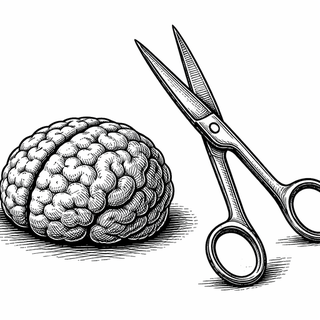
Here's where it gets wild. In 2024, Pasca's team used assembloids to tackle Timothy syndrome, a rare genetic disorder that scrambles brain development. They identified antisense oligonucleotides - tiny molecular scissors - that could snip out the faulty RNA and rescue the defective neurons. One dose. In living tissue. The cells started behaving normally again (Chen et al., 2024). If that doesn't give you chills, check your pulse.
Why Mice Weren't Cutting It
Here's the dirty secret of neuroscience: mouse brains are terrible stand-ins for human brains. Not because mice aren't smart (they navigate mazes like tiny furry GPS units), but because our brains are doing things theirs literally can't. We have roughly 86 billion neurons wiring themselves into up to 3,000 distinct cell types. That wiring happens mostly before birth and keeps going for about 30 years afterward. Mice? Not so much.
Take microcephaly, where the brain develops abnormally small. Researchers struggled for years to model this in mice because the mouse cortex is so different from ours that the disease just doesn't show up properly. Organoids cracked that open. And when Zika virus was ravaging newborns in Brazil, researchers grew brain organoids, infected them with the virus, and watched the devastating effects in real time - neural progenitor cells dying, growth stalling, the architecture collapsing (Cugola et al., 2016). No animal model could have shown us that with the same human specificity.
The Whole-Brain Play
If individual organoids are impressive, the latest generation is downright showing off. A team at Johns Hopkins recently grew a multi-region brain organoid that integrates cerebral, mid-hindbrain, and endothelial systems - essentially a miniature version of an entire brain, complete with rudimentary blood vessel-like structures and coordinated electrical activity (Kshirsagar et al., 2025). Your morning coffee involves less coordination than what's happening in this lentil-sized tissue.
And researchers aren't stopping at just watching. Northwestern scientists have developed a soft, flexible 3D electronic mesh that wraps around organoids like a neural hairnet, mapping and stimulating activity across the entire surface. Suddenly, you can watch whole-network brain activity in a dish and test how drugs affect it.
What's Next (Spoiler: Clinical Trials)
Knoblich, who helped start this whole field, recently told Nature that organoid research is "at an inflection point" (Abbott, 2026). Translation: the training wheels are coming off.
Researchers are now pushing toward the first clinical trial of a brain disorder treatment developed entirely using organoids. The FDA Modernization Act 2.0 has opened the door, acknowledging that organoid-based findings can potentially justify skipping straight from dish to human trials, bypassing animal models altogether.
Nobody's claiming these mini brains are conscious or that we're growing thinking tissue in a lab (there's a whole separate, very necessary ethics conversation happening about that). But for understanding how your 86-billion-neuron masterpiece assembles itself, and what goes wrong when it doesn't, we've never had a tool like this. A decade ago, a clump of cells did something unexpected. Now those cells are leading us somewhere the mice never could.
References
-
Abbott, A. (2026). Mini models of the human brain are revealing how this complex organ takes shape. Nature, 652(8109), 288-290. DOI: 10.1038/d41586-026-01025-6. PMID: 41951970
-
Lancaster, M.A., Renner, M., Martin, C.A., et al. (2013). Cerebral organoids model human brain development and microcephaly. Nature, 501, 373-379. DOI: 10.1038/nature12517. PMID: 23995685
-
Chen, X., Birey, F., Li, M.Y., et al. (2024). Antisense oligonucleotide therapeutic approach for Timothy syndrome. Nature, 628(8009), 818-825. DOI: 10.1038/s41586-024-07310-6. PMID: 38658687
-
Cugola, F.R., Fernandes, I.R., Russo, F.B., et al. (2016). The Brazilian Zika virus strain causes birth defects in experimental models. Nature, 534, 267-271. DOI: 10.1038/nature18296
-
Kshirsagar, A., Mnatsakanyan, H., Kulkarni, S., et al. (2025). Multi-region brain organoids integrating cerebral, mid-hindbrain, and endothelial systems. Advanced Science. DOI: 10.1002/advs.202503768. PMID: 40625223
Disclaimer: The image accompanying this article is for illustrative purposes only and does not depict actual experimental results, data, or biological mechanisms.