Tucked deep inside each temporal lobe, roughly behind your ears and a couple of inches inward, sit two almond-shaped clusters of neurons called the amygdalae. If your brain were a city, these would be the fire stations - small, always staffed, and responsible for pulling the alarm the instant something threatens the neighborhood. Now picture those fire stations with a broken "off" switch, dispatching trucks for every car backfire and slamming door. That, in the broadest strokes, is what happens in posttraumatic stress disorder.
The Three-Way Call Nobody Asked For
A sweeping new review in the Annual Review of Neuroscience by Beatty, Kearney, Ponomareva, and Ressler (2025) lays out the current map of PTSD neurobiology, and it reads like an ecosystem where several weather systems collide at once (Beatty et al., 2025).
The core circuit involves three players. The amygdala learns and expresses fear - think of it as the employee who memorizes every bad thing that ever happened in the office and brings it up at every meeting. The hippocampus provides context, helping you distinguish between a firecracker on the Fourth of July and an actual threat. And the medial prefrontal cortex (mPFC) acts as the supervisor, telling the amygdala to calm down once the danger has passed.
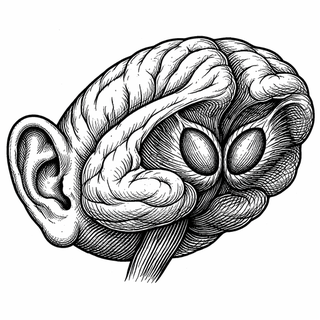
In PTSD, this conference call goes sideways. The amygdala cranks the volume to eleven. The hippocampus - which normally whispers, "Hey, you're safe now, this is just a parking garage" - shrinks in volume and loses its persuasive edge. Meanwhile, the ventral mPFC, the one brain region whose entire job is to tell the amygdala to pipe down, goes eerily quiet (Ressler et al., 2022). The result: a brain stuck in a storm that ended long ago, still boarding up the windows.
Fear Learns Fast and Forgets Slow
Much of what we know about PTSD comes from fear conditioning - a Pavlovian setup where a neutral tone gets paired with something unpleasant until the tone alone triggers a fear response. Healthy brains eventually learn that the tone no longer predicts danger, a process called extinction. People with PTSD struggle with exactly this step. Their "extinction neurons" in the basolateral amygdala, the very cells that should be whispering "false alarm," don't fire properly (Iqbal et al., 2023).
Sleep makes this worse. Fragmented REM sleep - the phase when your brain normally consolidates extinction memories - appears to undermine the whole process. So your brain learns the fear just fine (thanks for nothing, amygdala), but the unlearning part keeps getting interrupted by bad sleep. It's like trying to edit a document while someone keeps unplugging your computer.
Your DNA Has Opinions About Trauma
Here's where things get genuinely wild. A 2024 mega-study across more than 1.2 million people identified 95 regions of the genome associated with PTSD risk, 80 of which were brand new to science (Nievergelt et al., 2024). Among the 43 genes flagged as potentially causal, many code for neurotransmitter receptors and ion channels - the molecular hardware your synapses use to talk to each other.
One gene that keeps showing up is FKBP5, which regulates how your stress hormones (glucocorticoids) do their job. Variations in FKBP5 have been linked to everything from symptom severity to altered brain activity to exaggerated startle responses. Another standout: CRFR1, a receptor for corticotropin-releasing factor, the molecule that essentially tells your body, "We're doing a stress response now, everybody strap in."
The heritability of PTSD sits around 30-40%, which means genes load the gun but trauma pulls the trigger. Women develop PTSD at roughly twice the rate of men, and while sociocultural factors play a role, hormonal and genetic differences in stress-response systems likely contribute too.
So Why Can't We Fix It Yet?
Despite all this beautiful circuitry mapping and genomic detective work, the FDA-approved pharmacological options remain... underwhelming. Two SSRIs - sertraline and paroxetine - and that's the whole menu. Psychotherapy, specifically trauma-focused cognitive behavioral therapy and prolonged exposure, remains the gold standard, essentially teaching the brain to re-run its extinction learning with a therapist as co-pilot.
But the horizon looks different. Researchers are exploring kappa-opioid receptor antagonists, ketamine derivatives, and even prophylactic interventions that could be deployed in emergency departments or on battlefields before PTSD has a chance to set in. Neuromodulation techniques and EEG-based biofeedback targeting amygdala activity are in various stages of investigation.
What This Means for the Rest of Us
About 70% of people worldwide will experience a potentially traumatic event in their lifetime, and roughly 5-6% will develop PTSD. That's not a rare disease - that's a weather pattern affecting entire populations. The fact that we can now point to specific genes, specific neurons, and specific circuit failures doesn't just satisfy scientific curiosity. It opens the door to treatments that work with the biology rather than around it.
The brain, after all, is an ecosystem. Sometimes the storm passes on its own. Sometimes the landscape needs help recovering. And sometimes, understanding the weather is the first step toward building a better shelter.
References
-
Beatty, Z. G., Kearney, M. G., Ponomareva, O., & Ressler, K. J. (2025). Neurobiology of Posttraumatic Stress Disorder: Circuits, Genomics, and Treatment. Annual Review of Neuroscience. https://doi.org/10.1146/annurev-neuro-102124-033854 | PubMed: 41931825
-
Ressler, K. J., Berretta, S., Bolshakov, V. Y., Rosso, I. M., Meloni, E. G., Rauch, S. L., & Carlezon, W. A. Jr. (2022). Post-traumatic stress disorder: clinical and translational neuroscience from cells to circuits. Nature Reviews Neurology, 18(5), 273-288. https://doi.org/10.1038/s41582-022-00635-8 | PMCID: PMC9682920
-
Nievergelt, C. M., Maihofer, A. X., Atkinson, E. G., et al. (2024). Genome-wide association analyses identify 95 risk loci and provide insights into the neurobiology of post-traumatic stress disorder. Nature Genetics, 56, 792-808. https://doi.org/10.1038/s41588-024-01707-9
-
Iqbal, J., Huang, G.-D., Xue, Y.-X., Yang, M., & Jia, X.-J. (2023). The neural circuits and molecular mechanisms underlying fear dysregulation in posttraumatic stress disorder. Frontiers in Neuroscience, 17, 1281401. https://doi.org/10.3389/fnins.2023.1281401
Disclaimer: The image accompanying this article is for illustrative purposes only and does not depict actual experimental results, data, or biological mechanisms.