
The road to understanding fear has been littered with wrong turns. For decades, neuroscientists wandered down a seemingly straightforward path: fear gets learned, fear gets unlearned, job done. Except the brain, that magnificent contrarian, had other plans. It turns out that unlearning fear isn't like deleting a file - it's more like moving it to a folder you can't quite remember the name of, in a directory structure that changes depending on which room you're standing in.
A new study from Bouyeure and colleagues has finally mapped some of this bewildering terrain, and the findings suggest our brains are running a rather more sophisticated operation than we'd given them credit for.
The Trouble With Forgetting
Here's the awkward truth that's haunted exposure therapy for years: you can teach someone that spiders are safe in your nice, calming office, and they'll walk out feeling brilliant. Send them home, and the moment a spider appears in their kitchen, the fear comes roaring back like it never left. Neuroscientists call this "fear renewal," which is a polite way of saying the brain is annoyingly context-dependent.
The researchers at Ruhr University Bochum decided to investigate how the brain actually represents threatening things versus safe things, and critically, what happens when those labels get swapped. They recruited 24 participants and put them through a rather elaborate scenario involving "Nina the Unlucky Backpacker" - a narrative framework where household appliances occasionally predicted mild electric shocks. Science, everyone.
Two Brains for the Price of One
What emerged from the fMRI data was unexpectedly elegant. The brain appears to use two completely different strategies simultaneously when dealing with threats.
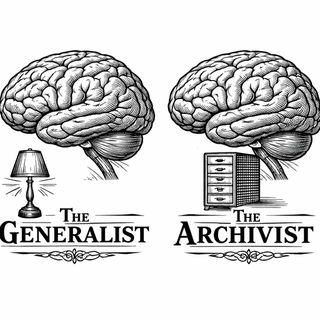
Strategy One: The Generalist. In regions like the dorsal anterior cingulate cortex - part of the brain's threat-detection network - all dangerous things start looking alike. Threatening cues develop increasingly similar neural patterns, as if the brain is saying, "I don't care which lamp is going to shock me, I just need to know that lamps in general are bad news." This generalised response is efficient, if somewhat paranoid.
Strategy Two: The Archivist. Meanwhile, in the precuneus and prefrontal cortex, the brain maintains detailed individual records of each specific threat. When a previously dangerous cue becomes safe (or vice versa), these regions track the change with remarkable precision. They're essentially keeping receipts.
The coexistence of these strategies makes a certain evolutionary sense. You need quick categorical responses ("predator - run!") alongside nuanced memories ("that particular predator lives by the watering hole, so approach from the east").
Context Is Everything (Unfortunately)
Perhaps the most striking finding concerned how the brain handles contexts during reversal learning. When threat associations changed, context representations in the prefrontal cortex became markedly more distinct - the brain essentially started filing "where I am" more carefully than before.
Here's where it gets clinically interesting: the degree of this context-specificity predicted whether fear would return later. Participants whose brains created sharper context boundaries during reversal learning showed more fear renewal when tested in the original environment. The brain's very attempt to be precise about "this is where things changed" may paradoxically make the original fear easier to retrieve.
It's rather like how knowing exactly where you put your spare keys makes it easier to remember where you used to put them.
What This Means for Anxiety Treatment
The implications for exposure therapy are considerable. The research suggests that the brain doesn't simply overwrite fear memories - it creates competing files with different context tags. Current therapeutic approaches may benefit from deliberately varying the contexts in which extinction learning occurs, essentially scrambling the brain's filing system in a therapeutically useful way.
The prefrontal cortex's role in mediating contextual fear regulation has been documented extensively, and this study adds crucial detail about how it accomplishes this feat. The region appears to function as a kind of switchboard operator, determining which memory gets expressed based on environmental cues.
Recent reviews have emphasised that fear extinction involves a broader network than previously thought, including the reward system and cerebellum. The Bouyeure study's findings about dual representational strategies fit neatly into this more complex picture.
The Bottom Line
Your brain hasn't been failing you all these years when old fears resurface unexpectedly. It's been doing exactly what evolution designed it to do: maintain multiple threat records with exquisite contextual precision. The challenge for therapeutic intervention isn't convincing the brain to forget, but rather teaching it to retrieve the right file for the current situation.
One suspects Nina the Backpacker, wherever she is, would find that information useful.
References:
Bouyeure, A., Pacheco-Estefan, D., Jacob, G., Kobelt, M., Fellner, M. C., Rose, J., & Axmacher, N. (2025). Distinct representational properties of cues and contexts shape fear and reversal learning. eLife, 14, e105126. https://doi.org/10.7554/eLife.105126 | PMC12991641
Maren, S., Phan, K. L., & Liberzon, I. (2013). The contextual brain: implications for fear conditioning, extinction and psychopathology. Nature Reviews Neuroscience, 14(6), 417-428. https://doi.org/10.1038/nrn3492
Giustino, T. F., & Bhattacharya, A. (2024). Neural circuits for the adaptive regulation of fear and extinction memory. Frontiers in Behavioral Neuroscience, 18, 1352797. https://doi.org/10.3389/fnbeh.2024.1352797
Kalisch, R., et al. (2006). Medial prefrontal pathways for the contextual regulation of extinguished fear in humans. PNAS, 103(23), 8783-8788. PMC4618170
Disclaimer: The image accompanying this article is for illustrative purposes only and does not depict actual experimental results, data, or biological mechanisms.