Meet Margaret, 84, who went through every Alzheimer's test in the book. Amyloid scans? Negative. Tau tangles? Minimal. Yet her memory kept slipping away like sand through fingers - names of grandchildren forgotten mid-sentence, the same story told three times at dinner. Her doctors were stumped. Turns out, Margaret may have been dealing with something we're only now learning to identify: a protein gone rogue that flies under Alzheimer's radar.
The Plot Twist Nobody Saw Coming
Here's the thing about dementia research: for decades, we've been laser-focused on amyloid plaques and tau tangles, the classic villains of Alzheimer's disease. But there's another troublemaker in town called TDP-43, and it's been quietly wrecking brains while we weren't looking.
TDP-43 is supposed to be a helpful little protein that hangs out in your cell nuclei, making sure your genes get read properly. Think of it as an editor who catches mistakes before your cells publish their work. When TDP-43 goes AWOL - fleeing the nucleus and clumping up in the cytoplasm - it stops doing its job. The result? Your cells start including "cryptic exons" in their genetic instructions, basically typos that were supposed to stay hidden forever.
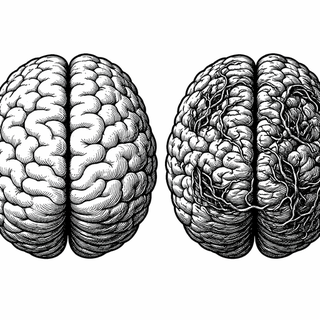
A new study in Cell Reports just cracked open how this whole mess plays out in human brains, and the findings are both illuminating and a little unsettling.
What the Scientists Actually Did
Researchers at Emory University and collaborators examined hippocampal tissue from 90 people who had passed away - some with normal brains, some with Alzheimer's, some with LATE-NC (that's the official name for TDP-43 brain damage), and some unlucky folks who had both.
They measured cryptic exon inclusion across eight different genes that TDP-43 normally keeps in check, including heavy hitters like STMN2 and UNC13A - genes crucial for keeping neurons alive and chatting with each other.
The punchline? People with both Alzheimer's AND TDP-43 pathology had the highest levels of these cryptic exon mistakes. Their cells were basically printing corrupted instruction manuals at record rates.
Three Flavors of Trouble
Perhaps the coolest part of this research is that the team identified three distinct subtypes based on cryptic exon burden: low, intermediate, and high. And here's what's wild - these categories held up regardless of how much amyloid or tau someone had in their brain. The cryptic exon signature was marching to its own drummer.
High cryptic exon cases showed something predictable but still striking: reduced levels of the proteins those corrupted genes were supposed to make, plus major disruptions in synaptic function, endosomal trafficking, and RNA-binding pathways. Translation? The cellular machinery for sending messages between neurons was falling apart.
Why Should You Care About This Alphabet Soup?
LATE (limbic-predominant age-related TDP-43 encephalopathy) affects roughly 40% of people over 85. That's not a typo. Almost half of the oldest-old have TDP-43 deposits gumming up their hippocampus. And about half of everyone with Alzheimer's pathology has LATE-NC riding shotgun, making their cognitive decline faster and nastier.
Here's where it gets clinically interesting: with new anti-amyloid drugs hitting the market, doctors need to know which patients will actually benefit. Someone like Margaret, who tests negative for amyloid but has rampant TDP-43 pathology, wouldn't be helped by amyloid-targeting treatments. She'd be a candidate for... well, therapies that don't exist yet. But at least we'd know why.
The Road Ahead
The silver lining in all this cellular chaos? Cryptic exons might actually be useful. They're highly specific markers of TDP-43 dysfunction, which means they could become diagnostic tools - maybe even blood tests someday - to catch LATE early. Plus, researchers are already working on antisense oligonucleotides (fancy molecules that can block specific RNA sequences) to prevent cryptic exon inclusion. Early experiments in stem cell-derived neurons show promise.
The study validates something important: TDP-43's loss of function, as measured by cryptic exon burden, provides a robust molecular signature that tracks with disease severity across different pathological contexts. It's not just about whether you have the protein clumps - it's about how badly your cells are misreading their own instructions.
For the millions dealing with dementia that doesn't quite fit the Alzheimer's mold, this research offers something valuable: an explanation, and a path toward treatments designed for their specific biology.
References:
-
Trautwig AN, et al. Subtyping based on hippocampal cryptic exon burden reveals proteome-wide changes associated with TDP-43 and Alzheimer's disease pathology. Cell Reports. 2026. DOI: 10.1016/j.celrep.2026.117142
-
Ma XR, et al. TDP-43 represses cryptic exon inclusion in the FTD-ALS gene UNC13A. Nature. 2022;603:124-130. DOI: 10.1038/s41586-022-04424-7
-
Seddighi S, et al. TDP-43-regulated cryptic RNAs accumulate in Alzheimer's disease brains. Molecular Neurodegeneration. 2023;18(1):57. PMCID: PMC10441763
-
Prudencio M, et al. Cryptic exon inclusion is a molecular signature of LATE-NC in aging brains. Acta Neuropathologica. 2024;147(1):29. DOI: 10.1007/s00401-023-02671-0
-
Nelson PT, et al. Limbic-predominant age-related TDP-43 encephalopathy (LATE): consensus working group report. Brain. 2019;142(6):1503-1527. DOI: 10.1093/brain/awz099
-
Wolk DA, et al. Clinical criteria for limbic-predominant age-related TDP-43 encephalopathy. Alzheimer's & Dementia. 2025. DOI: 10.1002/alz.14202
Disclaimer: The image accompanying this article is for illustrative purposes only and does not depict actual experimental results, data, or biological mechanisms.