
Astrocytes - the brain's most abundant glial cells - have been secretly running an immune surveillance programme under chronic inflammatory conditions, presenting neuronal debris to the immune system like evidence at a trial. Let me explain how we got here.
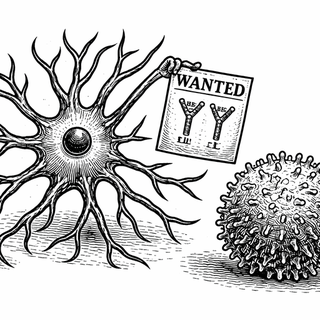
For decades, neuroscience had a tidy little narrative about astrocytes. They were the brain's support staff: mopping up neurotransmitters, feeding neurons, maintaining the blood-brain barrier, and generally keeping the lights on. Respectable work, certainly. But nobody suspected them of having ambitions in immunology. That particular job was meant for microglia, the brain's resident immune cells, who stomp about the place like overzealous security guards at a nightclub.
Then a team led by Steven Sloan at Emory University decided to ask a rather inconvenient question: what happens to human astrocytes when inflammation doesn't just knock on the door but moves in and rearranges the furniture?
The Long Game Changes Everything
Using human cortical organoids (essentially miniature brain-like structures grown in the lab) and primary fetal cortical tissue, Hill and colleagues exposed astrocytes to inflammatory cytokines for varying durations (Hill et al., 2026). The short version: timing is everything.
Brief inflammatory exposure produced one set of genetic responses. Prolonged exposure produced something entirely different. And here's the bit that raised eyebrows across several departments: only chronic inflammation triggered astrocytes to express major histocompatibility complex class II (MHC-II) molecules on their surface.
MHC-II is the molecular equivalent of holding up a "wanted" poster. It's how professional antigen-presenting cells - typically dendritic cells and macrophages - show fragments of suspicious proteins to T cells, essentially saying, "Does this look dodgy to you?" Astrocytes, apparently, have been learning this trick on the side.
From Wallflowers to Whistleblowers
The real plot twist arrived when the researchers pulled down the MHC-II complexes from chronically inflamed astrocytes and identified what peptides were being presented. Among them: fragments of neuronal proteins. Your astrocytes, it seems, are collecting neuronal debris and showing it to the immune system like a concerned neighbour reporting suspicious activity.
This wasn't some artefact of the organoid system, either. The team confirmed MHC-II expression in organotypic fetal cortical slices and, critically, in human pathological brain sections - tissue from actual patients with neuroinflammatory conditions.
The Interferon Connection
The mechanism behind this delayed immune awakening appears to involve progressive activation of interferon-linked signalling. Rather than an immediate switch, chronic cytokine exposure gradually ramps up an interferon-gamma response pathway, eventually crossing the threshold needed for MHC-II induction. It's less of a light switch and more of a slow-burning fuse.
This tracks with earlier work showing that interferon-gamma can induce MHC-II expression in astrocytes (Giovannoni & Quintana, 2020), and that astrocytic interferon signalling plays complex, sometimes protective roles in chronic autoimmune neuroinflammation (Hindinger et al., 2023). Previous research in Parkinson's disease had also hinted at astrocytes acting as antigen-presenting cells, with MHC-II-positive astrocytes found surrounding infiltrating T cells in post-mortem brain tissue (Rostami et al., 2020).
Why This Matters (Beyond Being Extremely Cool)
The finding that astrocytes can present neuronal debris via MHC-II opens a rather uncomfortable possibility: in chronic neuroinflammatory diseases like multiple sclerosis or Alzheimer's, could astrocytes be inadvertently training the immune system to attack neurons? Or, conversely, might they be helping to clear damaged cellular material in a controlled fashion?
Equally encouraging is the reversibility finding. When cytokines were withdrawn, astrocytes reverted to their quiescent state within days. The inflammatory programme, however dramatic, doesn't appear to leave permanent scars. The brain's support staff can, it seems, clock off from their immune side-hustle and go back to regular duties.
This temporal dimension matters enormously for therapeutic strategies. If MHC-II expression only emerges during chronic inflammation, then early intervention could potentially prevent astrocytes from ever entering this antigen-presenting state. Miss that window, however, and you may be dealing with a fundamentally different cellular player in the inflammatory game.
One thing is quietly certain: the next time someone dismisses astrocytes as mere support cells, they'll need a rather better excuse.
References
-
Hill, E. J., Sojka, C., McGuirk Sampson, M., Kebede, N., Wang, H. V., Showrin, S., King, A. T., Sing, A. D., Chang, J., Faundez, V., Sampson, T. R., Venneti, S., & Sloan, S. A. (2026). Temporal regulation of human reactive astrocytes reveals their capacity for antigen presentation. Neuron. https://doi.org/10.1016/j.neuron.2026.02.025 | PubMed
-
Giovannoni, F., & Quintana, F. J. (2020). The role of astrocytes in CNS inflammation. Trends in Immunology, 41(9), 805-819. https://doi.org/10.1016/j.it.2020.07.007
-
Rostami, J., Fotber, S., Bhesler, R., et al. (2020). Astrocytes have the capacity to act as antigen-presenting cells in the Parkinson's disease brain. Journal of Neuroinflammation, 17, 119. https://doi.org/10.1186/s12974-020-01776-7 | PMID: 32299492
-
Hindinger, C., et al. (2023). Astrocyte interferon-gamma signaling dampens inflammation during chronic central nervous system autoimmunity via PD-L1. Journal of Neuroinflammation, 20, 234. https://doi.org/10.1186/s12974-023-02917-4 | PMID: 37828609
-
Escartin, C., Galea, E., Bhesler, A., et al. (2021). Reactive astrocyte nomenclature, definitions, and future directions. Nature Neuroscience, 24, 312-325. https://doi.org/10.1038/s41593-020-00783-4
Disclaimer: The image accompanying this article is for illustrative purposes only and does not depict actual experimental results, data, or biological mechanisms.